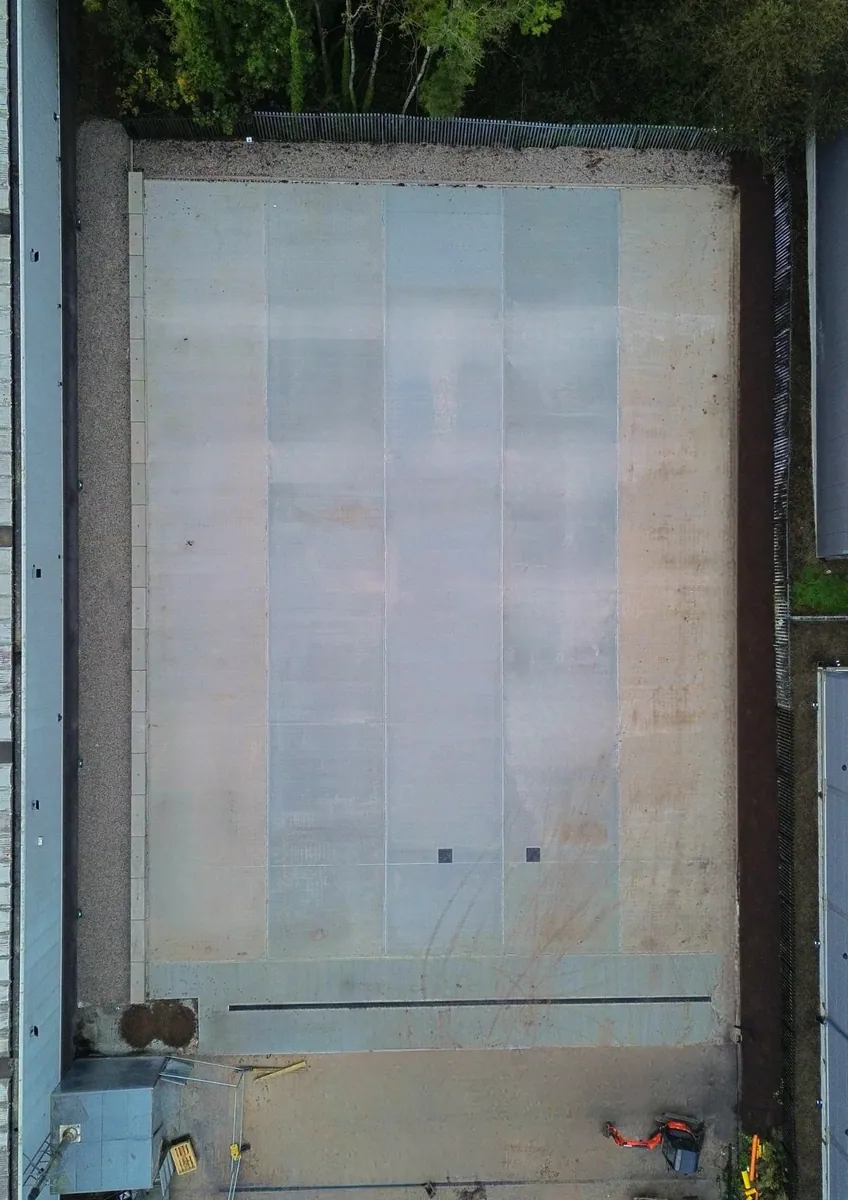
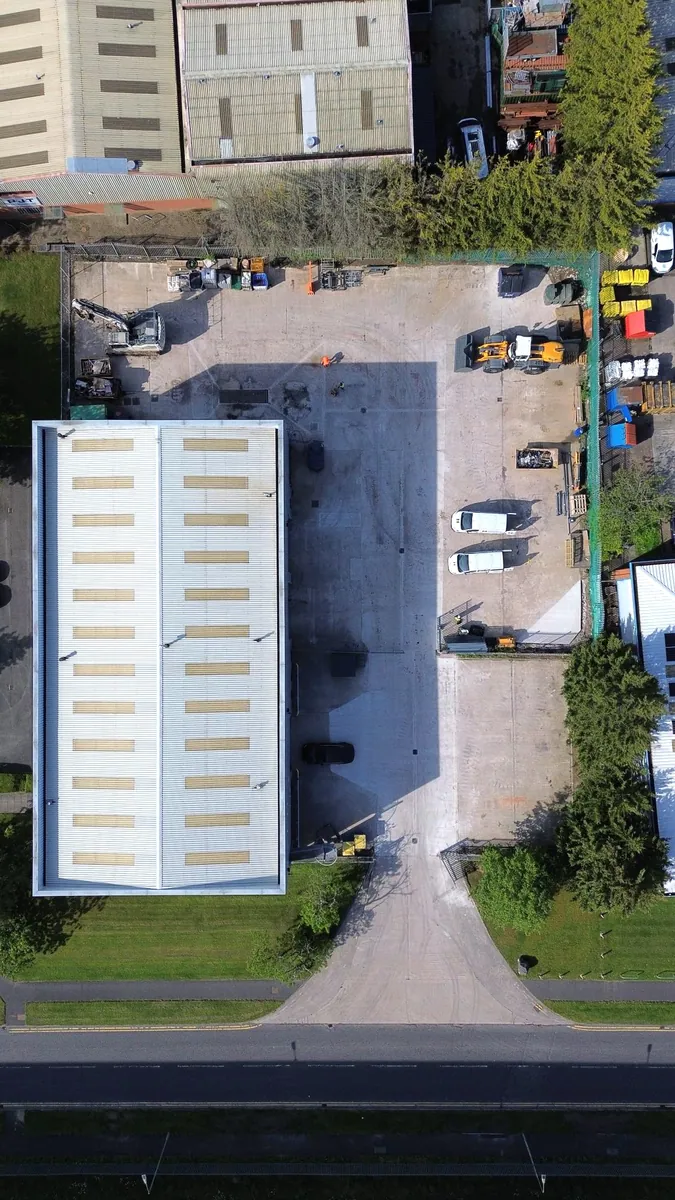

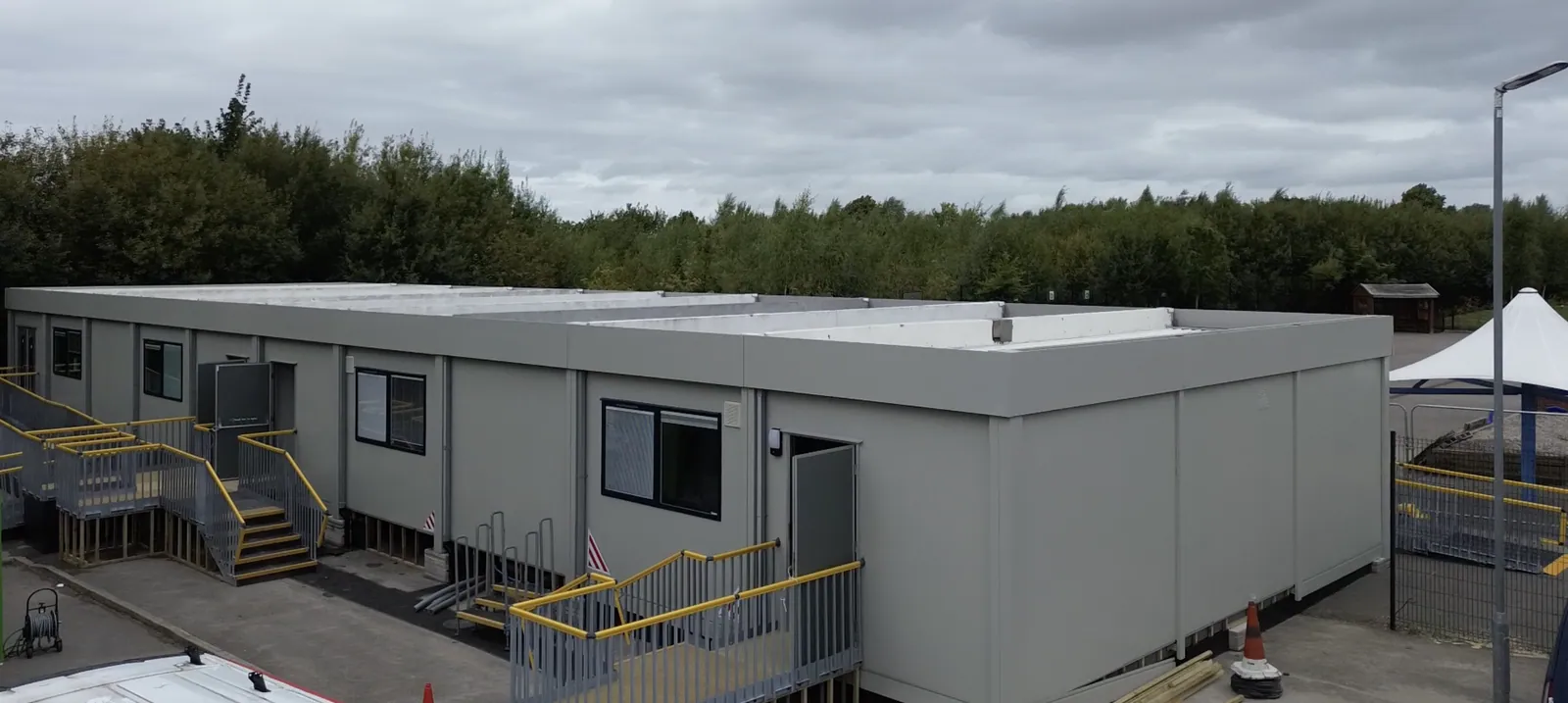
Everything was prepared when we arrived and the school was kept running throughout. Really pleased with how it went and look forward to working with you again

Modular classroom groundworksSt Helens, Modular, 4 weeksSee the job

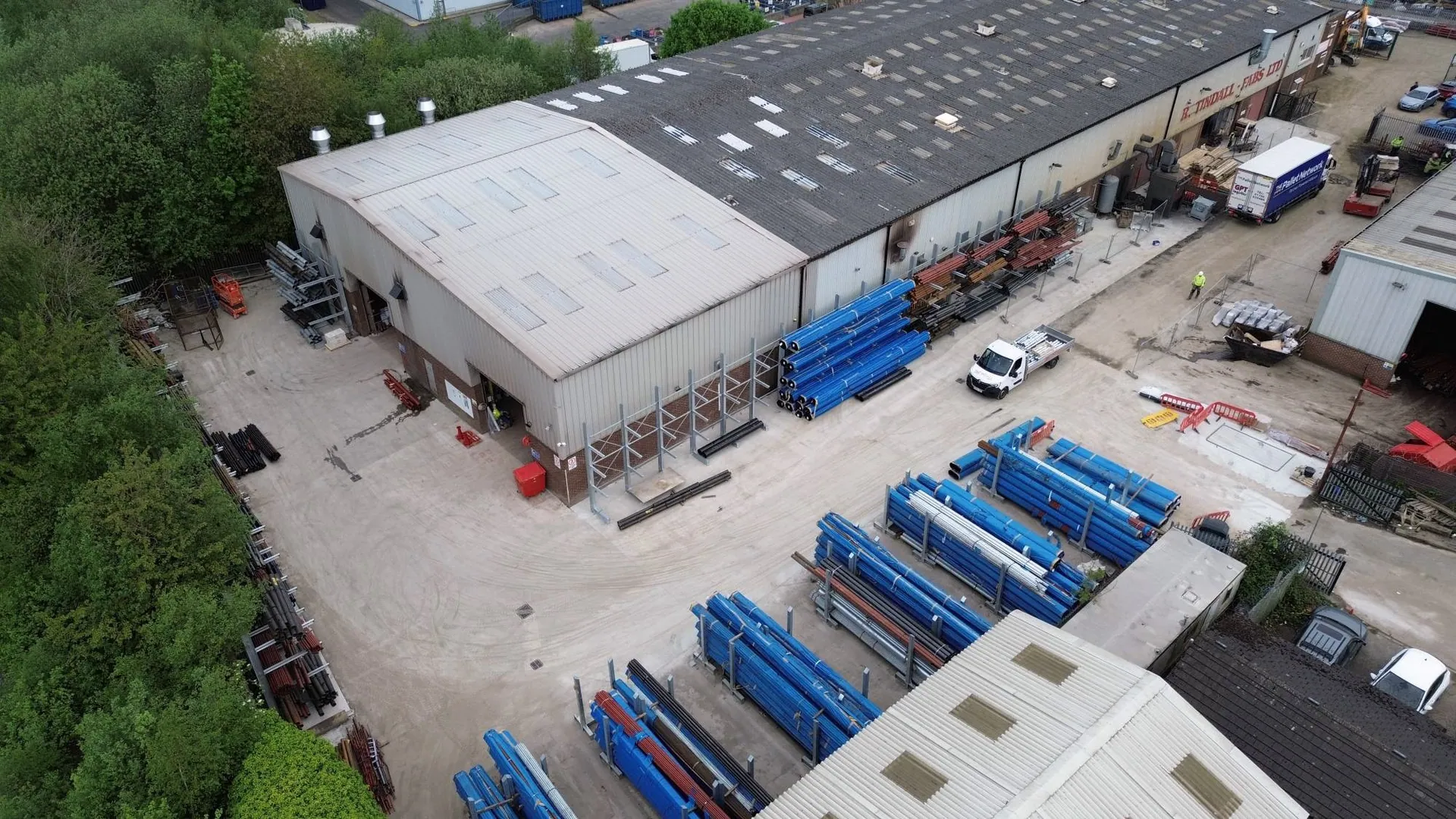
Birmingham's factories, warehouses and trade yards, from Minworth and Witton to Tyseley, need yards that stand up to HGVs on ground that can hold sulphate. PKB Civils is a concrete yard contractor that lays new yards and rebuilds failed ones, testing the ground before a slab is specified and phasing the work so the site keeps trading.
If your Birmingham yard is breaking up, holding water or too small for the fleet, we break out the failed bays, rebuild the sub-base, fix the steel and pour reinforced slabs, with the yard kept working round us. HGVs, forklifts and plant run on what we lay every day, so each slab is specified for the loads it will carry and the ground it sits on.
That fits the yards on Birmingham's big industrial estates: Prologis Park at Minworth, The Hub at Witton and Signal Point at Tyseley, all in the city's 2017 development plan, and Peddimore beside the A38, which the plan released for industry and warehousing. Beyond the city boundary, Hams Hall and Birch Coppice in North Warwickshire are large brownfield sites developed mainly for storage and distribution, both rail-served. Our concrete yard work covers new slabs and repairs alike.
Everything we can take on for you. Not sure which you need? Send your brief and we will tell you.
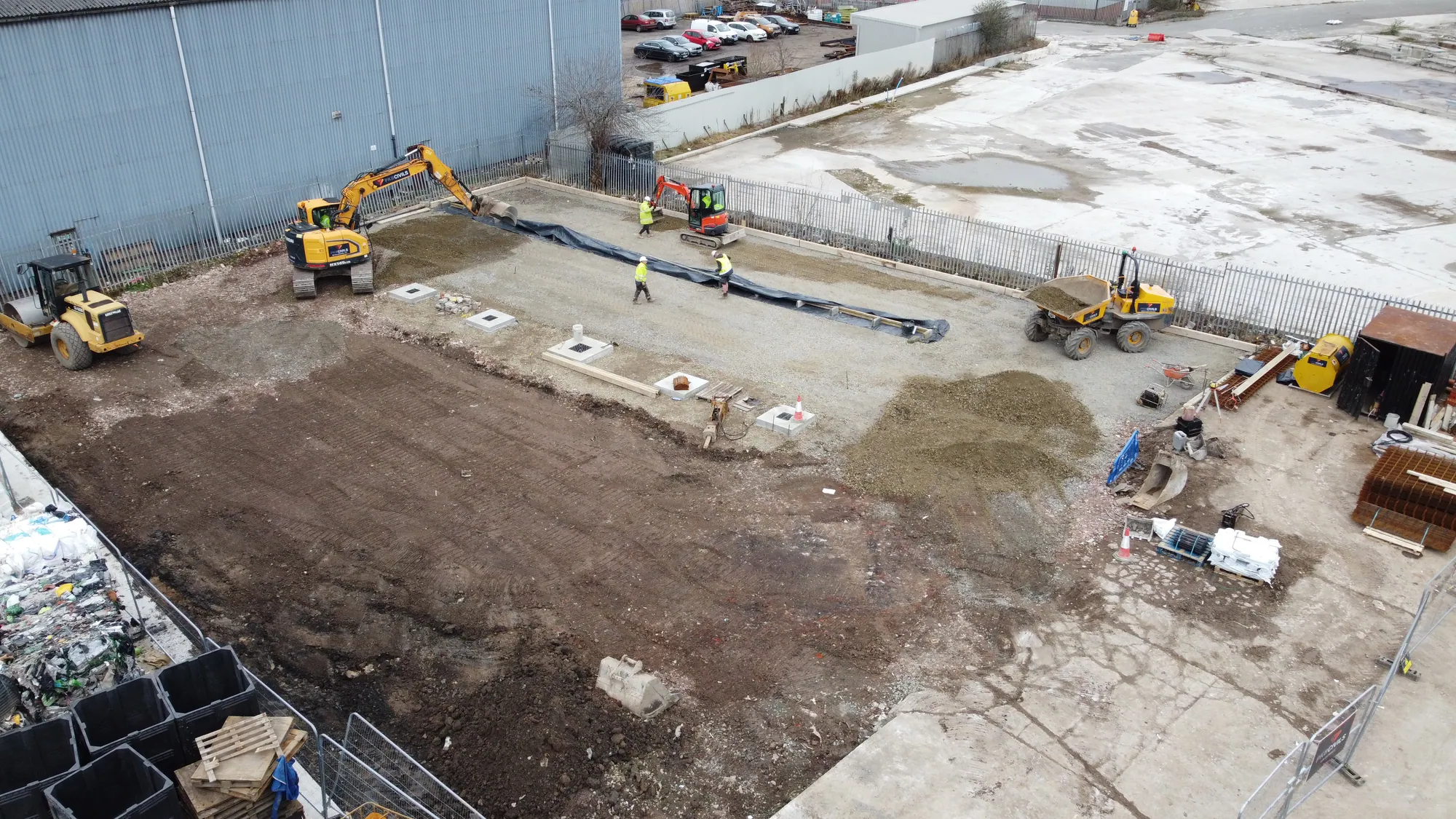
Unused ground beside a shed or factory turned into reinforced hardstanding, with the levels, joints and drainage designed together so it works from the day it's handed over.
Send your briefBroken bays cut out and relaid in turn, each dowelled into the sound slab beside it so the joints stay level under HGV wheels.
Send your briefThe concrete chosen once the subgrade has been tested for sulphate, which matters most on old fill.
Send your briefWhere only part of a slab has failed, the bad concrete cut back to sound and rebuilt from the sub-base up, so the repair doesn't become the next weak edge.
Send your briefRacking plinths and machine bases cast into an existing yard, sized for the load and set out around the routes vehicles already use.
Send your brief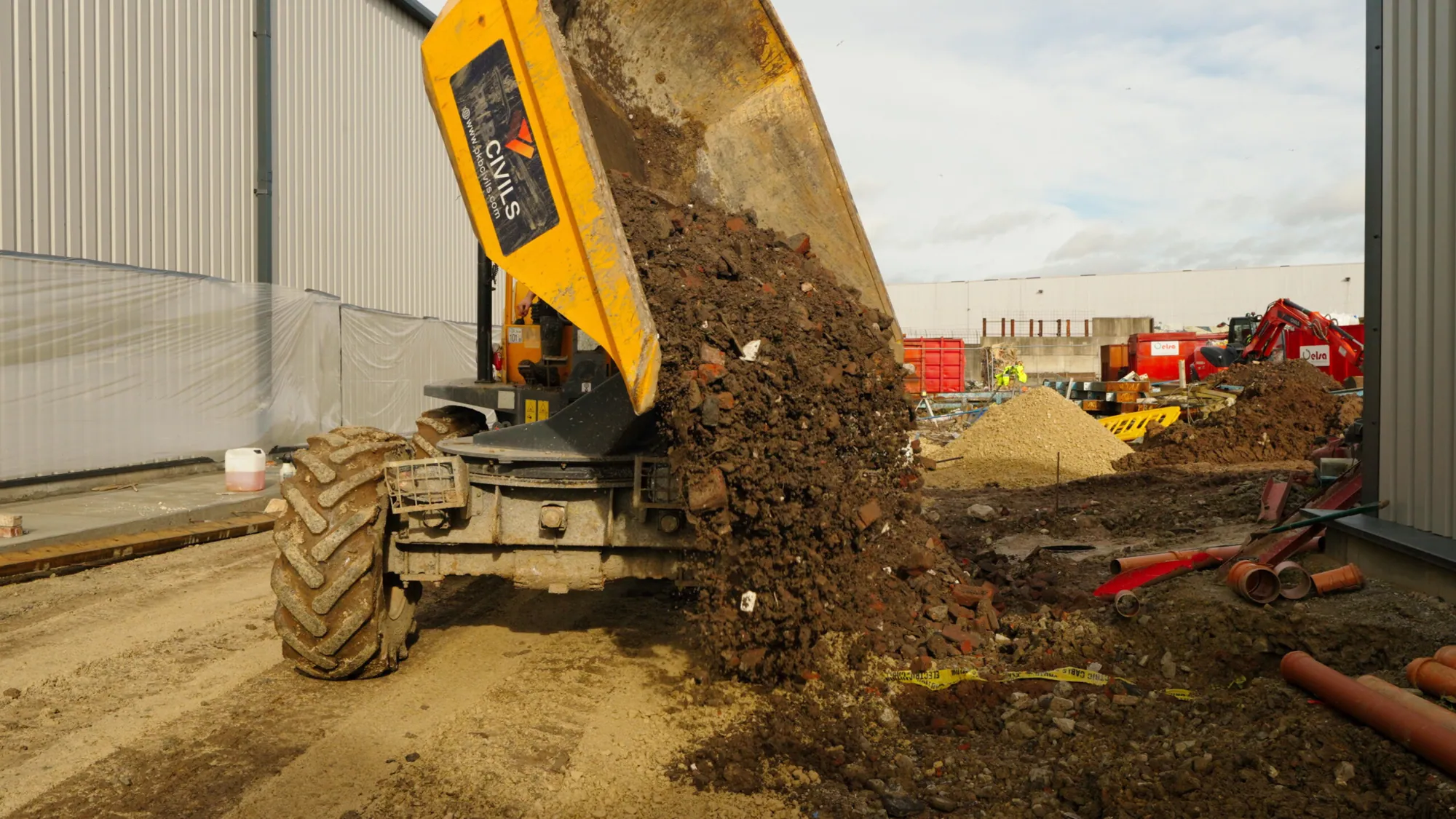
The same people survey, plan and build your job, and your site keeps running while we do it.
Send your briefPaul, one of our directors, writes about a manufacturing plant in the Midlands where a loading-bay pothole had been patched more than once, until the survey found carbonated concrete over a wider area and a targeted slab replacement fixed it for good. A Birmingham yard gets the same straight answer on patch or replace.
On a yard at Minworth, Witton or Tyseley we'd relay in sections round your delivery windows, so loading carries on, as it did on a merchant's yard in Enfield that didn't lose a day's trading. Where an apron meets a council road, the council's permit goes into that plan, as civil engineering in Birmingham explains.
We'd specify a Birmingham slab after testing the subgrade for sulphate, and choose the concrete to suit the result, so a yard on old fill isn't attacked from below.
Send us a short brief and a few photos. If it's a good fit, we'll arrange a free site survey and plan the work around how your site runs.
Two that come from the ground and estates around Birmingham, and two that wear out a yard anywhere.
Near Hams Hall, a gravel pit backfilled with power station ash can lie under one part of a planned extension and not the next, so the slab could settle unevenly across the line. A ground investigation finds the edge before the slab is designed.
Where lorries turn and stand at dock doors, as on a warehouse estate like Peddimore, the aprons wear first. Rebuilding them in sections with heavier reinforced slabs keeps the doors working.
A filled pothole over a failed sub-base breaks up again within months, Ben finds, and every patch adds a fresh edge where the next failure can start.
Many yards were specified in the 1980s or 1990s for lighter vehicles and less traffic than they carry now, Paul points out in his article on ageing yard infrastructure, so a slab can be sound and still under-specified for today's HGVs.
The jobs closest to Birmingham, with this kind of work first.
Feedback from the people who run these sites, shown with the job we did for them.
Everything was prepared when we arrived and the school was kept running throughout. Really pleased with how it went and look forward to working with you again
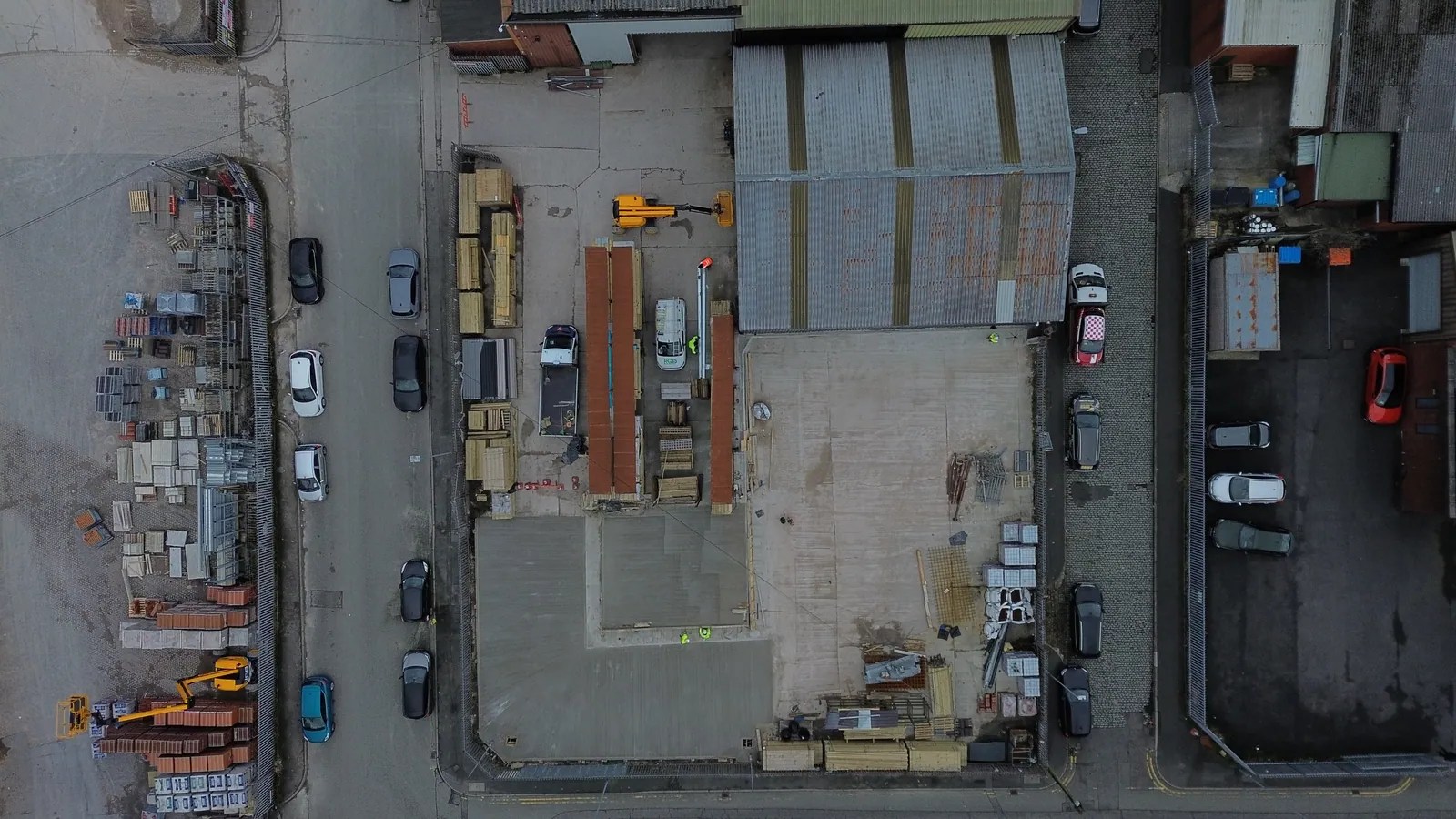
Really happy with the result. Your team were great to have on site and we were trading throughout which was important. Thank you.

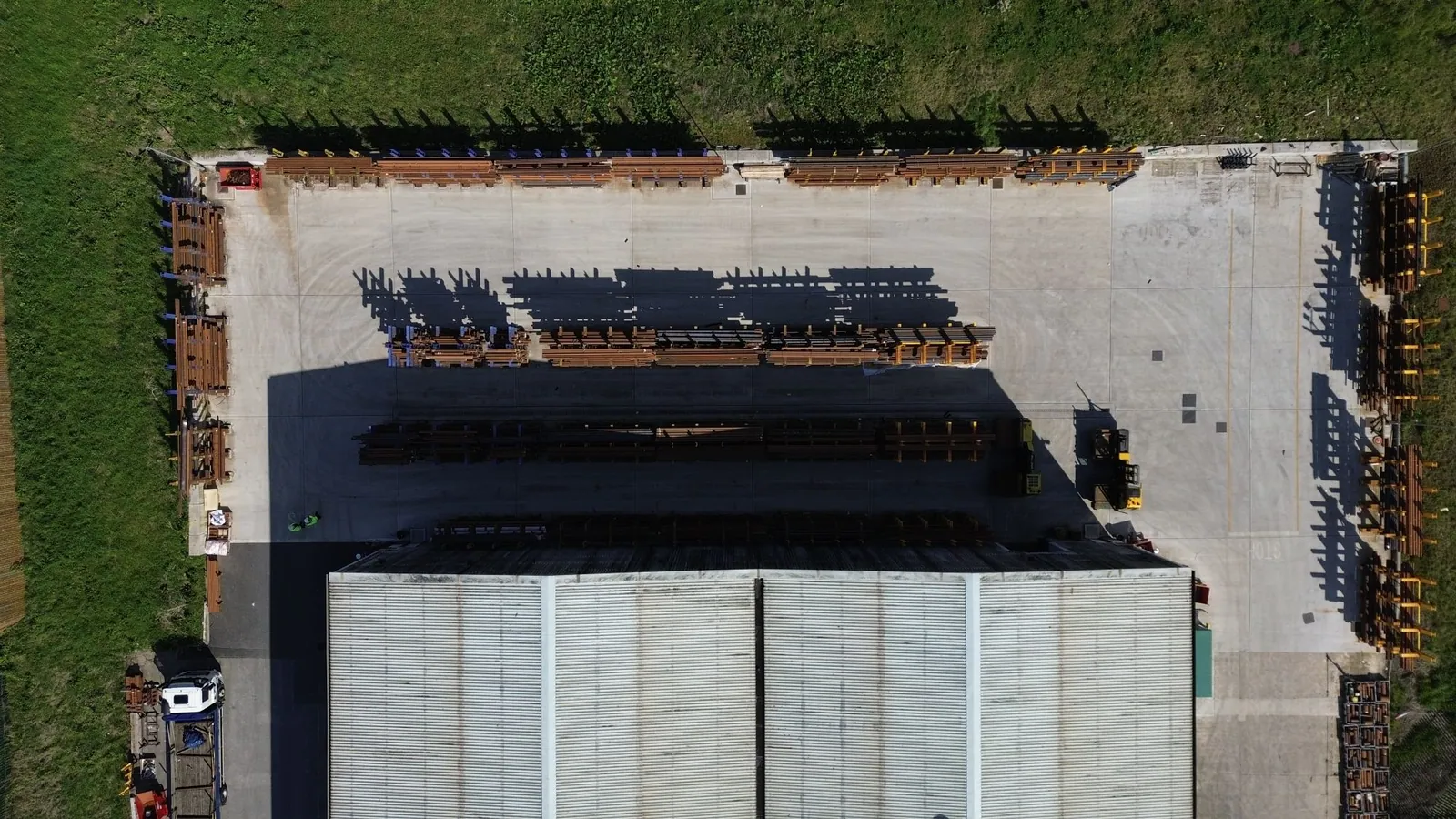
Thanks so much to the team, great work as always. The yard is already making a difference to how we move around site.

On Birmingham ground, sulphate is one of the things a slab has to be specified for. The British Geological Survey records it in the district's Mercia Mudstone at anything from Class 1, low, to Class 5, very high, and warns that high sulphate attacks concrete. Near the surface it tends to be low, because gypsum has generally been leached out of the top 30 m, so a slab on natural mudstone rarely meets the worst of it. Fill is another matter: the BGS says weathered unburnt colliery spoil may be high in sulphate, so a yard laid over old fill needs its own test. In our view, natural ground a metre or two down usually points to an ordinary mix; the sulphate test decides.
Further out, the BGS records significant made ground on the site of the old Hams Hall Power Station, at the National Exhibition Centre and at Birmingham Airport. Many of the former sand and gravel pits along the Tame near Hams Hall were backfilled with pulverised fuel ash from the power station, and others are flooded, so the ground under a yard there can change from one side of the site to the other. How the mudstone itself carries a load is covered in full on groundworks in Birmingham.
In Ben's words, “A well-specified industrial concrete slab is designed to carry heavy, repeated loads.” So when one fails early, the traffic over it is rarely the whole story, and new concrete won't last while water is still getting underneath. Where water is the cause, the fix belongs to drainage in Birmingham, and a new slab may not be needed at all after that.
Small faults may not need a new slab either. A broken joint or a worn patch can often be repaired locally, without new formwork, and Ben's article on why formwork matters sets out which jobs need it.
Postcode districts in Birmingham and the West Midlands where we've delivered: B6, B66, B98.
See them on the map
Can't see your question? Call us or send your brief and we'll come back to you.
Send your briefWe can, and yards like theirs are our core work. Prologis Park at Minworth covers 32.5 ha, according to the 2017 development plan, and at Peddimore the plan released 71 ha from the Green Belt for research, industry and warehousing, with a new junction onto the A38, close to junction 9 of the M42 and the existing employment areas at Minworth and Kingsbury.
Yes. Both are in North Warwickshire: Hams Hall near Coleshill and Birch Coppice at Dordon. The North Warwickshire Local Plan describes them as large brownfield sites developed mainly for storage and distribution, each served by a rail freight interchange. Our crews travel from Rochdale to sites across the UK, so a yard there is planned the same way as one in the city.
Rarely. The BGS gives the Sherwood Sandstone as Class 1, low sulphate, and the till and the alluvium as typically Class 1. The higher classes come from the mudstone at depth and from weathered unburnt colliery spoil used as fill. So on the sandstone the question is what the yard was built on in the past, and a sulphate test on any old fill answers it.
No. We work outside: yards, loading aprons, hardstanding and the drainage and ground under them. For an internal floor slab, a flooring specialist is the right firm. If the yard outside the shed is breaking up or holding water, that is our work, and the survey to look at it is free.
Yes. Repairs to older yards are as much our work as new slabs. Signal Point at Tyseley is one of the major industrial schemes in the 2017 development plan, which also points to significant redevelopment potential at Saltley Business Park in Heartlands. On an older yard, the survey decides between a targeted repair and new slabs, and the ground beneath decides the mix.

Ben has over 10 years of experience in contracting management, specialising in pre-construction with some of the UK's largest contractors. Ben now leads pre-construction, project planning and client engagement.
Tell us what's happening on site. We'll review your brief and, if it's a good fit, arrange a free site survey.