What ground and site conditions should you expect in Leicester?
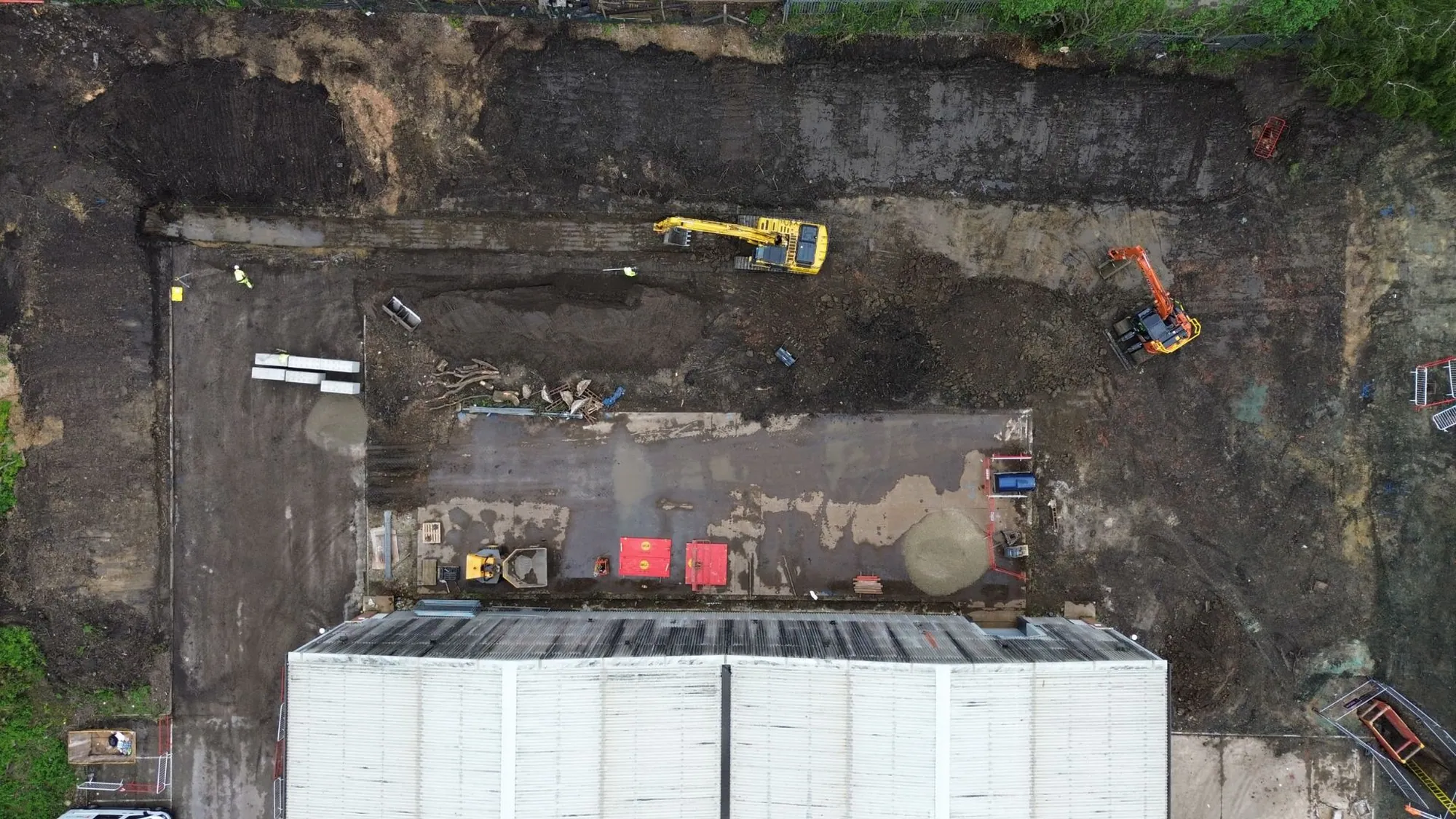
On Leicester ground the first question for a slab is sulphate. The British Geological Survey says the Mercia Mudstone in the district is locally abundant in gypsum, so sulphate attack on buried concrete is possible, and a more resistant concrete mix may be needed in places.
East of the city the Lias Group takes over. Its mudrocks, seen at places such as Knighton and Evington, can hold sulphur minerals such as gypsum and pyrite making up to 5% of the rock, the BGS records, and as pyrite oxidises it can form thaumasite, which attacks buried concrete aggressively.
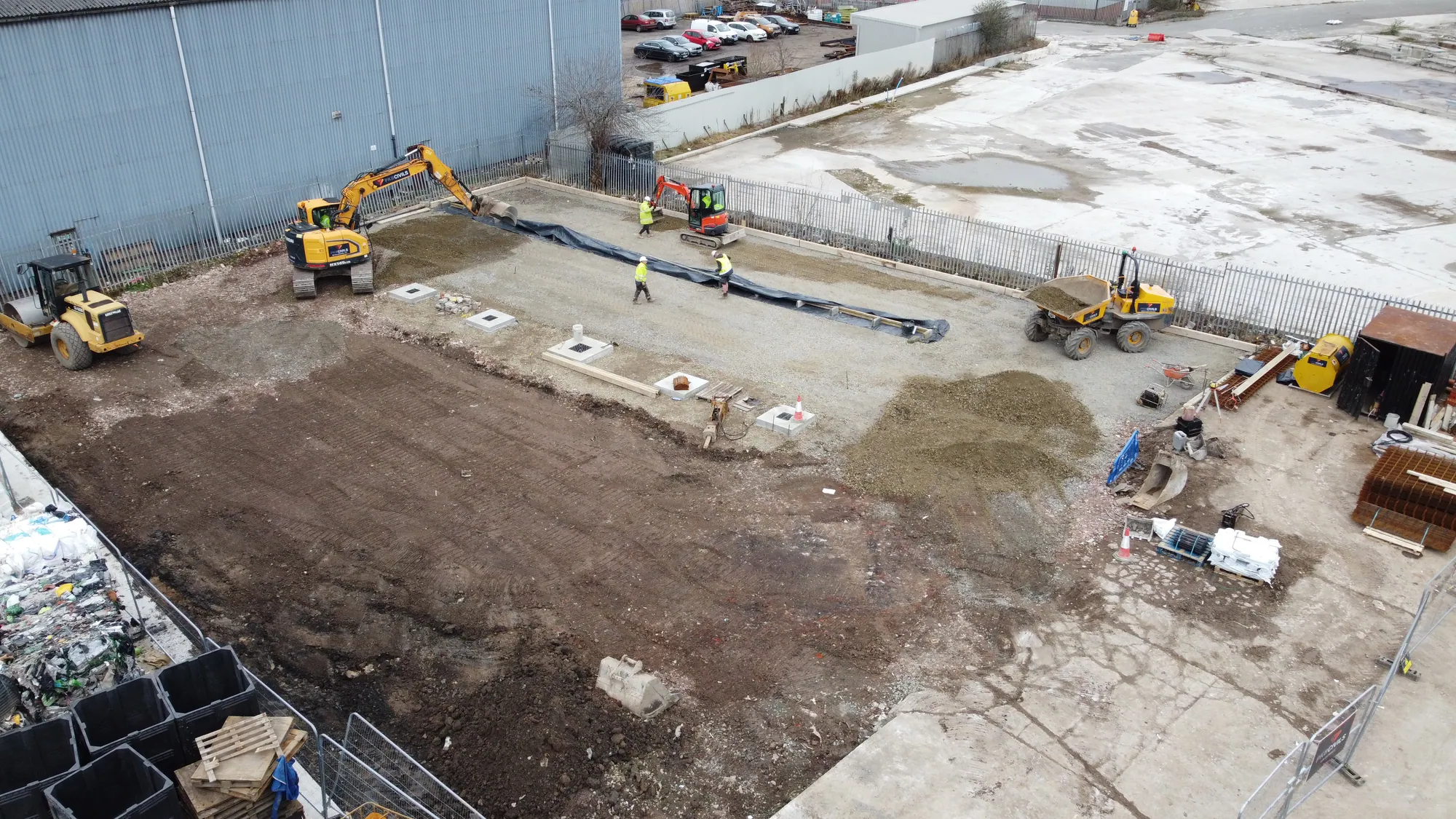
So the mix isn't chosen until the ground has been tested. The subgrade, and any fill under an old yard, is sampled for sulphate, and the concrete is specified to the result. Bases and thickened edges set into the ground get the closest look, because it's buried concrete that sulphate attacks.
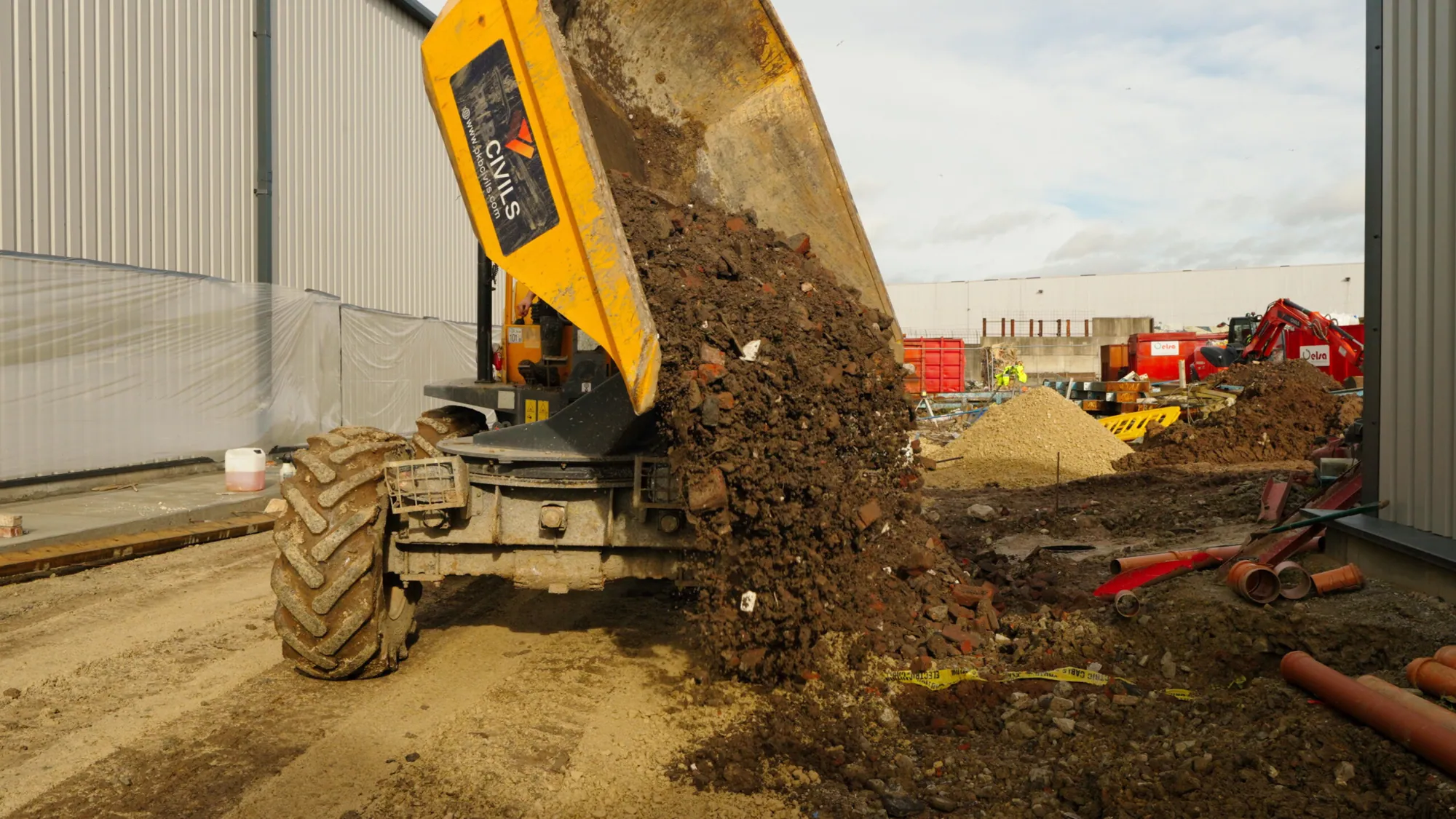
What the slab sits on matters as much as what's in it. Clay till that softens once it's opened, and compressible silt and peat on the Soar floodplain, are covered in full on groundworks in Leicester; for a yard, they mean the formation is proved before a sub-base goes down, and any soft patch comes out and is rebuilt.
When concrete isn't the right call
Not every failed yard needs new concrete. In Ben's words, “Not every concrete job requires complex formwork. Localised repairs to existing slabs, joint filling, and surface treatments typically do not involve new formwork at all.” A survey shows whether a worn strip by the doors or a broken joint can be put right without relaying the bay, and his article on why formwork matters sets out where it does.
If a slab keeps cracking where water lies, new concrete won't last until the water is dealt with. The drains come first, on drainage in Leicester, and the concrete follows once the yard sheds water properly.