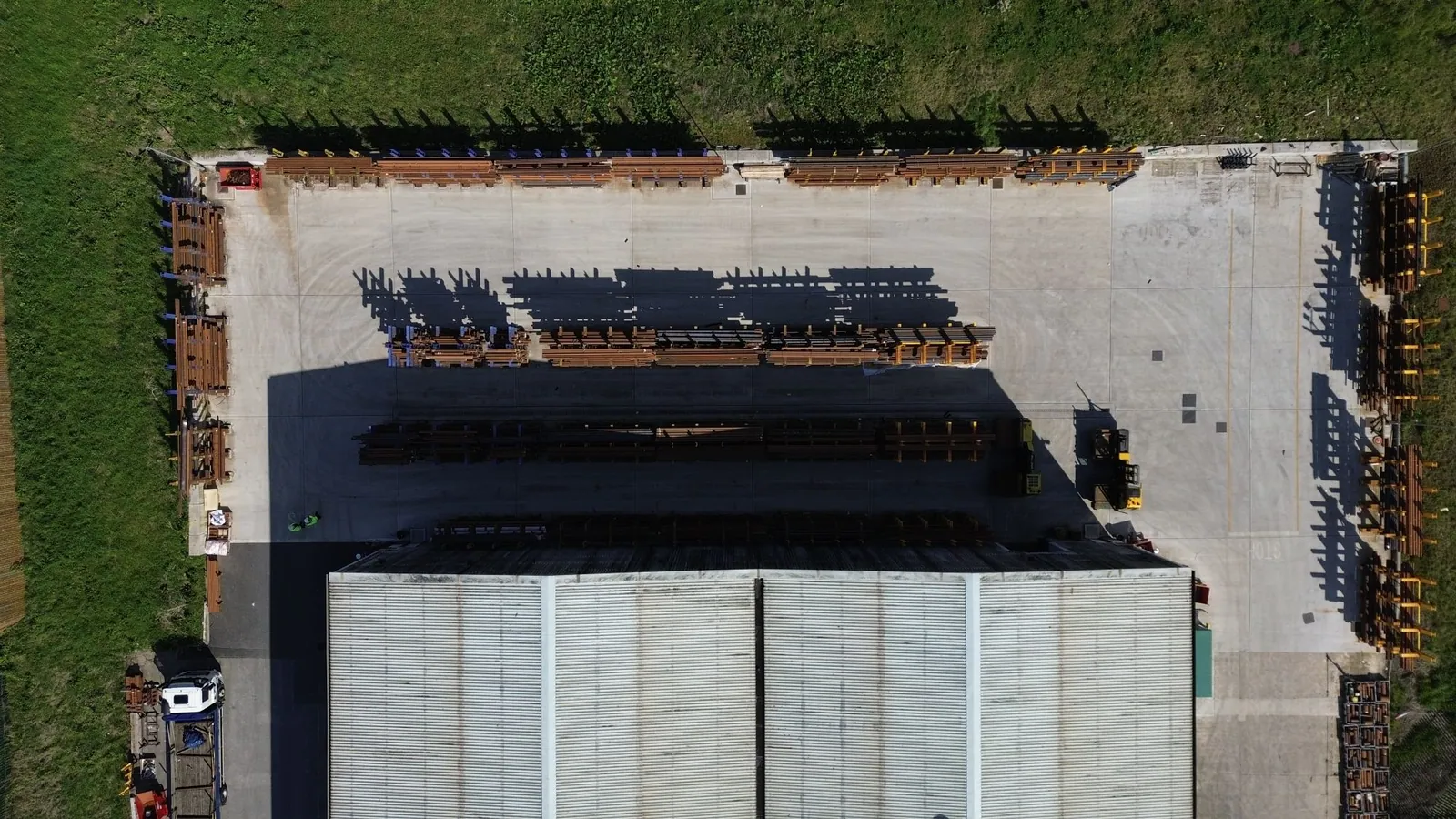
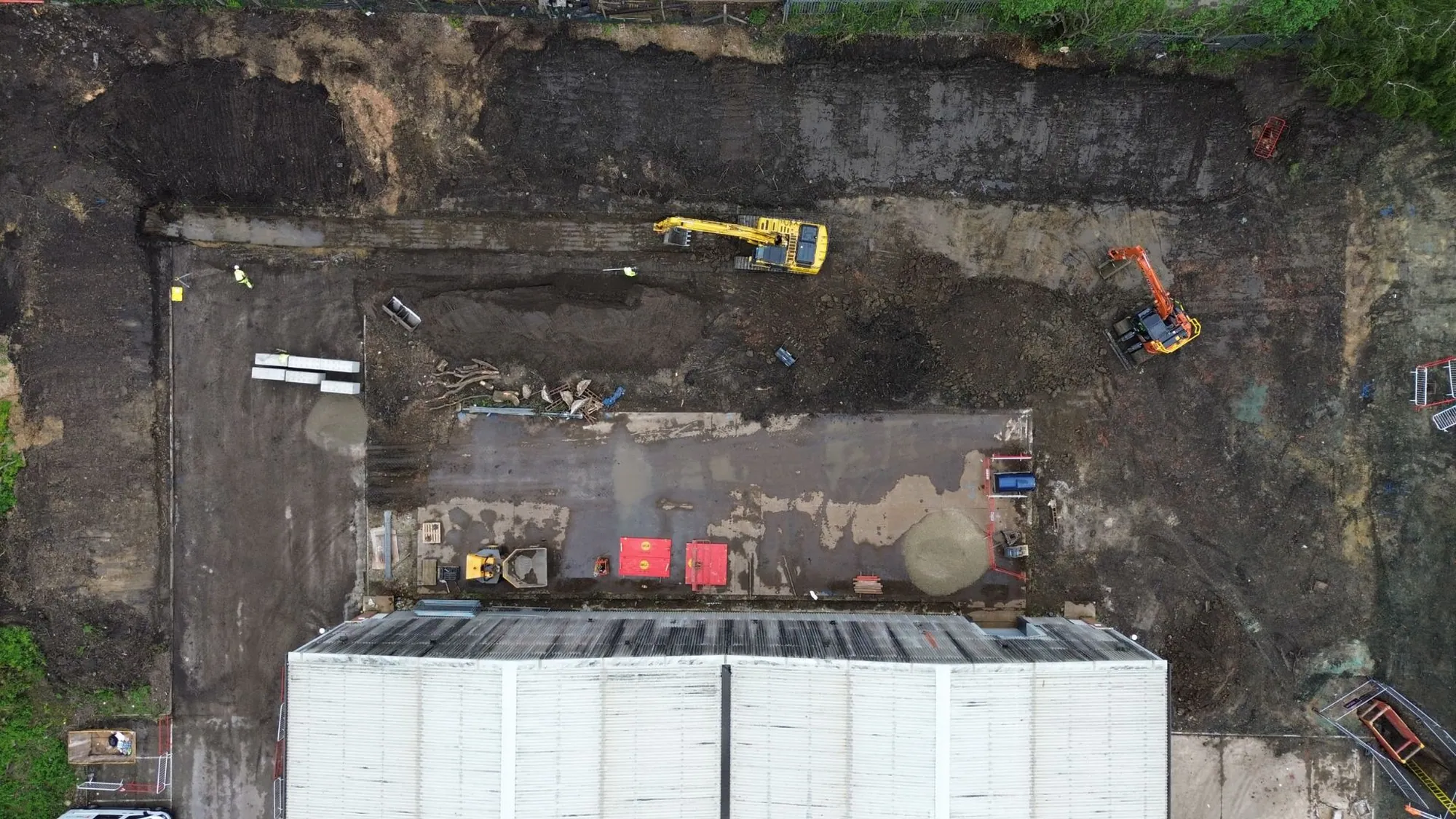
Looking for concreting in Nottingham because a commercial yard needs building or rebuilding? PKB Civils is a specialist concrete yard contractor: our own crews prepare the ground, set the forms, fix the steel and pour, on the city's estates and at warehouse sites near the M1, and a working yard is relaid a section at a time.
For distribution, manufacturing and trade sites in Nottingham whose yards carry HGVs, forklifts and plant every day. We build new concrete yards and relay failed bays, and on a yard that has to keep moving the work is phased around its traffic and its loading times.
The city keeps nine estates for employment under Policy EE2: Riverside/Lenton Lane, Glaisdale, Blenheim, Phoenix Park, New Basford, Bar Lane, Greasley Street, the Nottingham Science & Technology Park and NG2 Business Park. Beyond them, the large distribution warehouses sit out along the M1. If your Nottingham yard is one of these, the full service is under our concrete yard work.
2,000+Projects completed across the UK
150,000m²Concrete poured across all our jobs
40yearsFamily-run in Rochdale since 1986
Concrete yards in Nottingham: what we do
Everything we can take on for you. Not sure which you need? Send your brief and we will tell you.
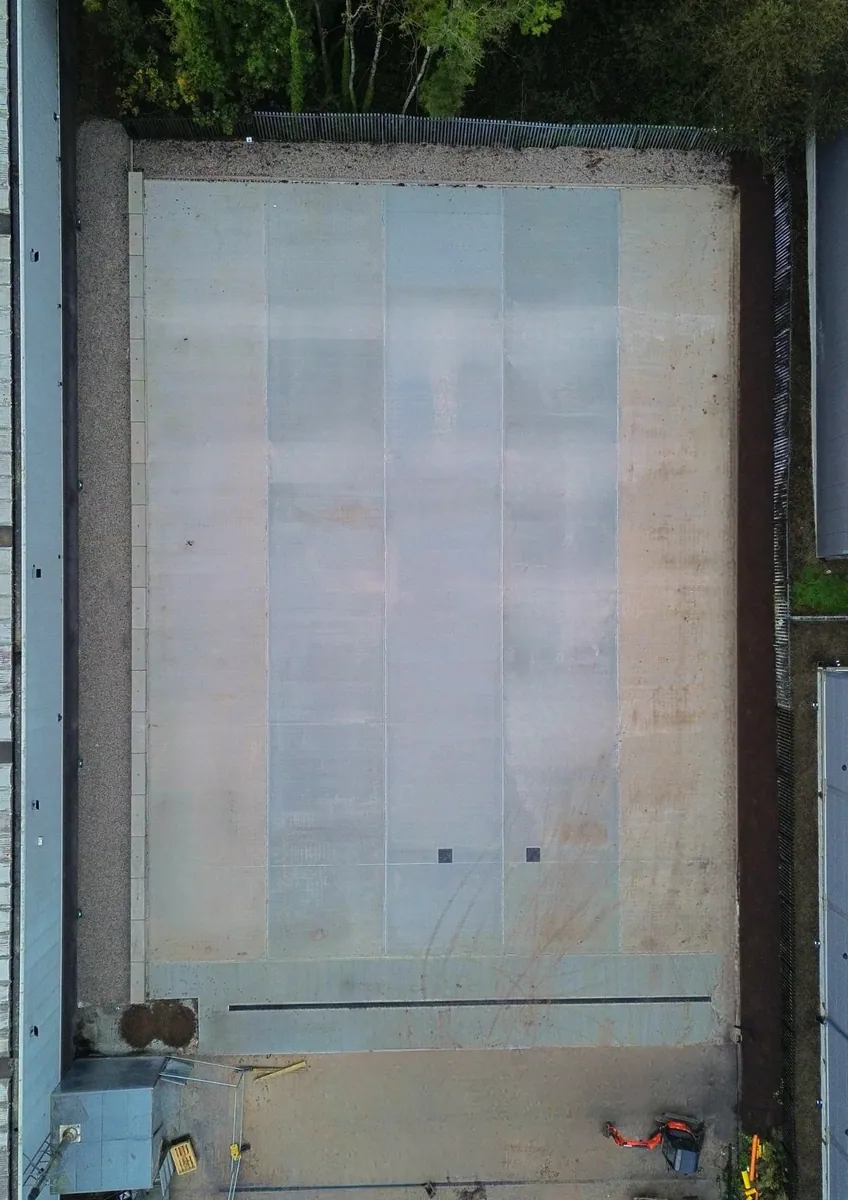
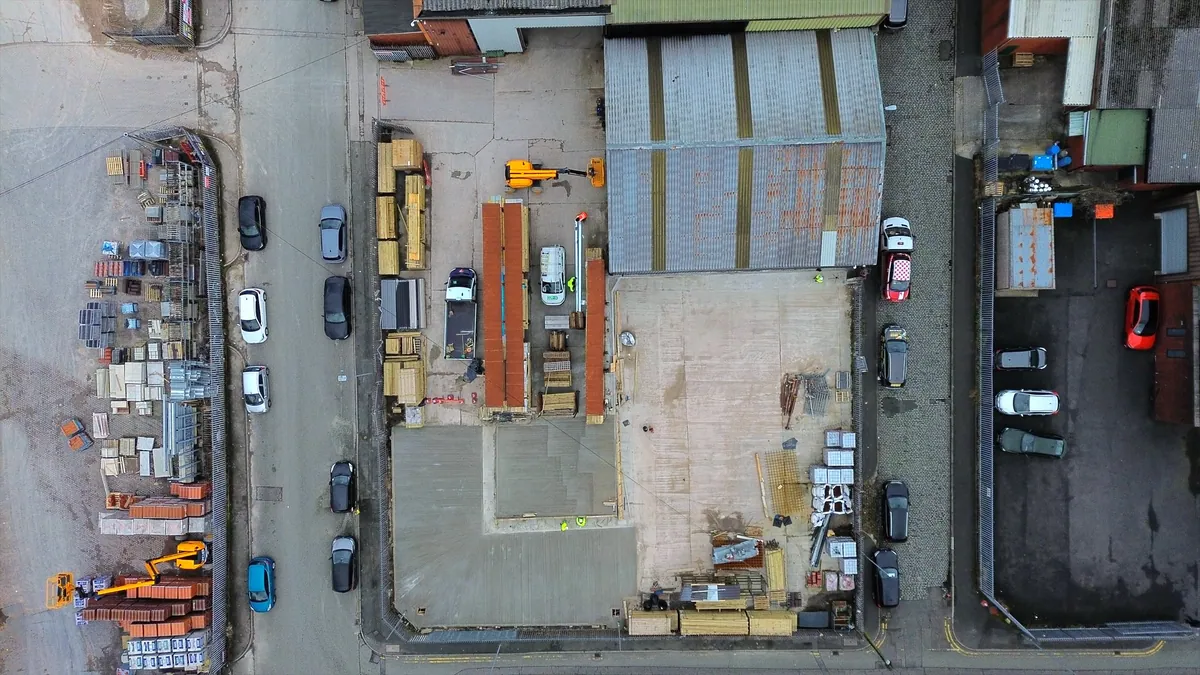
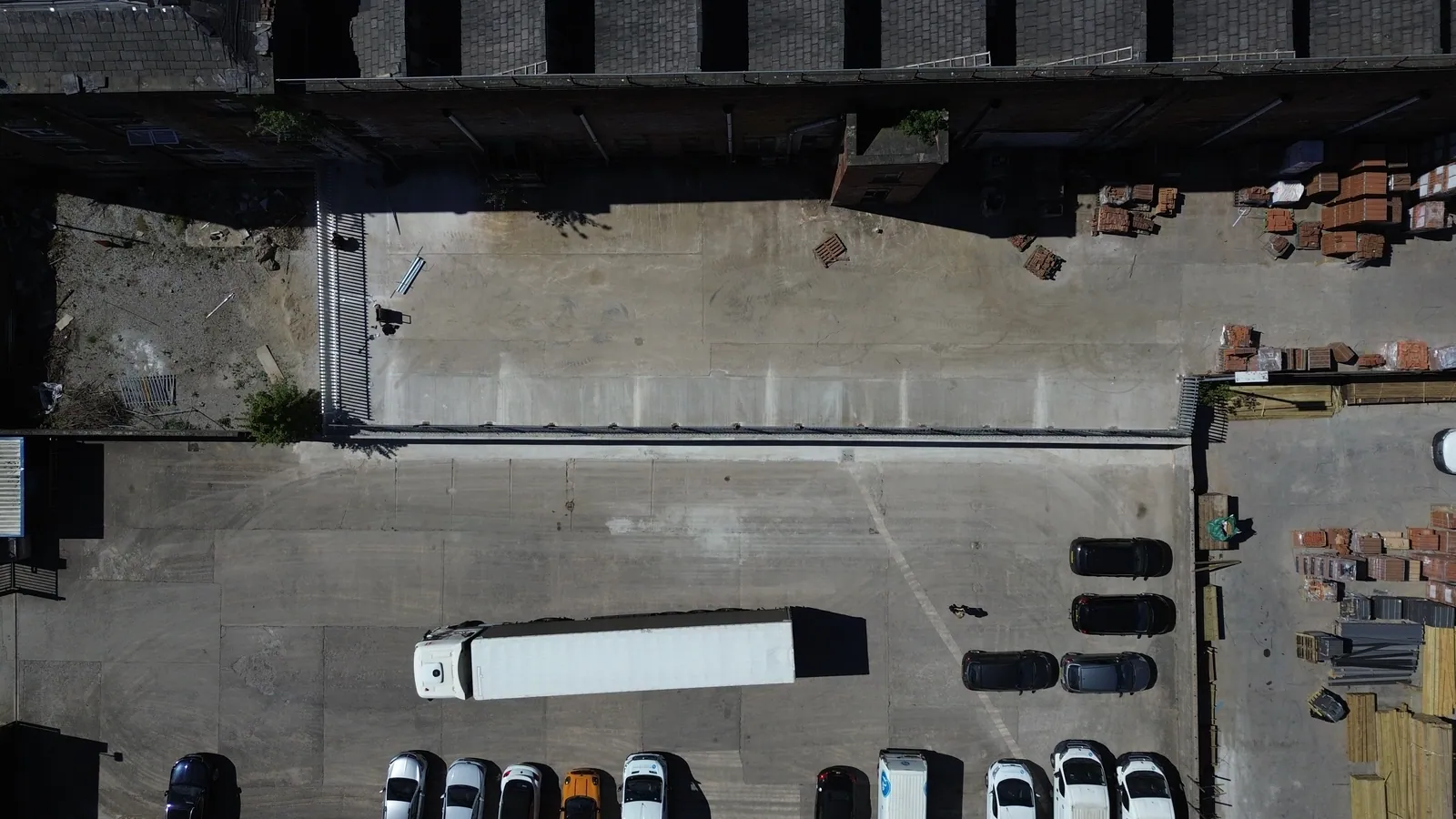
Hardstanding for warehouse yards
HGV parking, loading aprons and turning areas for distribution sites near the motorway, each part set out for the traffic it will carry.
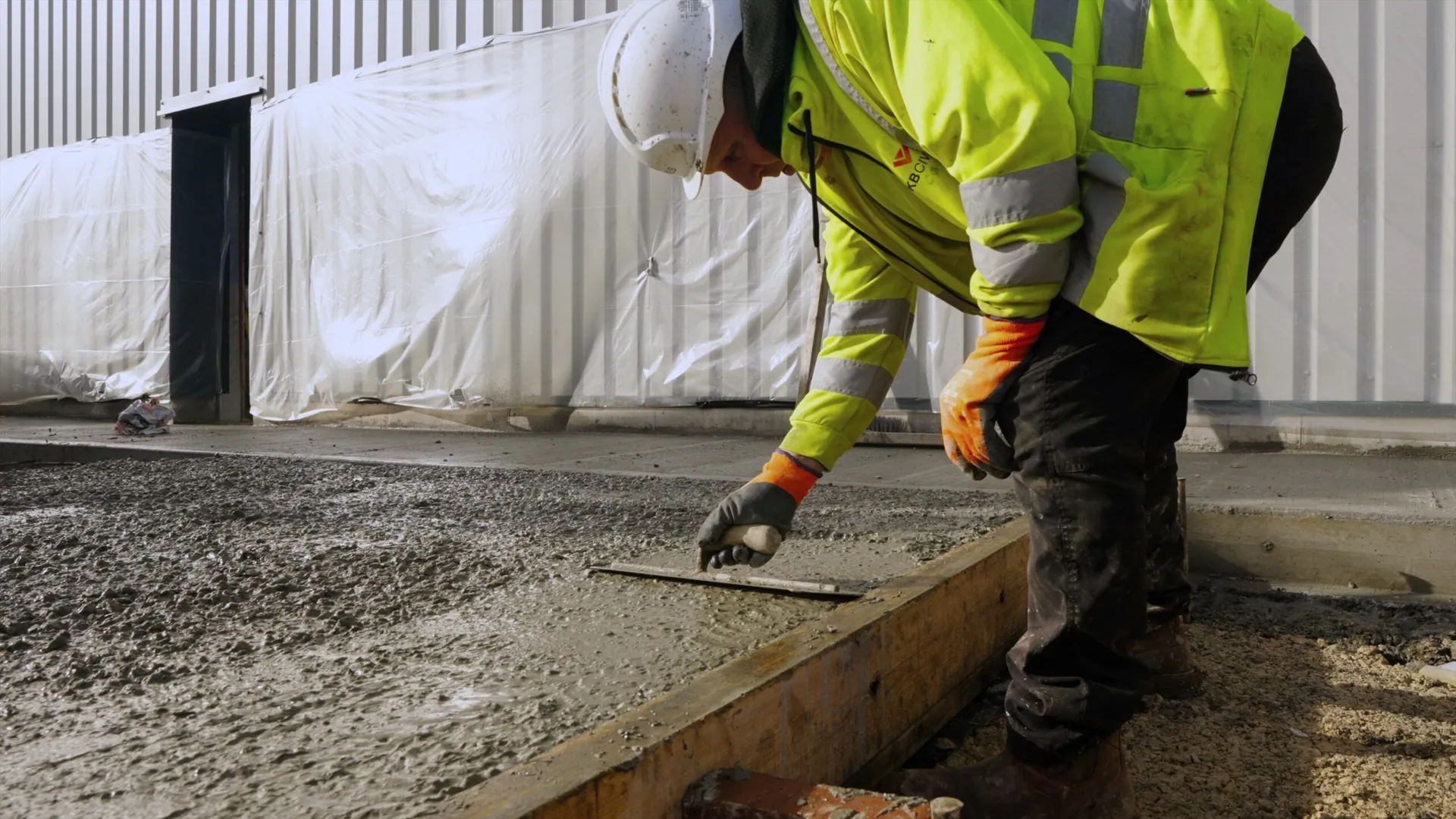
In Ben's words, “Formwork is the part of a concrete job that is rarely photographed or talked about, but it determines almost everything about the finished result.” Our own crew sets it, fixes the steel and pours, on every job.
Each area sized for its traffic
Loading aprons, HGV routes and forklift areas on a Nottingham yard carry different loads, so the survey maps what crosses each part before the slab thickness and joint layout are set. Ben's article on what formwork does for a slab explains why the forms matter as much as the mix.
Pours booked from the survey
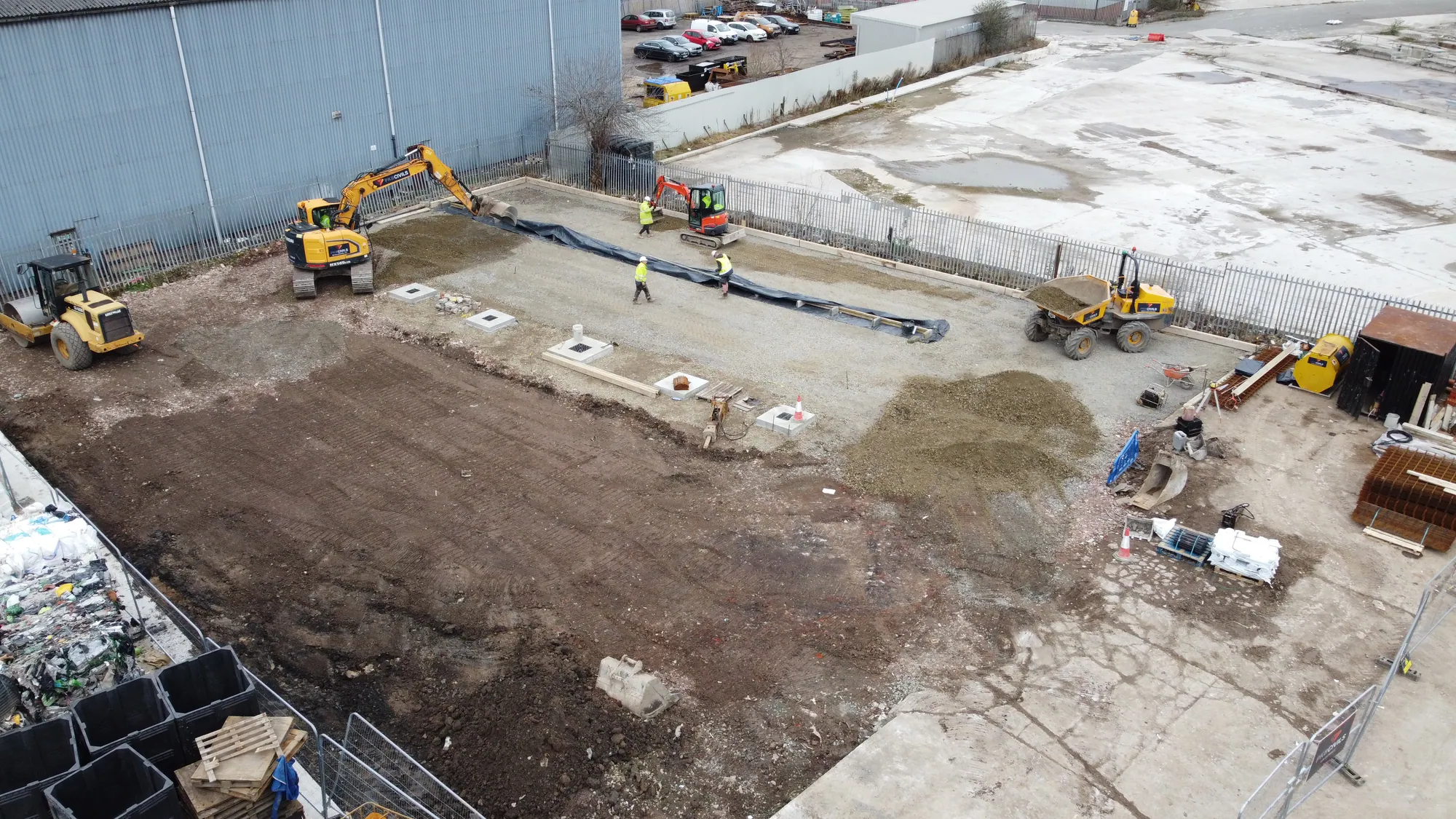
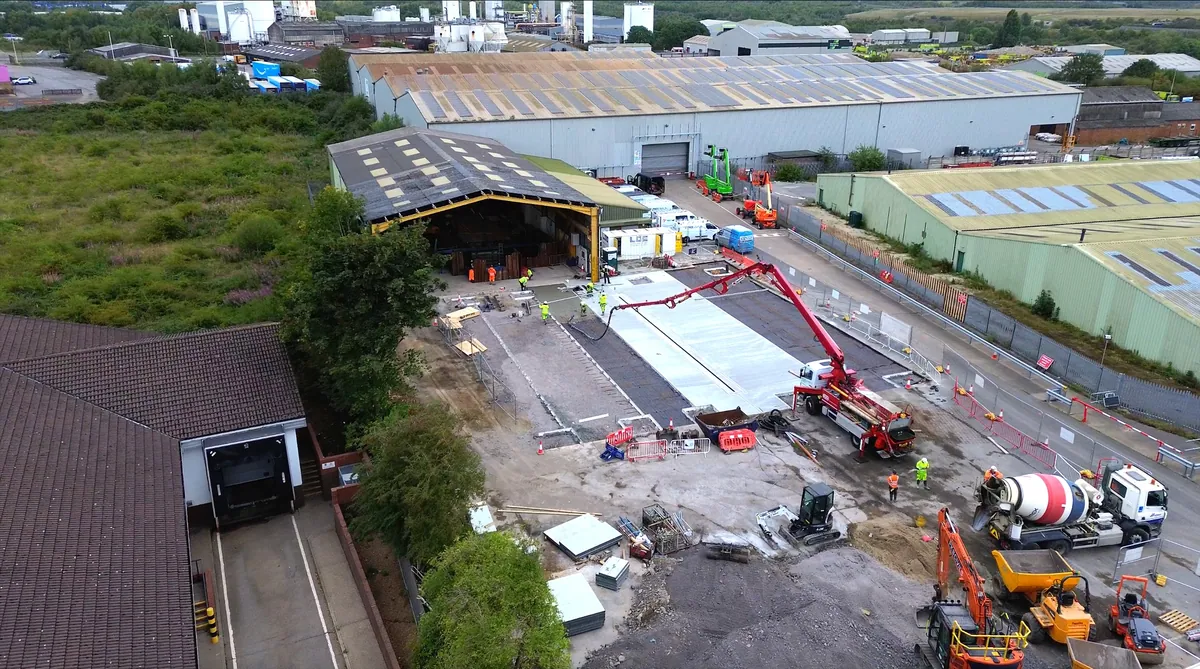
Our crews travel from Rochdale, so concrete deliveries, pump access and pour days are fixed at the survey, and each bay is sequenced so HGVs keep a way in.
Loads matched to the rock
On a yard in the caves area, a new plant base or racking line goes where the investigation says the rock can carry it, so the slab is built once.
Is your Nottingham yard holding you back?
Send us a short brief and a few photos. If it's a good fit, we'll arrange a free site survey and plan the work around how your site runs.
The demand, traffic and ground behind a Nottingham yard specification, from the published sources.
Space that's hard to come by
Agents quoted in the draft strategic plan put demand for large distribution sites along the M1 and the A roads from its junctions at very high, with suitable supply very limited. A bigger yard on land you already hold may come sooner than a move.
Estates that stay industrial
Because Policy EE2 safeguards the city's nine main estates for employment, a yard on one of them is likely to serve industrial tenants for years, which argues for a slab specified for heavy traffic from the start.
Water over a cave roof
The caves guide links wholesale roof failure almost always to water weakening the sandstone, so a yard's falls and drains protect the rock as well as the slab. See drainage in Nottingham.
Old fill by the river
Made ground along the Trent, built up into terraces, needs testing before a slab goes on it. See earthworks in Nottingham.
Our nearest projects to Nottingham
The jobs closest to Nottingham, with this kind of work first.
Feedback from the people who run these sites, shown with the job we did for them.
1 / 3
“
The fact you have a road sweeper coming on-site to clean up, is very much appreciated and shows attention to detail. Your team always work clean and tidy, and what really stood out is their communication and the fact nothing is too much trouble. The concrete repairs exceeded my expectations and should make the area much safer to work in.
Concrete repairsRochdale, Manufacturing, 4 to 5 weeksSee the job
“
Really impressed with your team and how you kept the yard open, the new works look fantastic. Brilliant job.
Yard extension and retaining wallBolton, Builders merchantsSee the job
“
Thanks so much to the team, great work as always. The yard is already making a difference to how we move around site.
Concrete yard extensionBolton, Manufacturing, 8 weeksSee the job
What ground and site conditions should you expect in Nottingham?
Buried concrete has a fairly easy time in much of Nottingham. The British Geological Survey reports sulphate attack unlikely in the sandstone under the city, and groundwater in the Trent valley gravels normally in sulphate class I, with class II in about a quarter of tests. River alluvium is more mixed, so on a yard by the Trent the ground investigation confirms the class before the mix is chosen, and the specification follows the result.
Over the caves, the question is load. Nottingham's caves technical guide puts most cave roofs in the city at 1 to 3 metres thick, and says current building regulations require at least 3 metres of solid, unweathered rock beneath any column bases or load-bearing walls. A yard slab is rarely the problem over the caves; the bases set into it can be.
Where heavier foundations are needed over caves, the BGS says the answers used most often are filling the cavities with concrete or digging down to the lowest cave floor and building deep basements. Either is a much bigger job than a yard slab. Pad and stem foundations on the cave floors, or a thick concrete raft straddling the caves, are the alternatives that keep them intact.
When concrete isn't the right call
A yard with sound slabs and a handful of failed joints may need a targeted repair and nothing more. Ben's point is that localised slab repairs, joint filling and surface treatments generally need no new formwork, which makes them a smaller job than relaying a bay, with less of the yard out of use while it is done.
Where water stands on the yard after rain, the drainage needs looking at before any concrete is broken out, as drainage in Nottingham explains. And for a new plant base or racking line on a city-centre yard, the rock beneath is investigated first, which groundworks in Nottingham covers.
A local track record
Postcode districts in Nottinghamshire where we've delivered: NG24.
Is a lightly loaded yard slab safe over a Nottingham cave?
Generally, yes. The city's caves technical guide says much thinner cave roofs are generally stable beneath lightly loaded floor slabs, and that wholesale failure is very rare and almost always linked to water weakening the sandstone. Heavier point loads are another matter, so bases, canopy columns and racking legs are placed from the investigation, and the drainage is built to keep water away from the rock.
Where are the large distribution warehouses around Nottingham?
The draft Greater Nottingham Strategic Plan notes large distribution warehouses built at Summit Park and Castlewood, which it places in Ashfield, and at Nottingham 26 near Eastwood. Yards at sheds like these carry heavy HGV traffic, so a repair is phased around the loading doors. We build and relay yards for sites of that kind, planned from a free survey.
Is East Midlands Gateway in Nottinghamshire?
No. The 2016 order that authorised the East Midlands Gateway Rail Freight Interchange, with its intermodal rail freight terminal and rail-served warehousing, works at M1 junction 24A and to the A453, and a new road from the A453 to the A6 bypassing Kegworth, places all of it in the District of North West Leicestershire.
Why do the edges of yard slabs at our Nottingham site crack so early?
Often because of the formwork. In Ben's words, “On industrial yards and hardstandings, poor formwork is often the root cause of slab edges that crack prematurely, joints that are misaligned, and surfaces that do not drain correctly.” Other causes are possible, so the survey of a Nottingham yard checks the joints, falls and sub-base too, and on cave ground whether the edge sits over a heavier base.
Is river ground near the Trent harder on concrete than Nottingham sandstone?
A little. The BGS reports sulphate attack unlikely in the sandstone, and Trent valley gravel groundwater normally in class I. The alluvium is generally class I too, but 20 per cent of samples reached class II and 10 per cent classes III and IV, and nearby fill may raise the values. So a yard on river ground gets its own samples before the mix is set.
Ben has over 10 years of experience in contracting management, specialising in pre-construction with some of the UK's largest contractors. Ben now leads pre-construction, project planning and client engagement.
We use cookies to see how people use our site and to measure our adverts. They're on unless you choose Reject all. Privacy policy
Necessary
Needed for the site to work, such as remembering your cookie choice. They don't store anything that identifies you.
Always active
Analytics
Google Analytics and Microsoft Clarity show us how people use the site, such as which pages they visit and where they came from, so we can improve it.
Advertising
HubSpot, Google Ads and WhatConverts cookies measure how our adverts perform and connect an enquiry or phone call to the advert or page that led to it.