1. Home
  2. Earthworks
  3. Nottingham

Earthworks contractors in Nottingham

A Nottingham dig can turn up Trent gravels, old fill terraces or weathered sandstone worth keeping, and PKB Civils is a specialist earthworks contractor for the commercial and industrial sites where that happens. Our operators and machines come from Rochdale, and what stays on site and what leaves is decided before the first load goes.

  • Keeping Clients Operational
  • Works Phased Around Your Site
  • Our Own Crews and Plant
  • Principal Contractor

Earthworks for Nottingham's commercial and industrial sites

Send your brief

For site and facilities managers who need a Nottingham yard dug out for a new slab, a plot levelled for building or soft ground taken out and replaced. Our own operators run our own machines, and we sort the dug material as it comes out, so the decision on reuse rests on what's actually there.

Nottingham digs change with the valley: sandstone across much of the city, Trent sand and gravel on the valley floor, and old fill built up into terraces along the river, each needing its own plan for what stays and what goes. What we take on is listed under our earthworks service.

2,000+Projects completed across the UK
150,000m²Concrete poured across all our jobs
40yearsFamily-run in Rochdale since 1986

Earthworks in Nottingham: what we do

Everything we can take on for you. Not sure which you need? Send your brief and we will tell you.

  • Reduce digs to formation

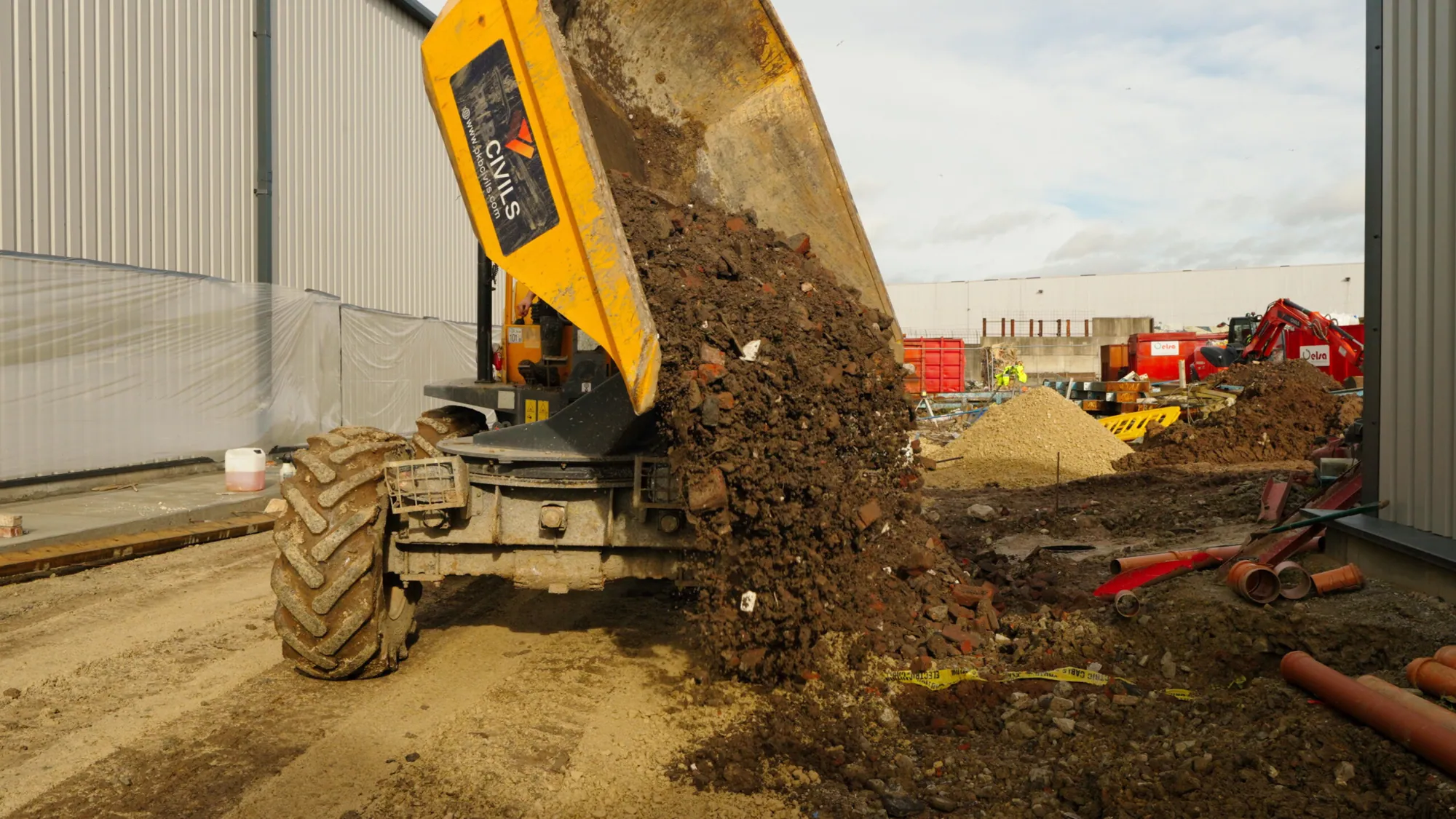
    Yards dug out to the level a new slab needs, with sandstone, gravel and fill kept in separate heaps so each can be judged for reuse.

    Send your brief
  • Sandstone back in as sub-base

    Weathered sandstone dug, stockpiled and, where tests allow, laid back under the new yard, saving tipper runs out and stone coming in.

    Send your brief
  • Cut and fill on the valley floor

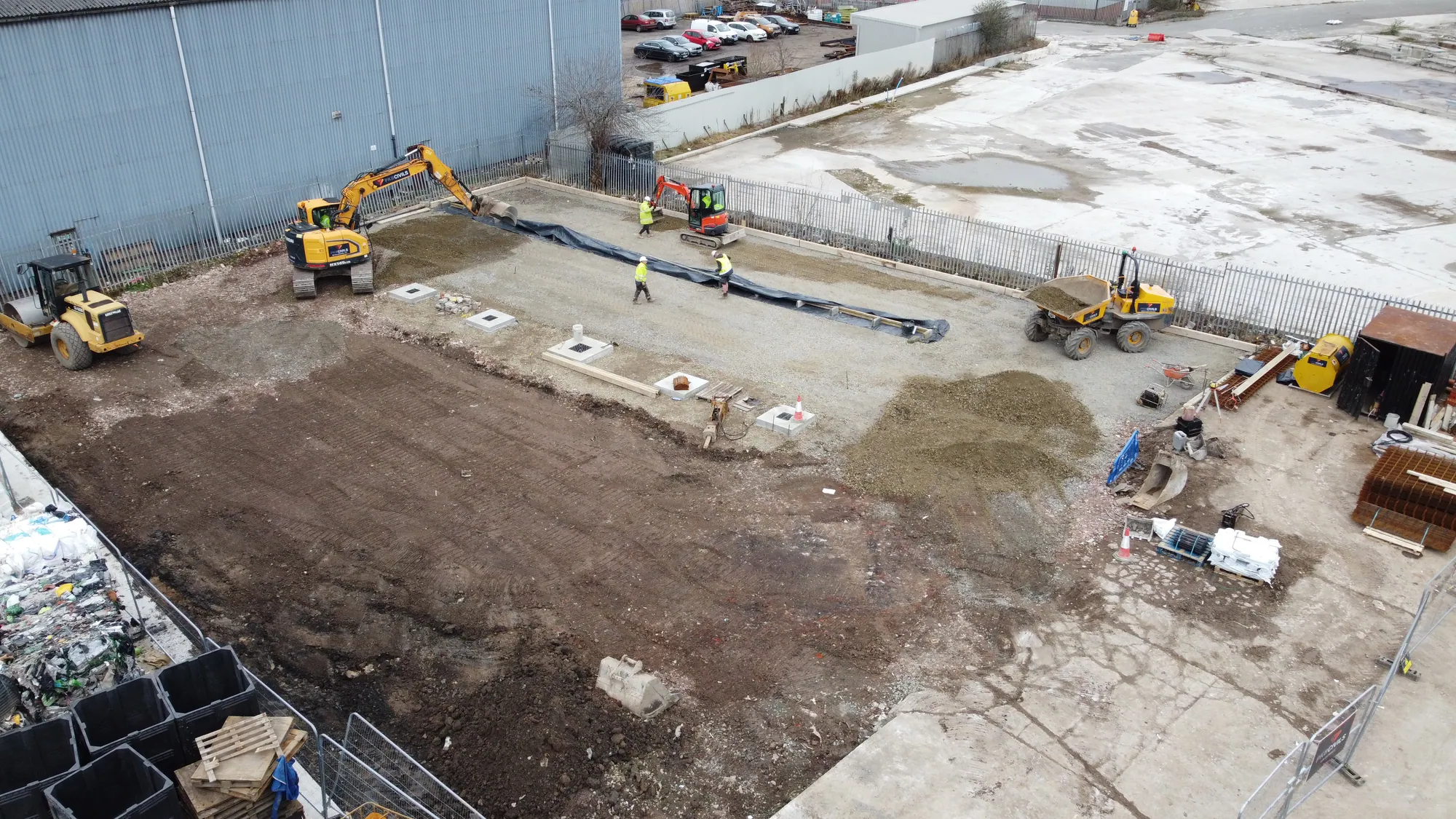
    Levels set on the Trent flats, with gravel faces held back while the dig is open and the fill placed in compacted layers.

    Send your brief
  • Old fill taken out

    Mixed fill dug out and replaced with compacted material where the investigation shows it can't stay under the yard.

    Send your brief
  • Muck-away with the right paperwork

    Material that can't stay classified, loaded and taken away under the waste rules, with lorry movements planned around your deliveries.

    Send your brief

Why Nottingham sites choose us for earthworks

The same people survey, plan and build your job, and your site keeps running while we do it.

Send your brief
  • Level starts at formation

    Ben's point is that an HGV yard base has to be level, even in thickness and properly jointed, and a slab can only be as even as the ground it is cast on. So the formation is trimmed and checked to level before any sub-base goes down.

  • Sandstone sorted as it's dug

    Weathered sandstone is kept apart from topsoil, fill and anything doubtful as it comes out, so the material that could go back in as sub-base isn't spoiled by what can't.

  • Lorries planned for a city site

    With our machines coming from Rochdale, muck-away and imported stone are booked at the survey, and tipper movements are fitted around your deliveries.

  • Spare teeth planned in

    Nottingham sandstone wears buckets and blades quickly, so a long dig in it is planned with spare wear parts and time for changes.

Earthworks planned for a Nottingham site?

Send us a short brief and a few photos. If it's a good fit, we'll arrange a free site survey and plan the work around how your site runs.

Send your brief

What turns up in Nottingham digs

Ground and rules a Nottingham earthworks job can meet, with the source or the page behind each.

  • Gas under old valley fill

    The BGS warns, in general terms, that where fill was tipped on once-marshy river-valley ground, the peat, organic soils and alluvial clays beneath are probably settling and generating methane, so a valley-floor plot with fill on it is checked for gas before the machines start.

  • A tip that can't be built on

    The BGS considers colliery spoil tips, such as the steep-sided tip at Calverton Colliery in Gedling, unsuitable sites for building, and levelling one doesn't change that.

  • Raising land in a floodplain

    Raising ground beside the River Leen or the Day Brook, in land that floods, can mean replacing the flood storage the new levels take away, which shapes how much fill comes in. See drainage in Nottingham.

  • A cave in the cut

    In and around the city centre the sandstone holds caves, so a bulk dig there waits for the investigation and follows the plan it produces. See groundworks in Nottingham.

What our clients say

Feedback from the people who run these sites, shown with the job we did for them.

1 / 3
Concrete repairs
The fact you have a road sweeper coming on-site to clean up, is very much appreciated and shows attention to detail. Your team always work clean and tidy, and what really stood out is their communication and the fact nothing is too much trouble. The concrete repairs exceeded my expectations and should make the area much safer to work in.
Concrete repairsRochdale, Manufacturing, 4 to 5 weeksSee the job

What ground and site conditions should you expect in Nottingham?

Near the surface, the Sherwood sandstone around Nottingham weathers to sand as deep as about 8 metres. The BGS memoir says it can usually be dug by scraper or bulldozer, with ripping in the harder beds, that its abrasive quartz grains wear blades quickly, and that it can be reused as road sub-base.

On the valley floor, Trent sand and gravel lies beneath the alluvium, under an overburden generally less than 1 metre thick, though locally much deeper, according to the memoir. The deposit itself is thicker in places such as Colwick and Wilford, and about half of it is sand.

Fill is the ground type that needs most care. The BGS identifies major spreads in the Dunkirk to Lenton Lane area and south of Wilford Road, built up into artificial terraces several metres above the Trent floodplain. Riverside/Lenton Lane is one of the estates the city keeps for industry, so a yard project there is likely to dig into fill.

Around Nottingham the old pits also left colliery spoil, or mine stone, which the memoir says commonly contains pyrite that may oxidise to produce sulphurous chemicals, along with combustible waste coal. Offered as cheap fill for a yard platform, it gets tested before any of it goes in.

When earthworks isn't the right call

One failed patch doesn't need a reduce dig across the whole yard. Ben's experience is that filling a pothole buys only a few months when the layer under it has given way, so the survey finds how far the failure runs before choosing between a local dig to sound ground and a bigger one. His reasoning is in the cost of reactive yard repairs.

And where water stands on the yard, the drains come before the dig, because rebuilding a sub-base that the next storm will soak again only repeats the failure. For a Nottingham yard where water is the cause, start with drainage in Nottingham.

A local track record

Postcode districts in Nottinghamshire where we've delivered: NG24.

See them on the map
2,000+Projects completed across the UK
1986The year PKB started in Rochdale

Questions about earthworks in Nottingham

Can't see your question? Call us or send your brief and we'll come back to you.

Send your brief
Can sandstone dug on a Nottingham site go back under the new yard?

Often, once it has been tested. The British Geological Survey says the weathered Sherwood sandstone can be reused as road sub-base. Whether it can stay without being treated as waste depends on the rules for reusing dug material, so we keep it clear of topsoil and fill and plan the reuse before the dig starts.

How deep is the sand and gravel under Trent-side sites at Colwick and Wilford?

Deep in places. The BGS memoir records Trent valley sand and gravel over 4.5 metres thick in the Colwick area and 10.8 metres thick in a borehole at Wilford. A reduce dig there is likely to stay in gravel, which affects how the faces are held while the dig is open and how much of the material can be reused.

How steep can a cutting in Nottingham sandstone be left?

Steep only for a short time. The BGS memoir says the sandstone stands at 70 degrees only in the short term, and that cuts at 35 degrees, protected from runoff, are needed for long-term stability. So a level change on a yard is either battered back to that kind of slope or held by a retaining wall.

Can a new yard go on the fill terraces around Lenton Lane?

It can, once the fill has been investigated. Those terraces were built up from whatever was tipped there, so trial pits spread across the footprint show what can stay. What can't is dug out and replaced with compacted material before any sub-base goes down.

Is the Definition of Waste code still the one to follow on a Nottingham dig?

For now, yes. The Environment Agency is working with CL:AIRE on a new version of the code, to be published as the Soil Passport Scheme: Code of Practice. It is expected to keep the existing mechanisms and scenarios for reusing soil while making their requirements clearer, so material tested and recorded today should fit the new scheme too.

Ben Duffy

Written by Ben Duffy

Director, PKB Civils. Page reviewed

Ben has over 10 years of experience in contracting management, specialising in pre-construction with some of the UK's largest contractors. Ben now leads pre-construction, project planning and client engagement.

Got a yard that's holding you back?

Tell us what's happening on site. We'll review your brief and, if it's a good fit, arrange a free site survey.

Call usSend your brief