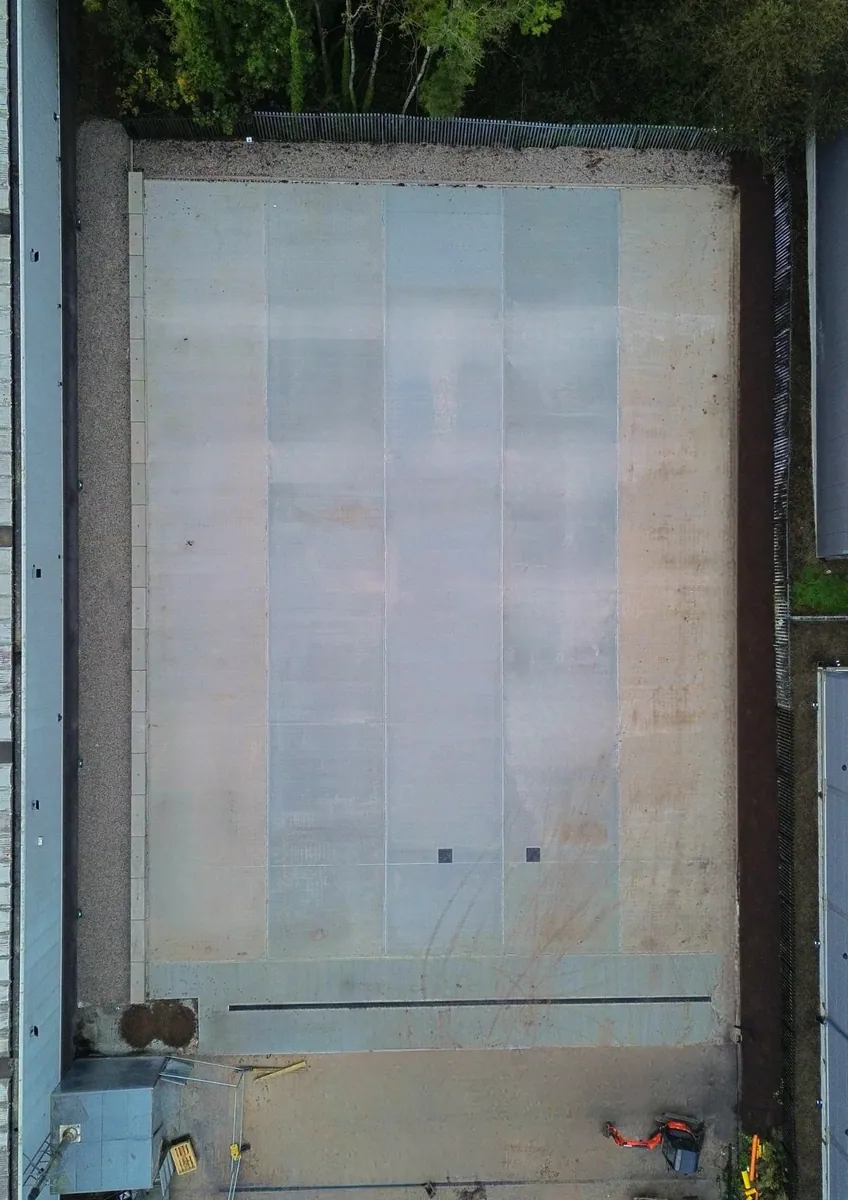
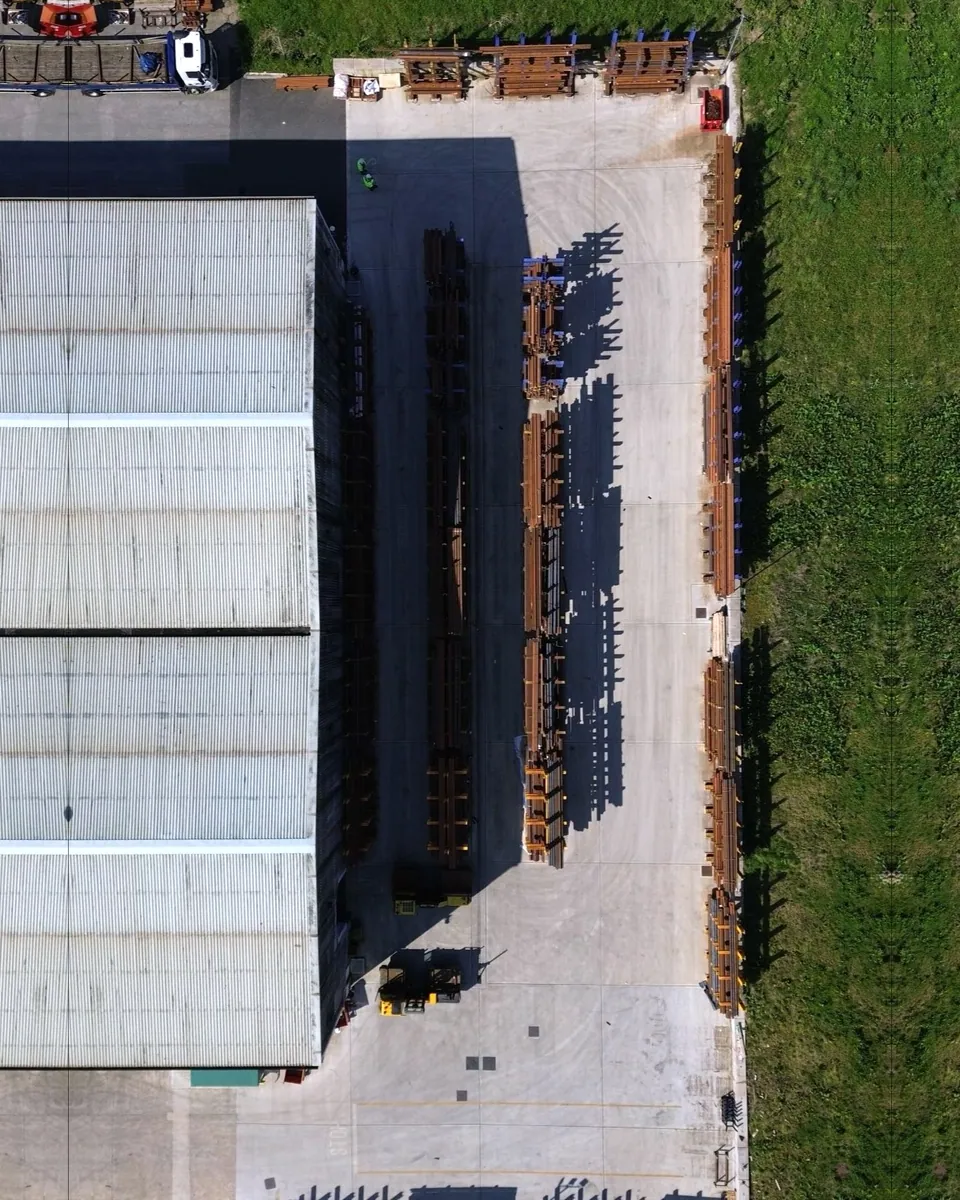
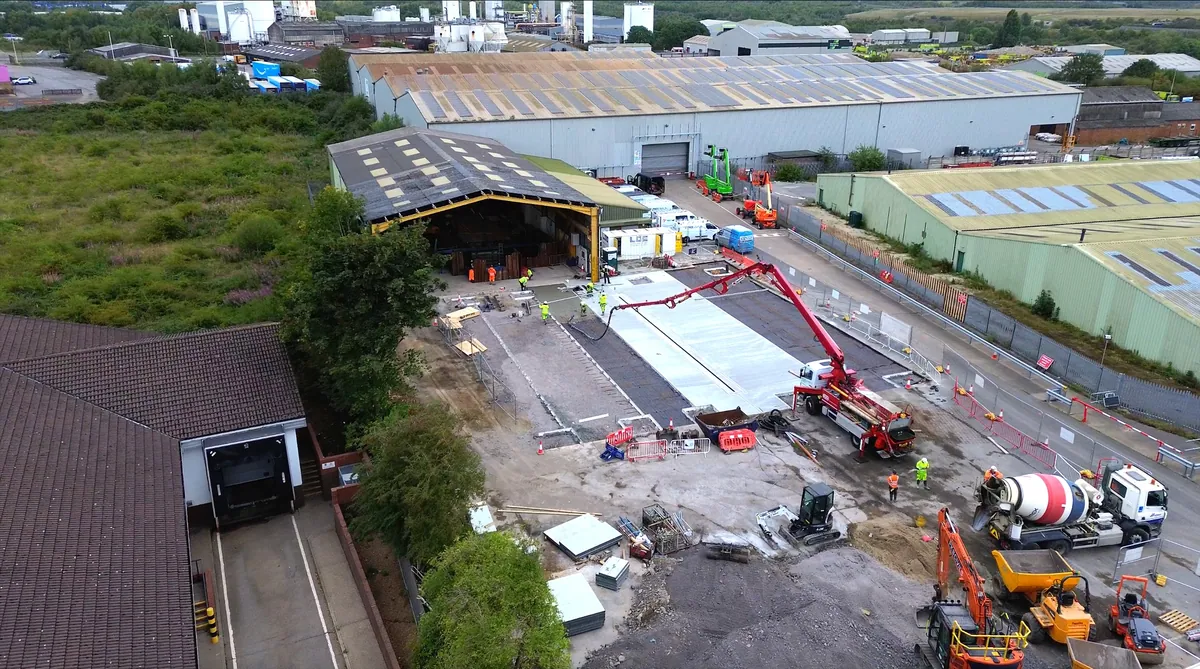
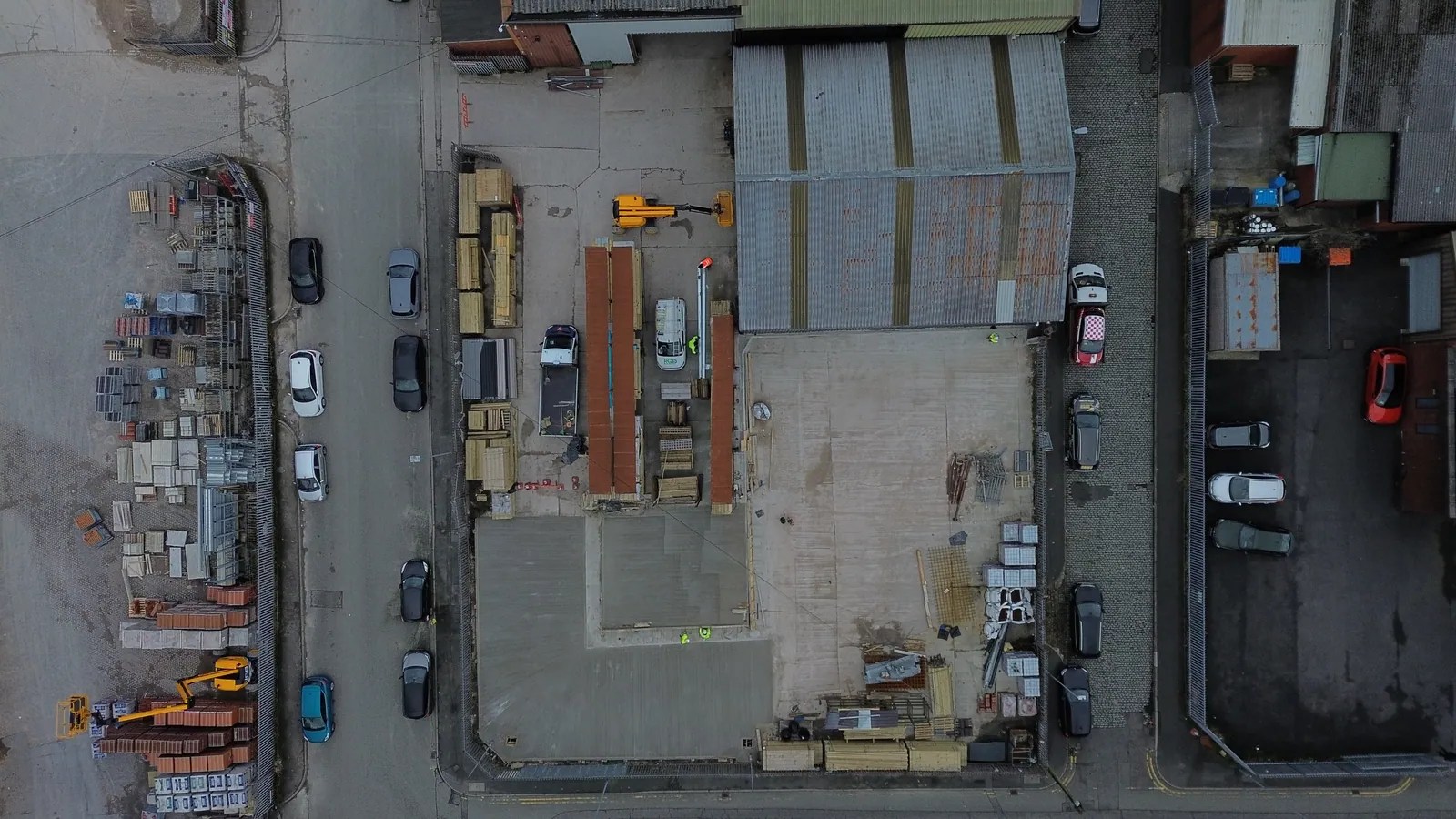
Really happy with the result. Your team were great to have on site and we were trading throughout which was important. Thank you.

Yard extension and retaining wallRochdale, Builders merchants, 3 weeksSee the job

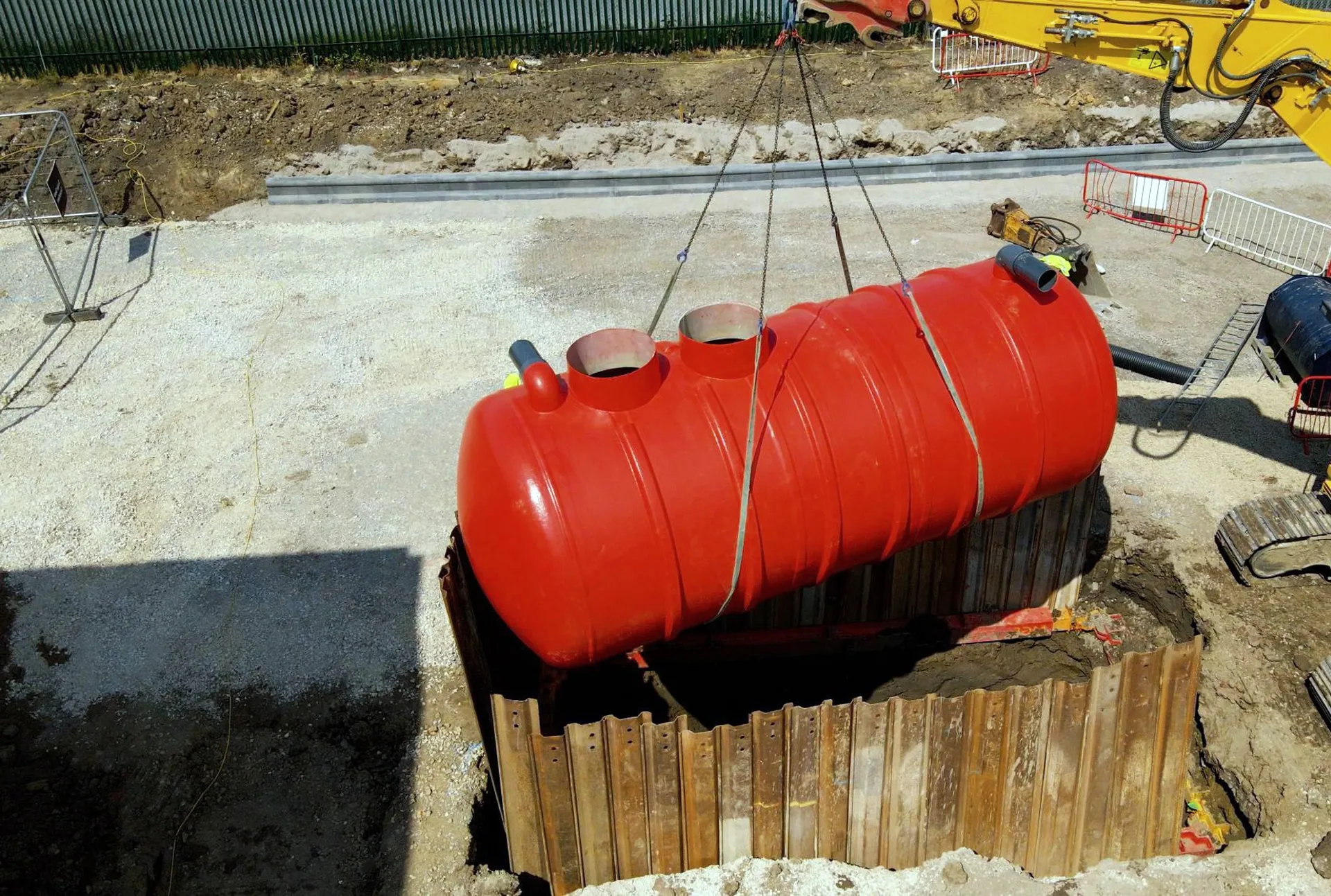
PKB Civils is a specialist commercial drainage contractor for industrial, distribution and trade yards in Nottingham, where a leaking drain over the sandstone caves is a ground risk as well as a flooding one. We lay channels, separators and storage with our own crews from Rochdale, timed around the vehicles that use the yard.
For site and facilities managers with a Nottingham yard that floods, a separator due for replacement or an extension that needs new drainage. We work on commercial and industrial yards, laying channels, gullies, separators, attenuation and connections with our own crews and plant, and reinstating the concrete around them ourselves.
Severn Trent is the sewerage company, and its Lower Trent plan lists the Nottingham catchment, treated at Stoke Bardolph, with a population of 606,500. Below a Nottingham yard, where the water goes matters as much as how quickly it leaves, as the next section explains. What we take on is set out under our drainage service.
Everything we can take on for you. Not sure which you need? Send your brief and we will tell you.
Channels and gullies sized for the yard's runoff and the wheels that cross them, set to falls that clear water off the slab.
Send your briefOil separators and silt traps where vehicles refuel, wash or stand, so what leaves the yard is fit for the sewer.
Send your briefTanks or oversized pipes under the hardstanding, holding storm water back so a redeveloped yard releases less than the old one did.
Send your briefOlder runs jetted and surveyed on camera in the caves area, so a cracked pipe is repaired before it soaks the sandstone.
Send your briefNew connections and diversions for yard extensions, agreed with Severn Trent before the yard or the road is opened.
Send your brief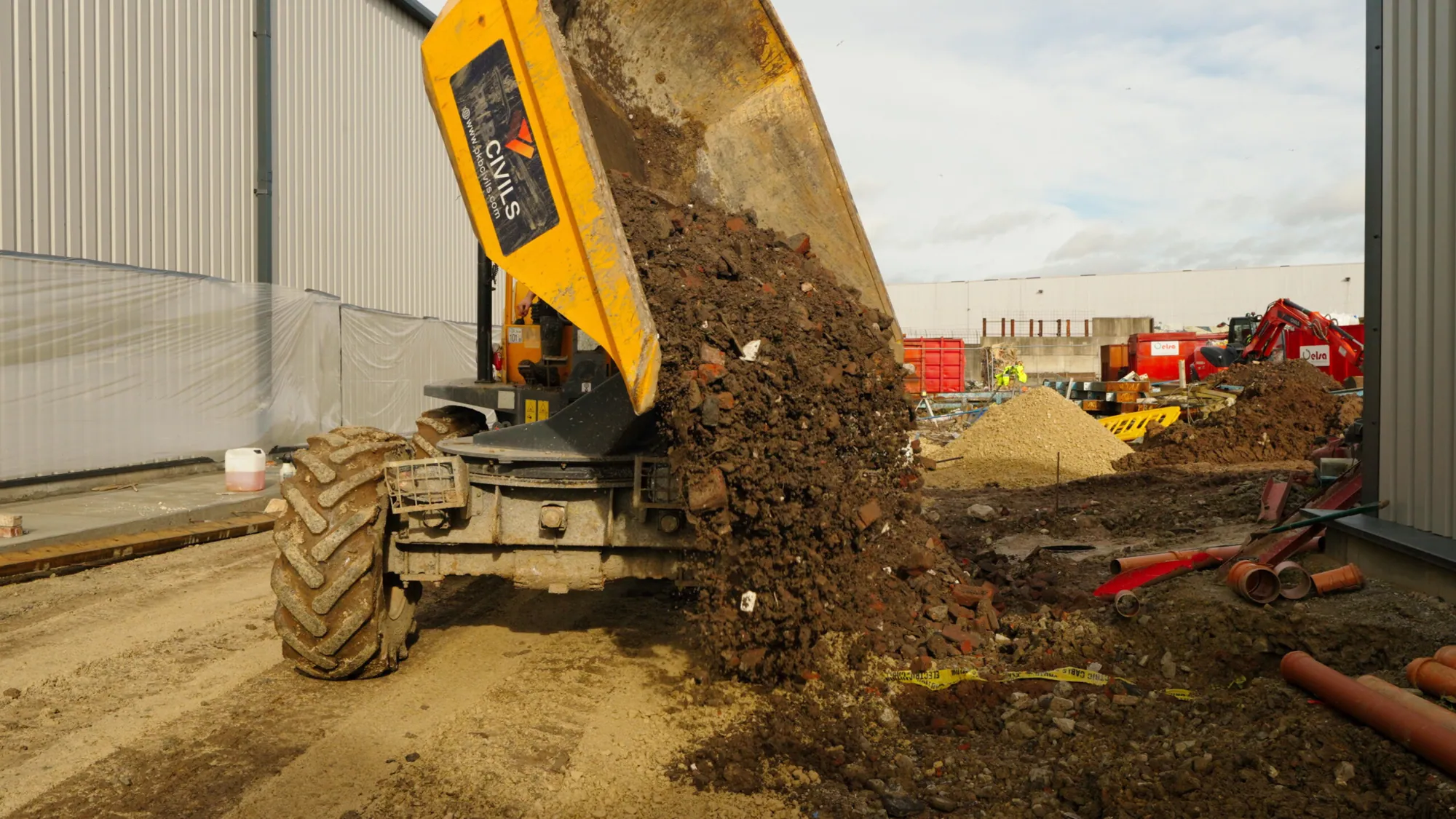
The same people survey, plan and build your job, and your site keeps running while we do it.
Send your briefBen's view is that poor drainage, more than the weight of the vehicles, is what makes yard concrete fail early, and he sets out why in his article on drainage and yard concrete. On a Nottingham yard the same water can reach the rock, so the drains get the first look.
A yard that comes under Policy CC3 has its storage and flow control designed in from the survey, and a major scheme is drawn up knowing the city council will review its surface water drainage.
New runs go in a length at a time, each backfilled and reinstated before the next is opened, so vehicles keep moving around the work.
Our crews come from Rochdale, so the survey fixes where the connections go, what Severn Trent needs and the order of work before anyone sets off.
Send us a short brief and a few photos. If it's a good fit, we'll arrange a free site survey and plan the work around how your site runs.
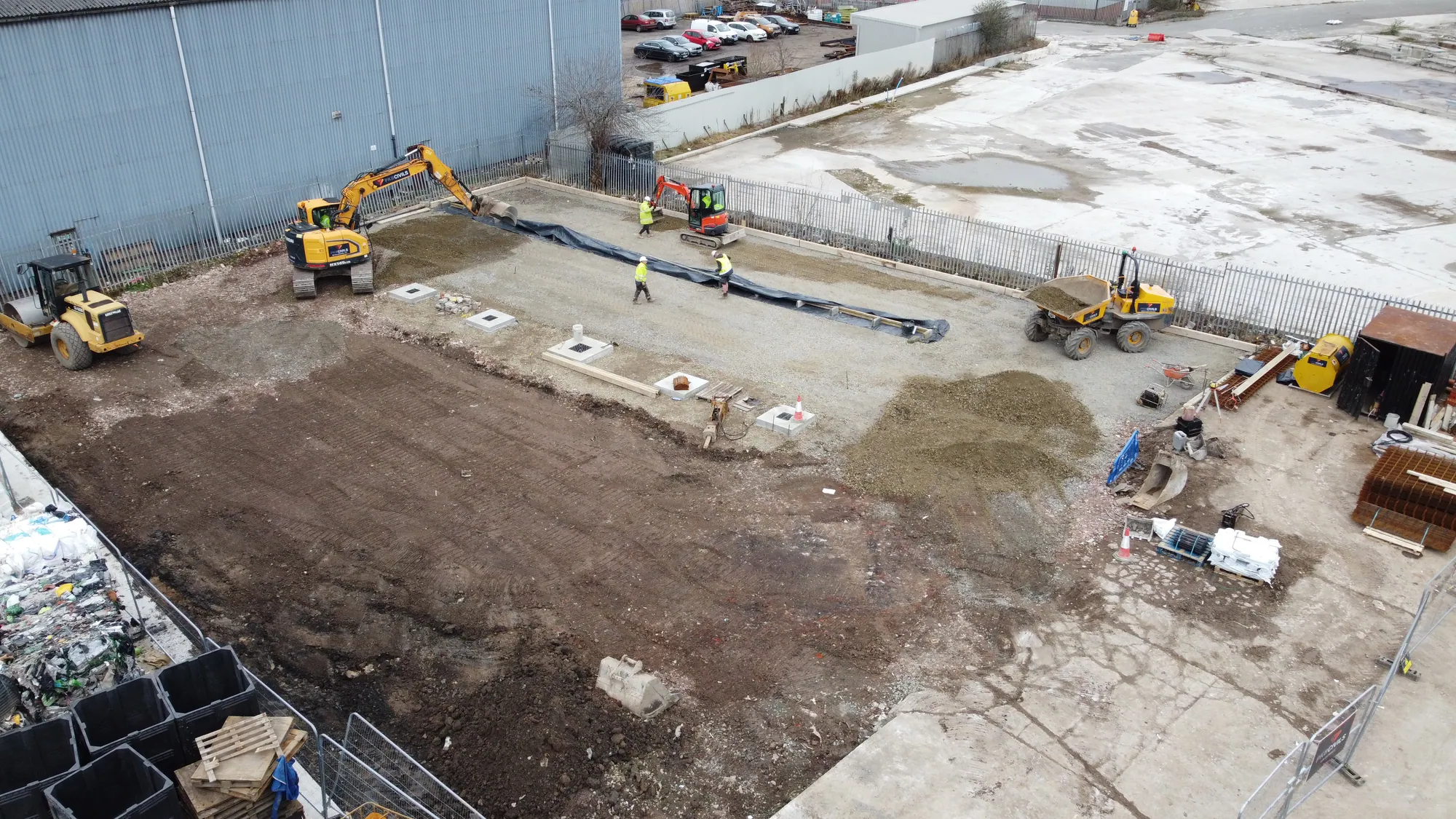
The surface water asks a Nottingham yard scheme meets, with the source for each.
The city's Policy CC3 asks for a two-stage SuDS treatment to improve the quality of the water leaving a site, so on a new yard a separator may be only half of the answer.
On a plot that has never been built on, the same policy expects runoff to stay at greenfield rates once the yard is down, which on hard surfacing generally means storage beneath it.
Building in the functional floodplain of the River Leen or the Day Brook means replacing the flood storage the yard takes up, level for level, under Policy CC3.
Severn Trent's Lower Trent plan records a blue-green infrastructure project on the Day Brook, with the city council, that reduced flood risk to 160 properties. A new yard in that catchment is expected to add as little runoff as it can.
The jobs closest to Nottingham, with this kind of work first.
Feedback from the people who run these sites, shown with the job we did for them.
Really happy with the result. Your team were great to have on site and we were trading throughout which was important. Thank you.

The fact you have a road sweeper coming on-site to clean up, is very much appreciated and shows attention to detail. Your team always work clean and tidy, and what really stood out is their communication and the fact nothing is too much trouble. The concrete repairs exceeded my expectations and should make the area much safer to work in.

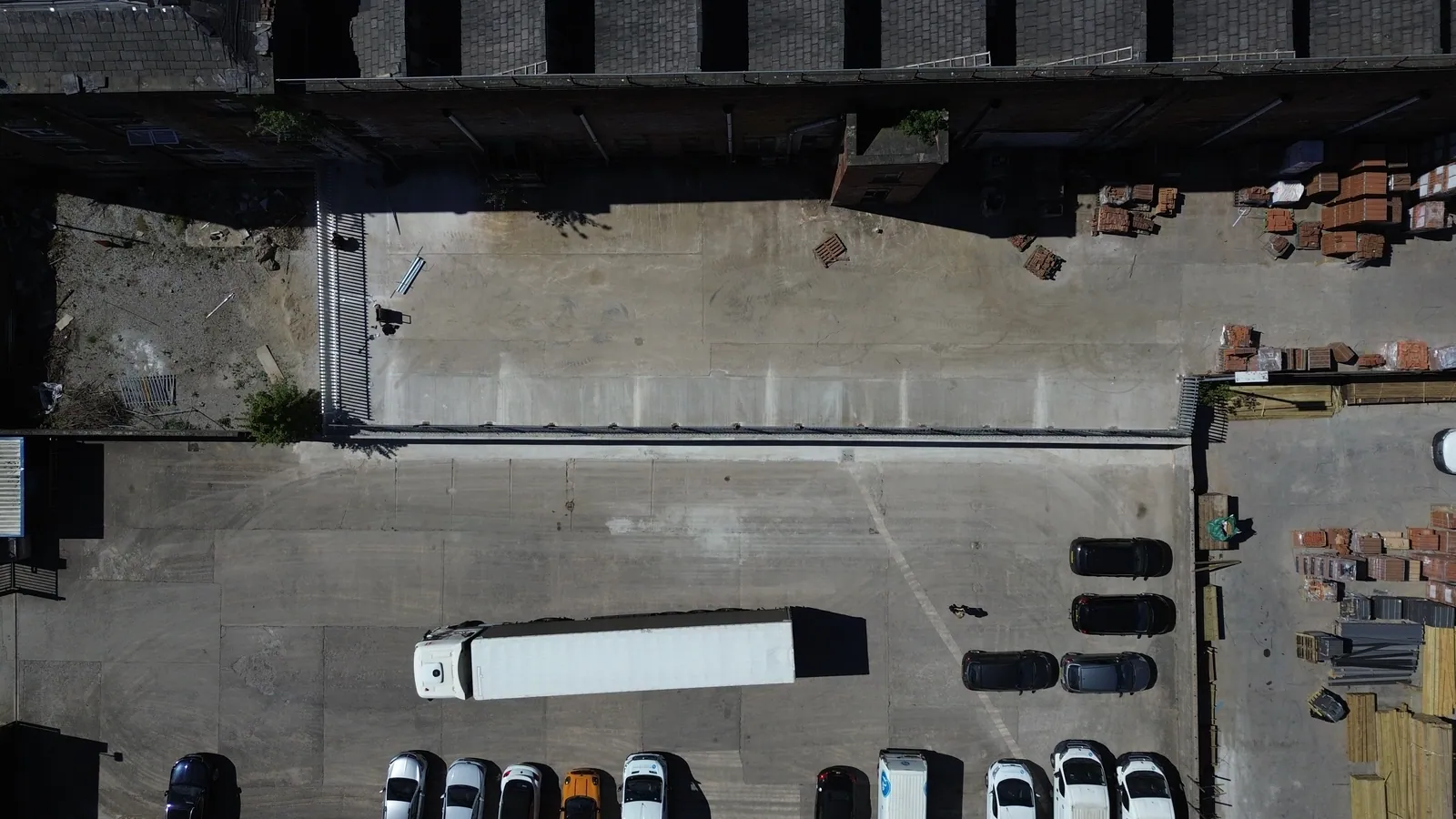
Really impressed with your team and how you kept the yard open, the new works look fantastic. Brilliant job.

Much of Nottingham sits on sandstone with caves in it, and water is what most often brings a cave roof down. The council's caves technical guide says the vast majority of recorded roof failures appear to have been caused by water, most commonly from a broken pipeline, water main or drain, because saturation greatly reduces the sandstone's strength. Over the caves, a cracked channel or a leaking run under the yard is a stability risk as well as a drainage one.
The Trent shapes the south of the city. In 1947 it flooded 86 factories in the city centre, along with thousands of properties and miles of road. Since 2012 the Environment Agency's Left Bank defence has run for 27 kilometres along the river from Sawley to Colwick, protecting thousands of homes and businesses.
North of the centre, the River Leen and the Day Brook are where the city's drainage asks are tightest. As Lead Local Flood Authority, the council wants discharge there as close to greenfield runoff rates as possible, and it is a required consultee on the surface water drainage of every major development in the city. A yard extension in that catchment is designed with both in mind from the survey.
Not every wet patch means new drainage. Ben separates puddles that have gone within an hour or so from water still standing hours after the rain, and only the second points to a fault worth digging for.
Even then, a new system may not be needed. In his experience channels that block or collapse rarely do it all at once: they decline over a year or more, with the standing water a little worse each winter, so jetting and a camera survey may show a repair will do.
And if water reaches the yard from the Trent in flood, yard drainage won't hold it back; that becomes a question of site levels and flood risk for the design team.
Postcode districts in Nottinghamshire where we've delivered: NG24.
See them on the map
Can't see your question? Call us or send your brief and we'll come back to you.
Send your briefEvery major development in the city. As Lead Local Flood Authority the council is a required consultee on surface water drainage, and major development includes buildings of 1,000 square metres or more and sites of 1 hectare or more. A smaller yard job won't reach that review, though the city's runoff policy can still apply if it needs planning permission.
Think hard before using one there. Saturation greatly reduces the strength of the sandstone, which is why the council's caves technical guide puts most recorded roof failures down to water, and a soakaway is built to put water into the ground. Over the caves, a sealed system to the sewer, with whatever storage the runoff rules need, is the cautious design, and the engineer makes the final call.
With jetting and a camera survey. The runs are cleared, then a camera goes through them to find cracks, displaced joints and collapses, so only the faulty length is dug up. Over Nottingham's caves that matters twice: it finds a leak that could be soaking the sandstone, and it keeps the breaking out, and the machines doing it, to the smallest area.
Severn Trent, for the public sewers. Its drainage plan for the Lower Trent covers the Nottingham catchment, treated at Stoke Bardolph. The city council's part is as Lead Local Flood Authority, setting the surface water asks for new development. A new yard connection is agreed with Severn Trent before we dig.
If the work needs planning permission, it can. Policy CC3 asks brownfield development to cut surface water runoff rates by at least 30%, unless that isn't technically feasible or viable, and to get as close to greenfield rates as possible. Whether a rebuild needs permission depends on the scheme, so check with the council early; the storage can be designed either way.

Ben has over 10 years of experience in contracting management, specialising in pre-construction with some of the UK's largest contractors. Ben now leads pre-construction, project planning and client engagement.
Tell us what's happening on site. We'll review your brief and, if it's a good fit, arrange a free site survey.