What ground and site conditions should you expect in Leicester?
Five Main River catchments run through the city, the 2022 flood risk assessment records: the River Soar and the Braunstone, Melton, Saffron and Willow brooks. For a yard, which of them takes your water, directly or through the sewer, decides how the outfall behaves in a storm.
Leicester floods often come as a double peak, the SFRA explains. The urban brooks respond to rain within 5 hours, and a second, larger peak arrives 12 to 24 hours later as runoff from the rural headwaters in south Leicestershire reaches the city. The Soar and the Sence meet south of it, in Enderby.
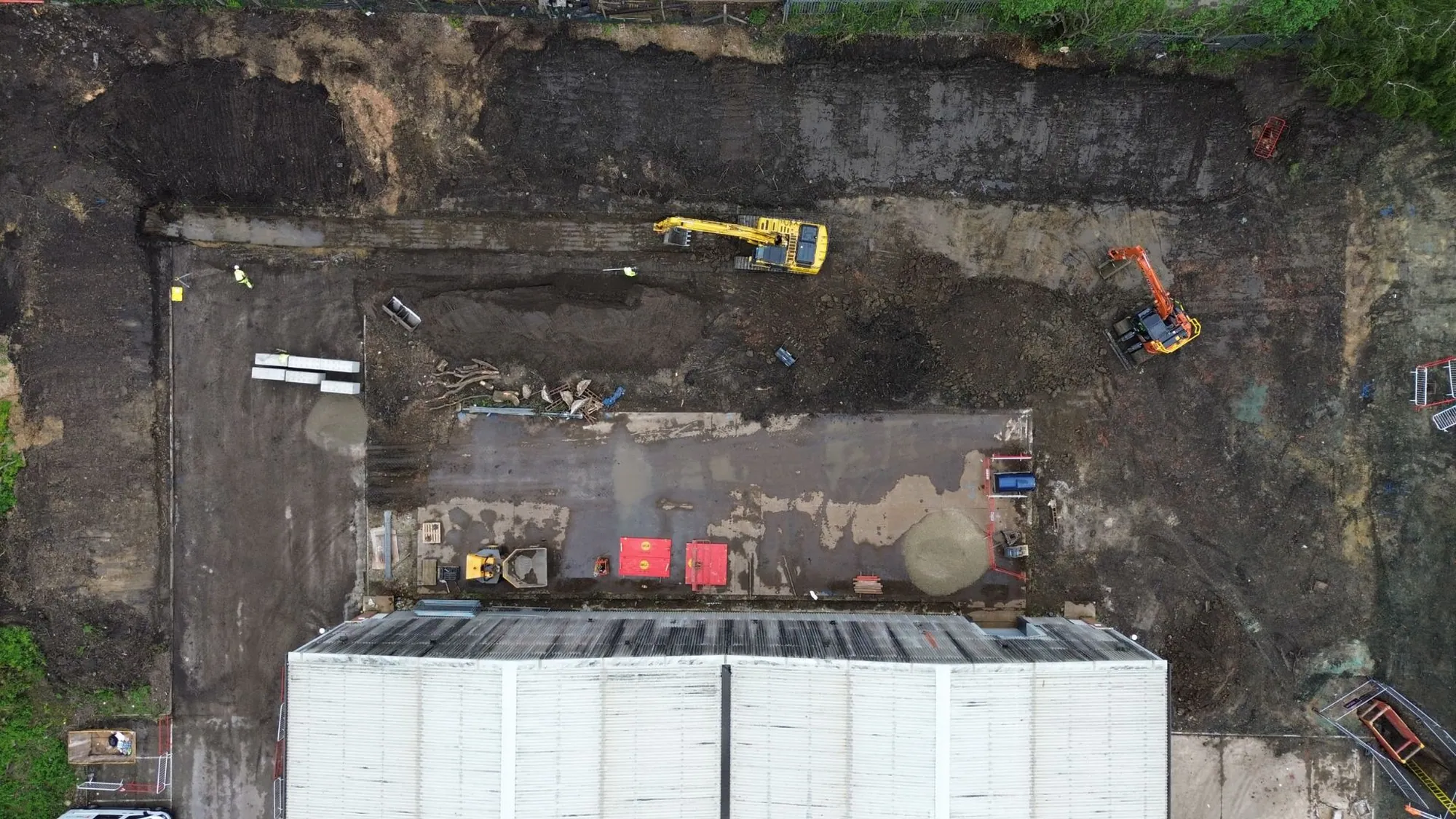
That second peak is the one a yard outfall has to be designed round. A pipe that discharged freely while the rain was falling can be facing high water in the brook the next morning, after the storm has passed. On low ground beside a brook, the level of the outfall, the position of the separator and how far the yard falls towards the water all come into it.
Soil and geology add a further limit: the same assessment says they restrict infiltration across much of the city, so a yard's water usually has to be stored and released.
When drainage isn't the right call
Not every wet yard needs new drainage. Ben makes a clear distinction between surface water that comes and goes and water that sits for hours, and a condition survey shows which one you have. A silted channel or gully may only need jetting, with a camera run to prove the pipe beyond is sound.
When the Soar itself is over its banks, no yard drain will carry that water away; on low ground near the river, a flood plan, and what's stored at floor level, deserve as much thought as the pipework. Lauren's fifteen-minute yard walk is a quick way to see where water lies on your own yard.