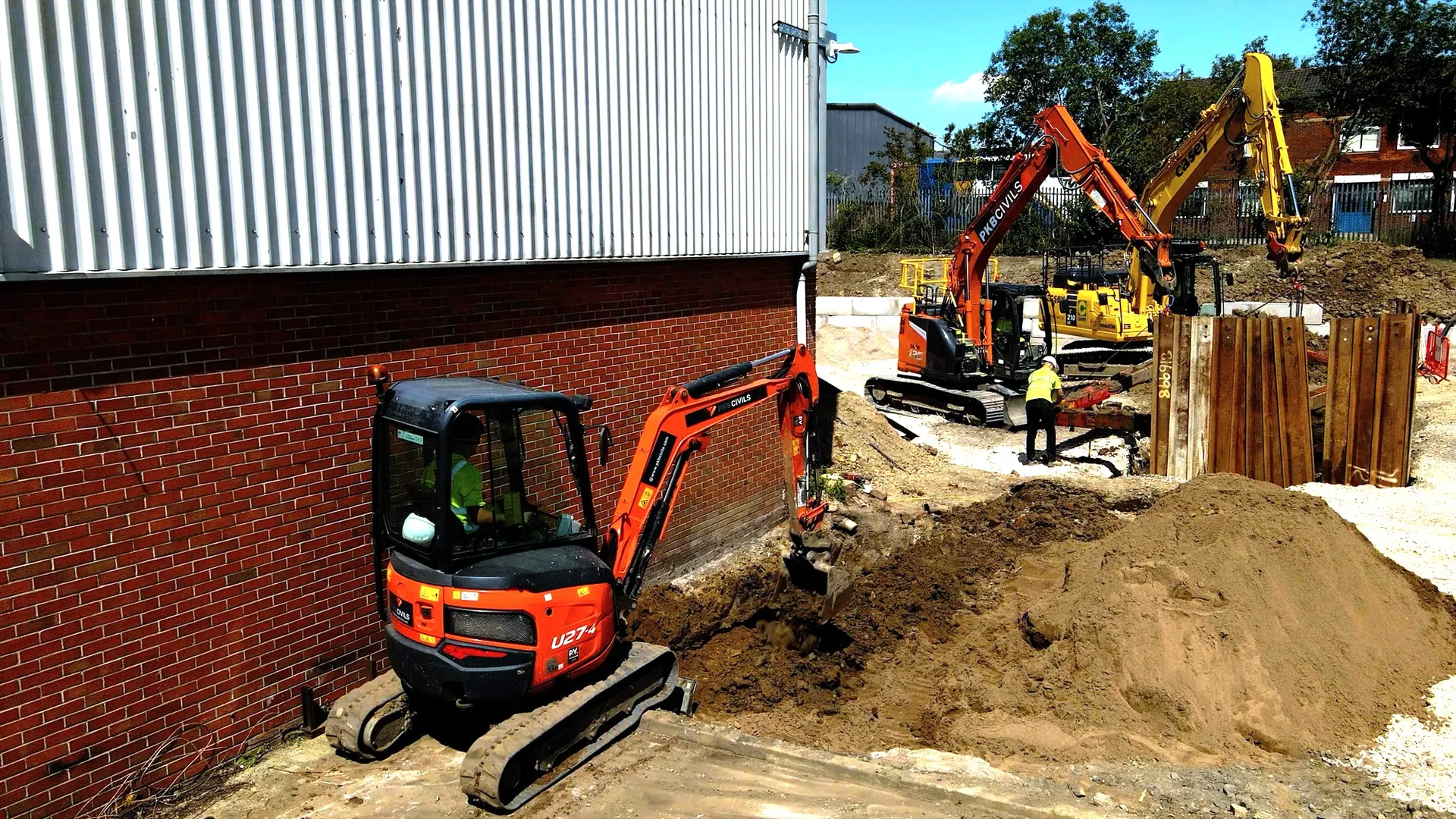
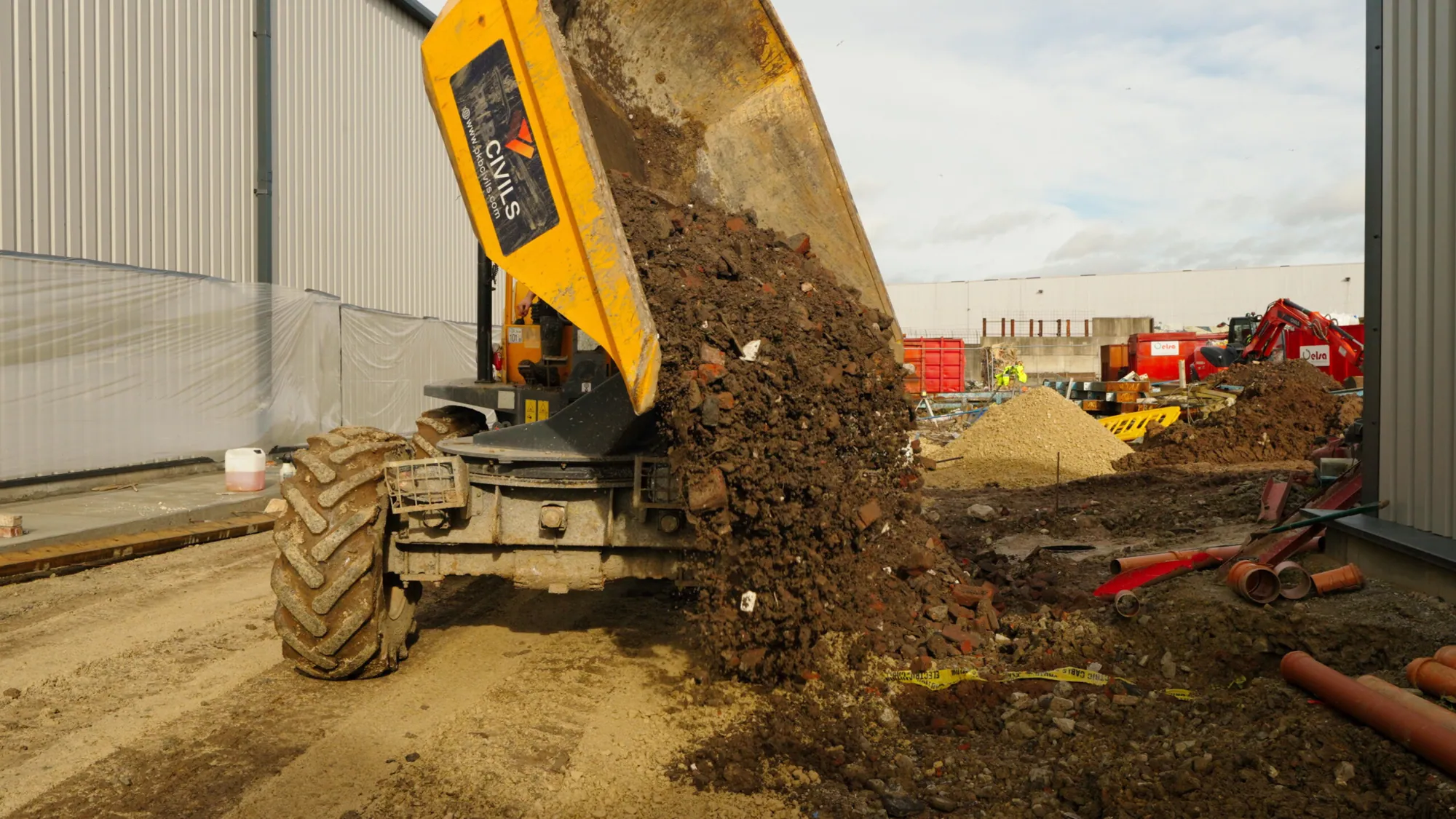
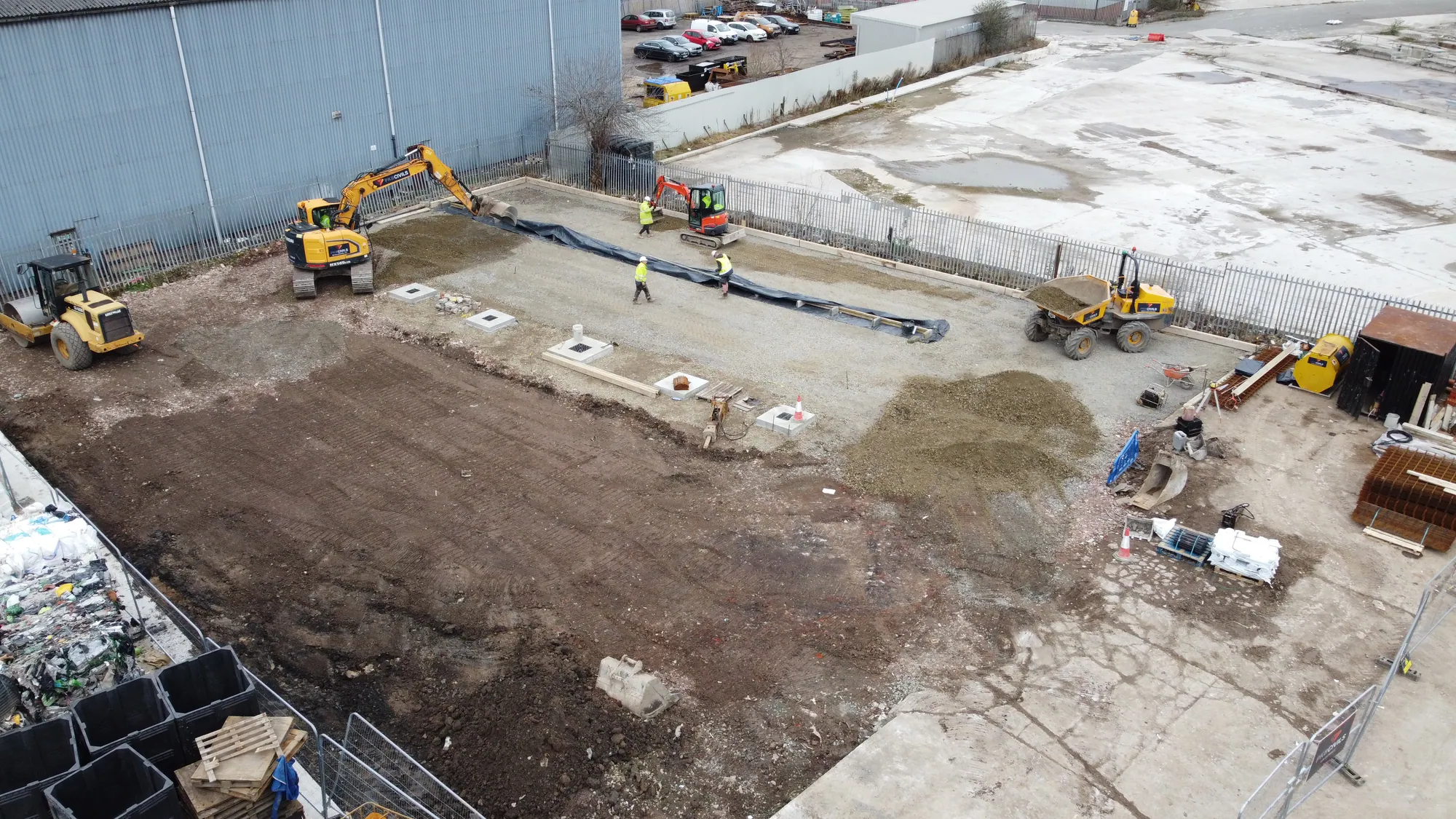
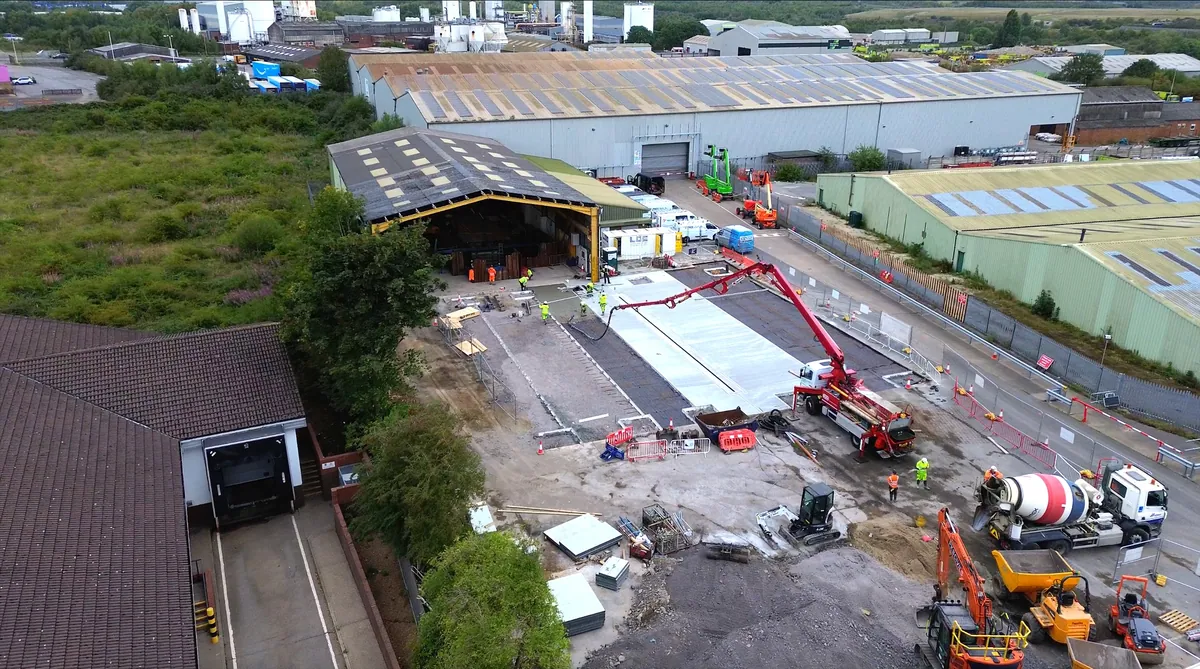
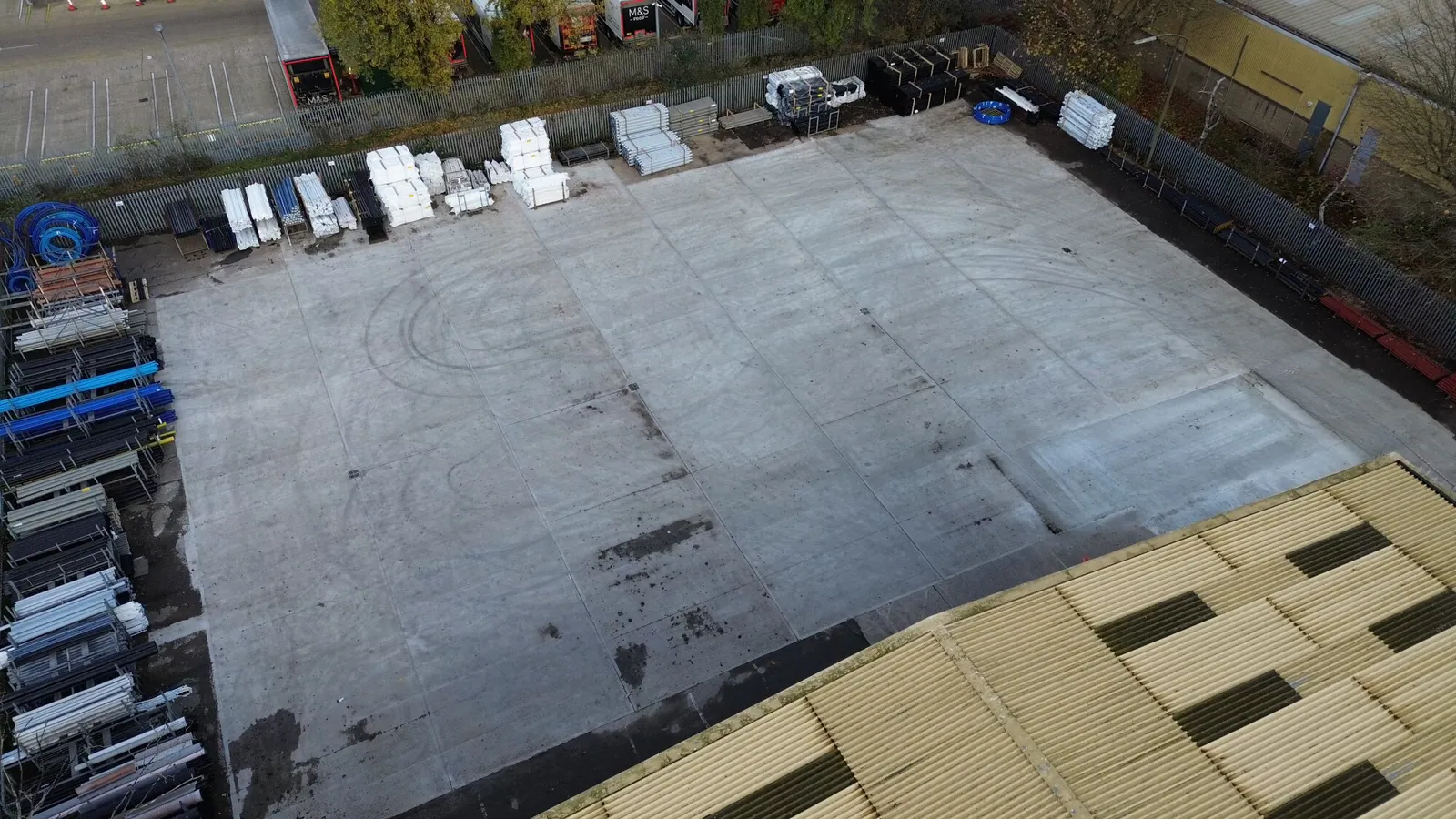
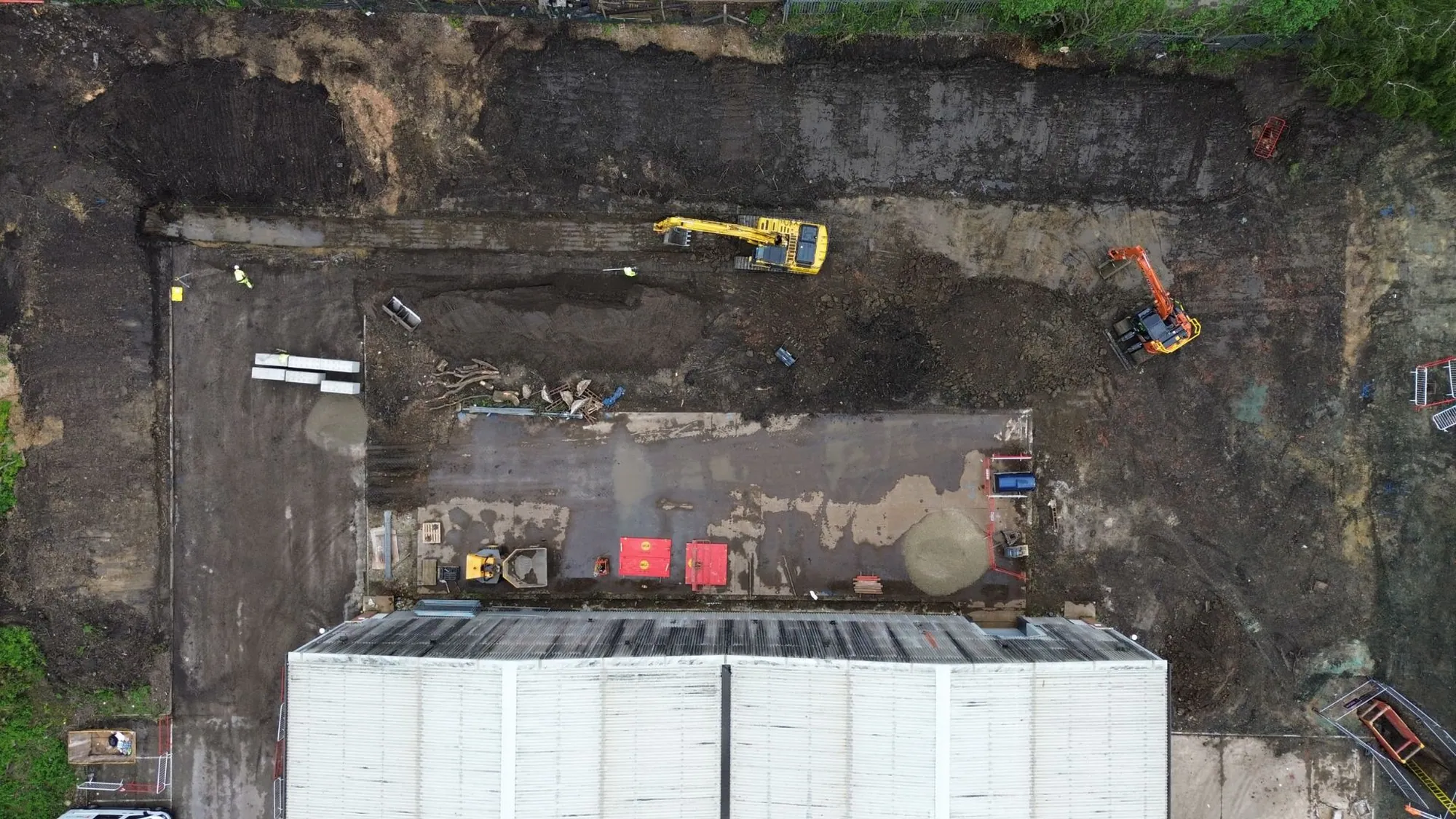
PKB Civils is a specialist groundworks contractor for warehouses, factories and trade yards in Leicester, where the ground changes from Soar valley gravel to stiff till to gypsum-bearing mudstone. We prove the ground with trial holes before pricing, then build bases, trenches and retaining walls with our own crews and plant from Rochdale while your yard stays open.
If a Leicester site needs a plant base, a trench for ducts or drainage, a retaining wall or the sub-base for new slabs, we dig and build it with our own crews and plant, working round the vehicles that still use the yard. One team takes it from the survey to handover.
Leicester's ground isn't one material. The city grew up on the Soar's gravel terraces, till covers over half the surrounding district, and the mudstone under parts of the centre carries gypsum, so the first question on any Leicester dig is which of them you're in. We answer it from the British Geological Survey record and our own trial holes. Our groundworks service covers the full scope.
2,000+Projects completed across the UK
150,000m²Concrete poured across all our jobs
40yearsFamily-run in Rochdale since 1986
Groundworks in Leicester: what we do
Everything we can take on for you. Not sure which you need? Send your brief and we will tell you.
Bases for plant and racking
Pads sized for the load and cast on a tested formation, with the concrete in soon after the dig because Leicester's clay till softens when it's left open.
With no Leicester job behind us yet, we don't guess at the ground. Trial holes across the plot show where the till thins or the gravel starts, and plate bearing and CBR tests on the formation show what it will carry before a base or slab is designed.
Formations opened in short lengths
Leicester's clay till is stiff when it's cut but softens with exposure, so we open a formation in lengths we can test and cover the same day, and keep water off it while it's open.
One gang from dig to pour
Around 90% of what we build is done by our own people and plant, so the crew that digs your bases also fixes the steel and pours them, and a question at the trench gets answered there.
Planning groundworks on a Leicester site?
Send us a short brief and a few photos. If it's a good fit, we'll arrange a free site survey and plan the work around how your site runs.
What Leicester's geology can do to a groundworks job, and where the British Geological Survey records it.
Till that changes over a few metres
The thickness of the district's till can change within short distances, so one trial hole says little about the corner of the yard furthest from it. A base designed off a single pit can land on different ground, so trial holes are spread across the whole footprint.
Mudstone weathered deep
In the west of the district, the BGS says, the Mercia Mudstone can be weathered to at least 20 m, so a trial pit there may never reach sound rock and the formation is tested where the base will sit.
Fill where the pits were
Made ground is thickest in and around Leicester, and what is dug from it sets the muck-away, covered on earthworks in Leicester.
Sulphate from the same gypsum
The gypsum that can dissolve under a structure can also attack buried concrete, which concrete yards in Leicester covers in full.
Our nearest projects to Leicester
The jobs closest to Leicester, with this kind of work first.
Feedback from the people who run these sites, shown with the job we did for them.
1 / 3
“
The guys have been brilliant from start to finish... Thanks again to all the team and really appreciate the work you have done for us. Who knows you may end up at another AVK site in the future...
New concrete yardHyde, Manufacturing, 6 weeksSee the job
“
The fact you have a road sweeper coming on-site to clean up, is very much appreciated and shows attention to detail. Your team always work clean and tidy, and what really stood out is their communication and the fact nothing is too much trouble. The concrete repairs exceeded my expectations and should make the area much safer to work in.
Concrete repairsRochdale, Manufacturing, 4 to 5 weeksSee the job
“
Thanks guys, really happy with how this came out. The yard is great, staff can move around and we've got our space back. Will definitely be coming back to you again.
New concrete yardLondon, Builders merchants, 4 weeksSee the job
What ground and site conditions should you expect in Leicester?
Till covers about 50 to 60% of the Leicester district, according to the British Geological Survey. The clay-rich till is typically stiff to very stiff, but it fissures and softens once it's exposed, so a formation cut into it is best covered soon after it has been tested. Sandier till behaves differently: perched water tables in it can give running conditions in an excavation, and a trench that stood well at one end may need support at the other.
Down on the floodplain, the Soar's alluvium typically has a cap of silt and clay 1 to 3 m thick, and that cap is where the BGS says the most compressible material, including peat and organic silt, is concentrated. A base set in it can settle unevenly, so the peat is found and dealt with before a formation level is fixed.
Under much of the low ground of the Soar and Wreake valleys and the central city, the BGS maps the gypsum-rich Cropwell Bishop Formation of the Mercia Mudstone. Its gypsum dissolves slowly in a zone several metres thick below the subsoil or superficial deposits, which the BGS warns could cause uneven settlement damaging heavy structures. For a groundworks job, that is the reason to know what sits under a heavy base before it is designed.
When groundworks isn't the right call
If the plan is a heavy structure over the gypsum belt, the foundation needs a ground investigation and an engineer's design before anyone prices the groundworks, and we'll say so at the survey.
A cracked slab isn't always a groundworks job either. Ben reads the pattern first: cracks along joints and slab edges usually point to load, while random cracking across the surface more often means frost damage or a sub-base that has moved. On Leicester's swelling clays that movement can come from the ground itself, so the drains and the formation are checked before anything is relaid. Refilling a hole over a sub-base that has already failed buys months at most, Ben finds. Lauren's article on yards and extreme weather covers how clay ground moves in a dry spell.
Which tills are we likely to dig into around Leicester?
Two the BGS names are the red-brown Thrussington Till and the grey, chalky Oadby Till. Where they're clay-rich they are typically stiff to very stiff, with undrained shear strengths of 100 to 300 kPa, which is firm ground for a base while it stays dry. Opened up, till fissures and softens, so a trench or formation in it is dug, tested and covered without delay.
Do trenches in the Soar valley gravels need support?
Often. The BGS says the river terrace deposits Leicester grew up on normally give good foundations, but they vary in thickness and can loosen, with running sand, in excavations. So a trench in the gravels has its support on site before the dig starts, and the depth of gravel is checked with trial holes on your plot instead of being assumed from the one next door.
Is there any coal mining risk under Leicester sites?
Leicester City, Blaby, Harborough and Charnwood councils are not on the Coal Authority's list of planning authorities on the coalfield (the Coal Authority now trades as the Mining Remediation Authority). Hinckley and Bosworth, North West Leicestershire, Melton and Leicestershire County Council are on it, so for a site in those districts the mining records are worth checking before a dig.
Does the ground under Leicester swell and shrink?
Parts of it can. The BGS says parts of the Edwalton and lower Cropwell Bishop formations contain up to 40 to 60% smectite clay, with the potential to shrink and swell. The same clay clogged the full-face tunnelling machine driving the Abbey Sewer from Wanlip, under the Soar floodplain, to near Abbey Park in 1993. Under a yard, it's a reason to keep water away from the formation.
Is the gypsum under central Leicester a risk for a yard slab?
The BGS warning about the Cropwell Bishop Formation, about 40 to 50 m thick, is about uneven settlement damaging heavy structures, so the heavier the load, the more it is worth a ground investigation finding the solution zone first. For an ordinary yard slab, the gypsum matters more as sulphate in contact with the concrete, which the mix is chosen to resist.
Ben has over 10 years of experience in contracting management, specialising in pre-construction with some of the UK's largest contractors. Ben now leads pre-construction, project planning and client engagement.
We use cookies to see how people use our site and to measure our adverts. They're on unless you choose Reject all. Privacy policy
Necessary
Needed for the site to work, such as remembering your cookie choice. They don't store anything that identifies you.
Always active
Analytics
Google Analytics and Microsoft Clarity show us how people use the site, such as which pages they visit and where they came from, so we can improve it.
Advertising
HubSpot, Google Ads and WhatConverts cookies measure how our adverts perform and connect an enquiry or phone call to the advert or page that led to it.