1. Home
  2. Earthworks
  3. Leicester

Earthworks contractors in Leicester

PKB Civils is an earthworks contractor for commercial and industrial sites in Leicester, where dug mudstone loses strength the more it's handled and old gravel pits on the Soar floodplain may be backfilled with waste. We dig, fill and level with our own crews and plant from Rochdale, test the spoil before it moves, and keep your site working.

  • Keeping Clients Operational
  • Works Phased Around Your Site
  • Our Own Crews and Plant
  • Principal Contractor

Earthworks for Leicester's commercial and industrial sites

Send your brief

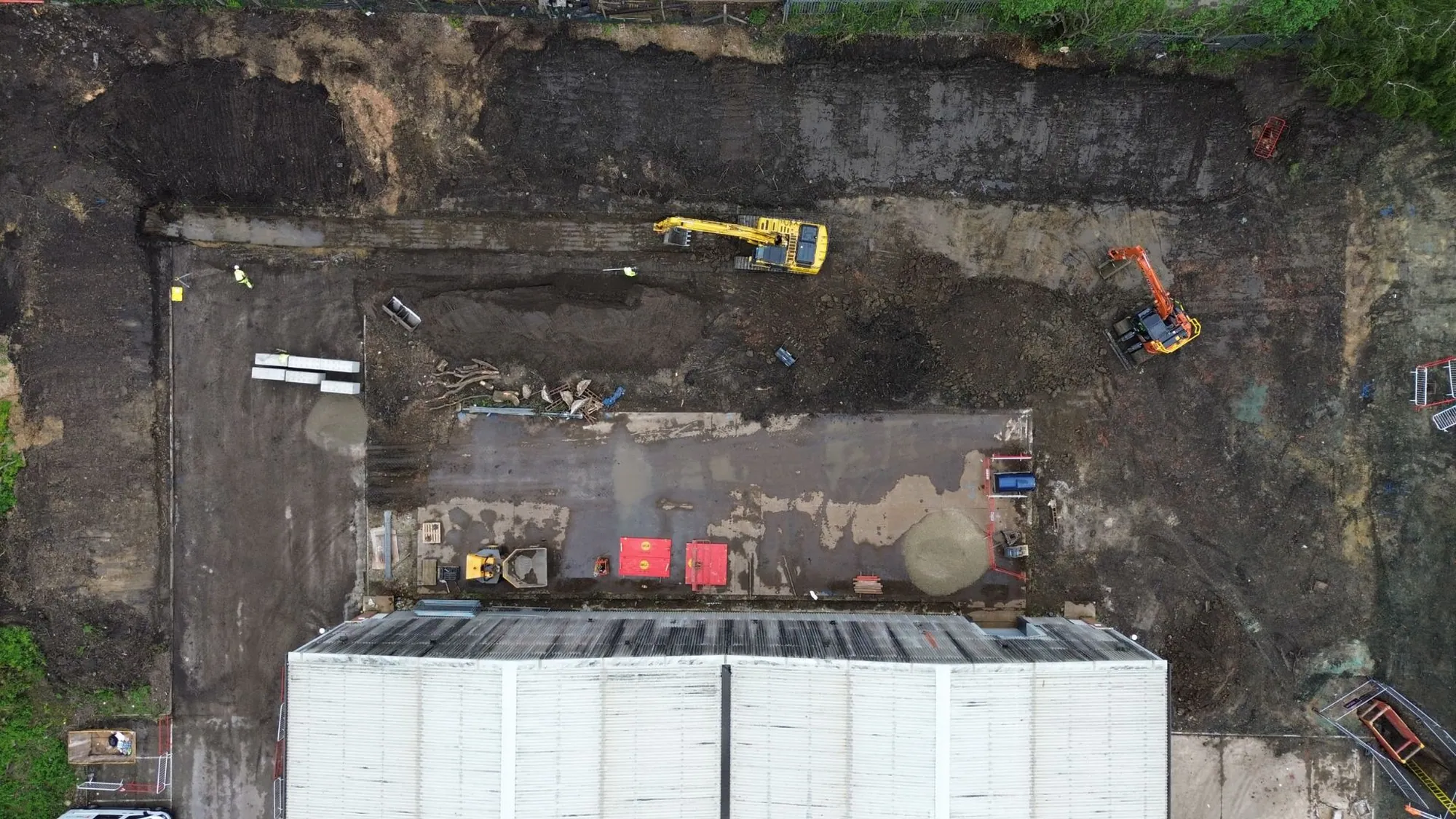
Most earthworks on a working site come down to one question: can what we dig out go back in, or does it have to leave? We settle that before the first lorry is booked, then dig, cut and fill, compact and trim to level with our own crews and plant, keeping haul routes clear of the vehicles that still use your site.

On a Leicester site the answer turns on the ground. Mudstone that looked firm in the trial pit can weaken as it's dug and moved, and old gravel pits on the floodplain may have been backfilled with waste. With no Leicester dig behind us yet, we'd start from the British Geological Survey record and our own tests. Our earthworks service runs from bulk digs and levelling to stabilisation and muck-away.

2,000+Projects completed across the UK
150,000m²Concrete poured across all our jobs
40yearsFamily-run in Rochdale since 1986

Earthworks in Leicester: what we do

Everything we can take on for you. Not sure which you need? Send your brief and we will tell you.

  • Reduce digs

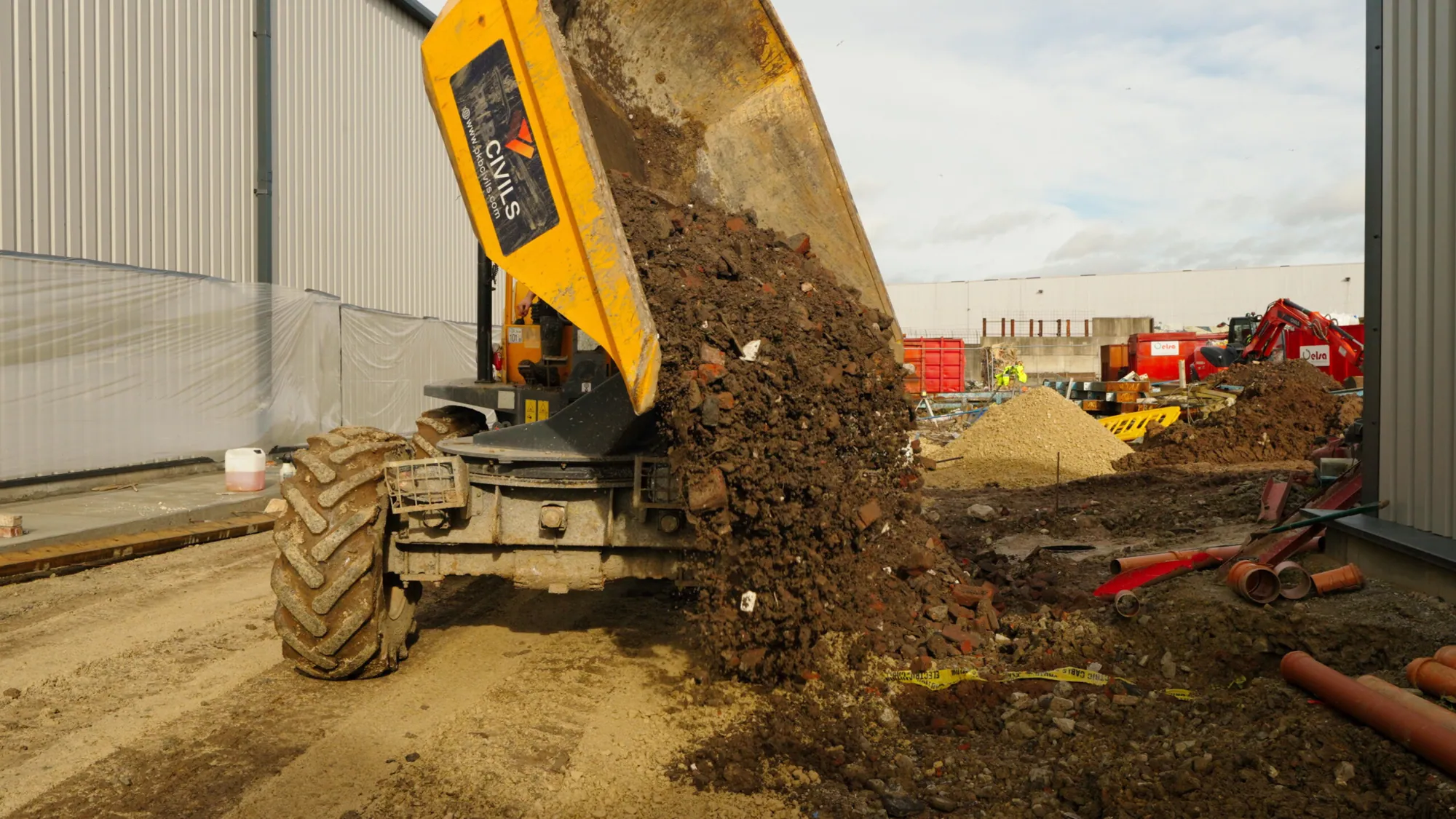
    Old yards and plots taken down to the depth the new slab is drawn to, with the arisings heaped by type the moment the bucket lifts them.

    Send your brief
  • Cut and fill on mudstone

    Dug mudstone moved as few times as possible and placed in thin rolled layers, because the more it's reworked, the weaker it gets.

    Send your brief
  • Formation for yards and platforms

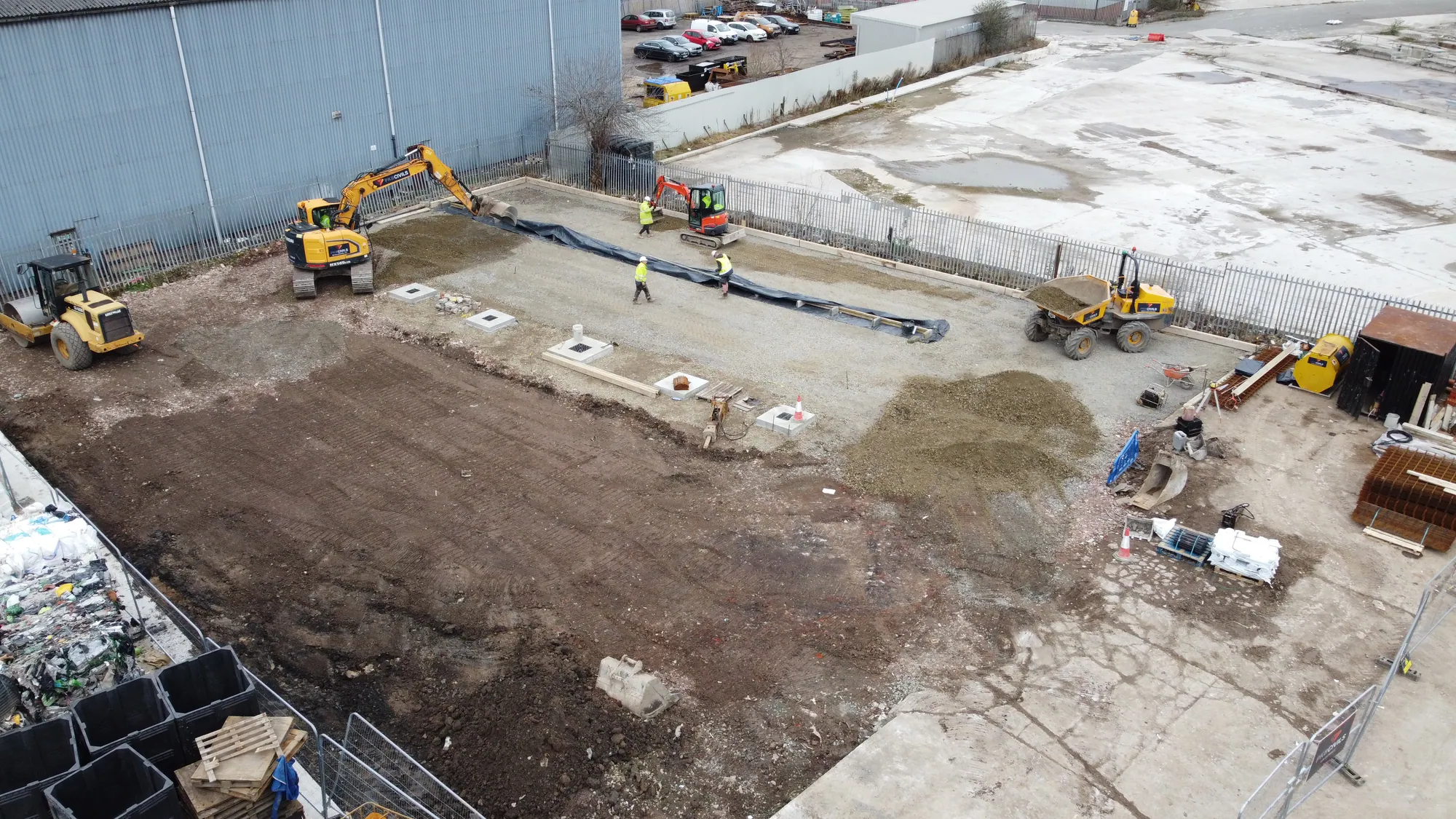
    Formation trimmed and proved to the levels and falls the drainage and concrete need, with any soft spot dug out and refilled before stone goes on.

    Send your brief
  • Muck-away from old pit ground

    Spoil from backfilled gravel pits and old industrial land sampled before any lorry is booked, so each load goes to a site able to take it.

    Send your brief
  • Stockpiles on busy sites

    Heaps kept small, shaped to shed rain and set away from the routes your vehicles use, so the clay meant for reuse stays usable.

    Send your brief

Why Leicester sites choose us for earthworks

The same people survey, plan and build your job, and your site keeps running while we do it.

Send your brief
  • Mudstone handled once

    Because Leicester mudstone weakens each time it's reworked, we plan the cut, the haul and the fill so it's dug and placed in as few moves as possible, with the stockpile sited before the machine arrives.

  • Changes agreed on the day

    Ben puts our strength down to our own people and direct delivery, which lets us work things out with you as they happen. When a Leicester dig turns up fill the trial pits missed, the plan changes that day, agreed with you, without waiting on a subcontractor.

  • Every load accounted for

    Since October 2026 the sites that receive waste in England have had to record it on the government's digital waste tracking service. We sample and classify Leicester spoil before it leaves, so what we send matches what the receiving site expects.

Earthworks planned for a Leicester site?

Send us a short brief and a few photos. If it's a good fit, we'll arrange a free site survey and plan the work around how your site runs.

Send your brief

Spoil and ground that change a Leicester earthworks plan

What the BGS record and England's waste rules can add to a dig in and around Leicester.

  • A pit edge under the new levels

    Restored pits on the Soar and Wreake floodplains mostly stand 1 to 2 m above the alluvium around them, the BGS notes, so a level line across a floodplain plot can cross old fill and natural ground. Trial pits find the edge first.

  • Till that varies between pits

    Till thickness can change within short distances, so the volume between two trial pits is an estimate until the dig opens; groundworks in Leicester covers the till.

  • Sulphur in Lias spoil

    Mudrock from the Lias east of the city can hold gypsum and pyrite, which matters if it's reused against buried concrete: see concrete yards in Leicester.

  • Reuse rules being rewritten

    The Environment Agency is working with CL:AIRE on a third version of the Definition of Waste Code of Practice, to be called The Soil Passport Scheme, so reuse paperwork is planned against the current code with the change in view.

What our clients say

Feedback from the people who run these sites, shown with the job we did for them.

1 / 3
Concrete repairs
The fact you have a road sweeper coming on-site to clean up, is very much appreciated and shows attention to detail. Your team always work clean and tidy, and what really stood out is their communication and the fact nothing is too much trouble. The concrete repairs exceeded my expectations and should make the area much safer to work in.
Concrete repairsRochdale, Manufacturing, 4 to 5 weeksSee the job

What ground and site conditions should you expect in Leicester?

The Lias Group and Mercia Mudstone crop out over about 30% of the Leicester district, and near the surface weathering and old periglacial processes have often broken their mudstones into clasts sitting in softer clay, the British Geological Survey says. Reworking that material during excavation, and while fill is handled and prepared, reduces its strength and can increase its plasticity. In plain terms, mudstone dug from a Leicester cut is weaker as fill than it was in the ground.

Made ground is most extensive and thickest in and around Leicester itself, the BGS adds, on derelict brownfield industrial sites and where parts of the Soar floodplain were remodelled during canal construction and river straightening.

Further out, most restored sand and gravel pits on the Soar and Wreake floodplains were raised above the alluvium around them, and their backfill may include construction and demolition waste, domestic refuse and industrial waste.

Put together, a Leicester dig can move from natural mudstone that needs gentle handling to fill that has to be sampled before it goes anywhere, sometimes on the same plot. So the spoil is sorted by type as it comes out, and the reuse and muck-away plan is settled for each heap before it grows.

When earthworks isn't the right call

If the plot still has buildings, slabs or live services on it, those come first, and that's enabling works in Leicester. If the trouble is a dip in an existing yard, a reduce dig may be the wrong tool. Ben's experience is that water washing fines from beneath a slab opens voids well before the surface dips, so the drains and the sub-base are looked at first, and a soft patch is dug out and rebuilt as part of the repair, as Lauren sets out in her article on depot yard surfacing.

And if the job is a garden, a driveway or anything inside a building, we're the wrong firm, and we'll tell you so when you first get in touch.

Questions about earthworks in Leicester

Can't see your question? Call us or send your brief and we'll come back to you.

Send your brief
Can dug Leicester mudstone go back in as fill?

Often, if it's handled with care. The BGS says reworking the district's mudstone during excavation and fill handling reduces its strength and can increase its plasticity, so it's placed quickly, in thin compacted layers, and tested as it goes. Where it has been too wet or too broken down to compact, it goes off site and stone comes in, or stabilisation is tested as an option.

Is Glen Parva Clay any use as fill?

Not easily as dug. The BGS maps it in the south-west of the district, interleaved with till and glacial sand and gravel, and says it most probably behaves like Coventry's Wolston Clay, with moisture contents over 30%, plasticity that can be very high and strengths generally lower than till. Clay like that may need drying or treatment before it will compact, and tests on the actual spoil decide which.

Can you stabilise clay on a Leicester site instead of digging it out?

Sometimes. Soil stabilisation is among the earthworks we offer, and whether it suits a Leicester formation is decided by testing the clay, its moisture and what it contains, before stabilising is priced against digging out and replacing. On some plots one answer is clear from the trial pits; on others the tests settle it.

Can you level a sloping Leicestershire plot without importing fill?

Often the cut can supply the fill, if the mudstone is dug and placed in as few moves as possible and at a moisture it will compact at. Where the cut is wet clay or old fill, imported stone or stabilisation may be needed to make up the difference. A level survey and tests on the spoil set the balance before a price is given.

How do you stop a wet Leicester clay site turning to mud?

By keeping traffic off the clay. Haul routes go in on stone, heaps are kept small and shaped to shed rain, and the formation is covered soon after it's proved. Reworked mudstone and wet clay both lose strength when they're churned, so the programme puts the main cut in drier weeks where it can, and the machines stop before the ground is ruined.

Ben Duffy

Written by Ben Duffy

Director, PKB Civils. Page reviewed

Ben has over 10 years of experience in contracting management, specialising in pre-construction with some of the UK's largest contractors. Ben now leads pre-construction, project planning and client engagement.

Got a yard that's holding you back?

Tell us what's happening on site. We'll review your brief and, if it's a good fit, arrange a free site survey.

Call usSend your brief