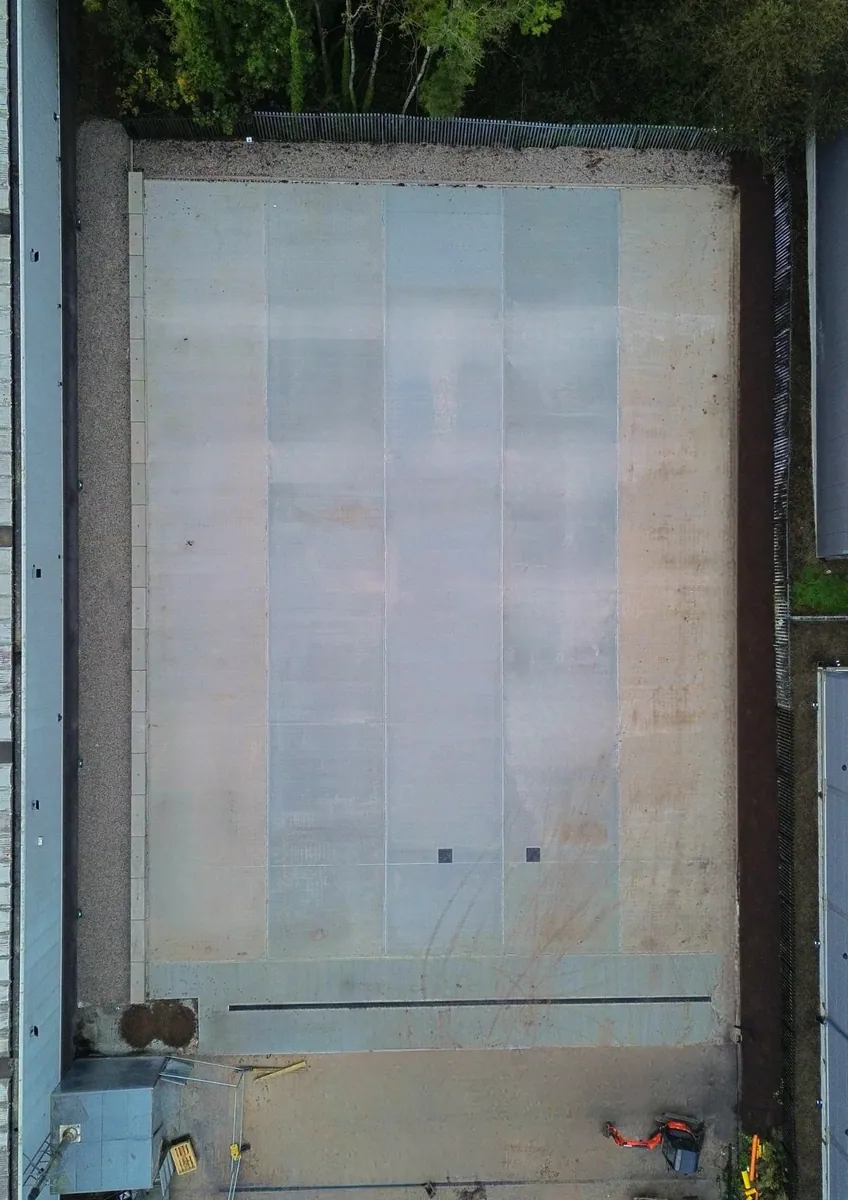
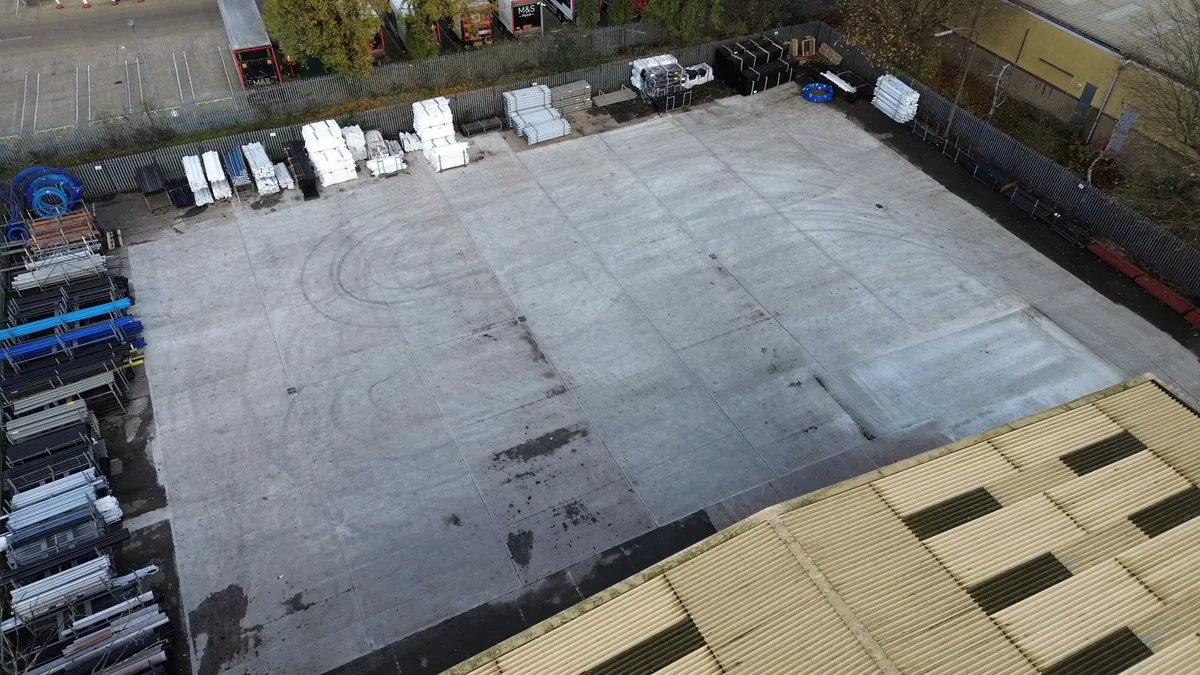
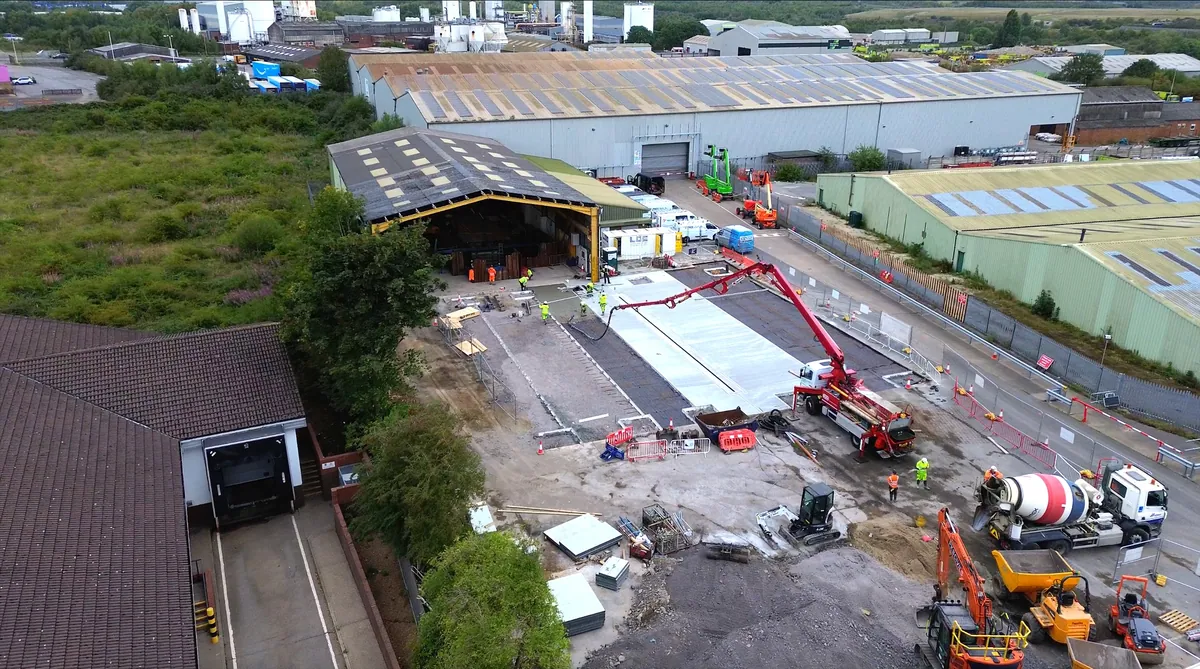

Really happy with the result. Your team were great to have on site and we were trading throughout which was important. Thank you.

Yard extension and retaining wallRochdale, Builders merchants, 3 weeksSee the job

PKB Civils is a specialist commercial drainage contractor for yards on London's industrial estates, merchants and depots. We trace, clear, repair and replace channels, gullies, separators and sewer connections with our own crews from Rochdale, working in sections so vehicles keep moving, with each design built around Thames Water's consent rules.
Yard drainage for London merchants, depots and industrial sites, where the sewer a yard drains to is Thames Water's. When a London yard floods in heavy rain, or a channel has cracked under HGVs, we find the cause by camera and repair it in sections while the yard keeps working.
Thames Water's rules shape the design. On a London yard we trace where each drain runs, keep process water away from the surface water system and fit the separators and silt traps the layout needs, then make any new connection to the main drainage network and reinstate the concrete in the same programme. Our drainage service lists the full range.
Everything we can take on for you. Not sure which you need? Send your brief and we will tell you.
Channels and gullies replaced or moved on London yards where the falls have changed, laid bay by bay so forklifts and HGVs keep a way through.
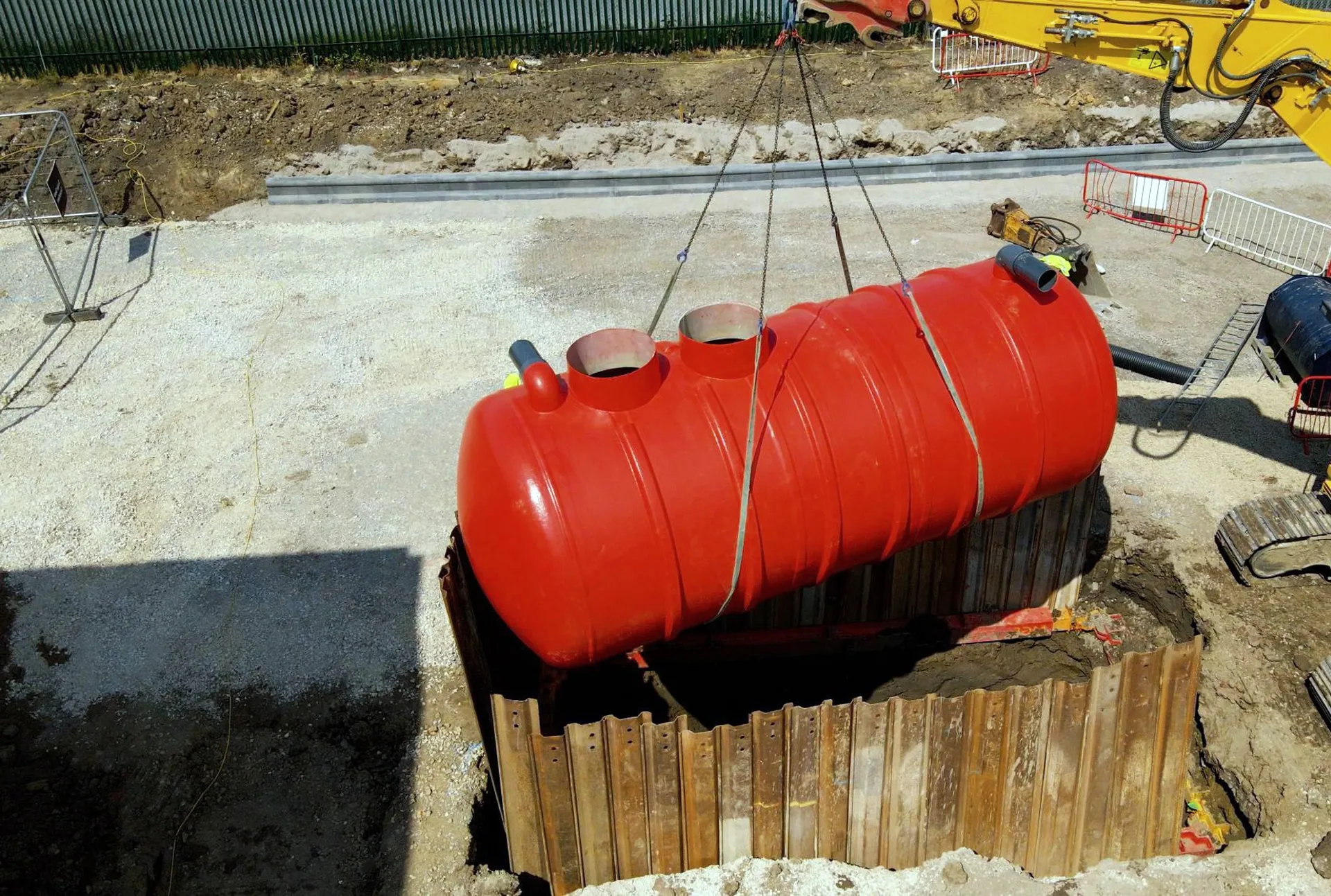
Send your briefSeparators and silt traps between a London yard and the Thames Water sewer, sized for the fuel, oil and silt the yard actually sheds.
Send your briefCCTV and jetting to show which kind of sewer each drain on a London yard joins, foul, combined or surface water, before any design is drawn.
Send your briefAttenuation under a London yard's slab to hold storm water back and let it out slowly, so a downpour doesn't overwhelm the outlet.
Send your briefNew or altered connections to the public sewer, with Thames Water's consent for any process water in place before the yard is connected.
Send your brief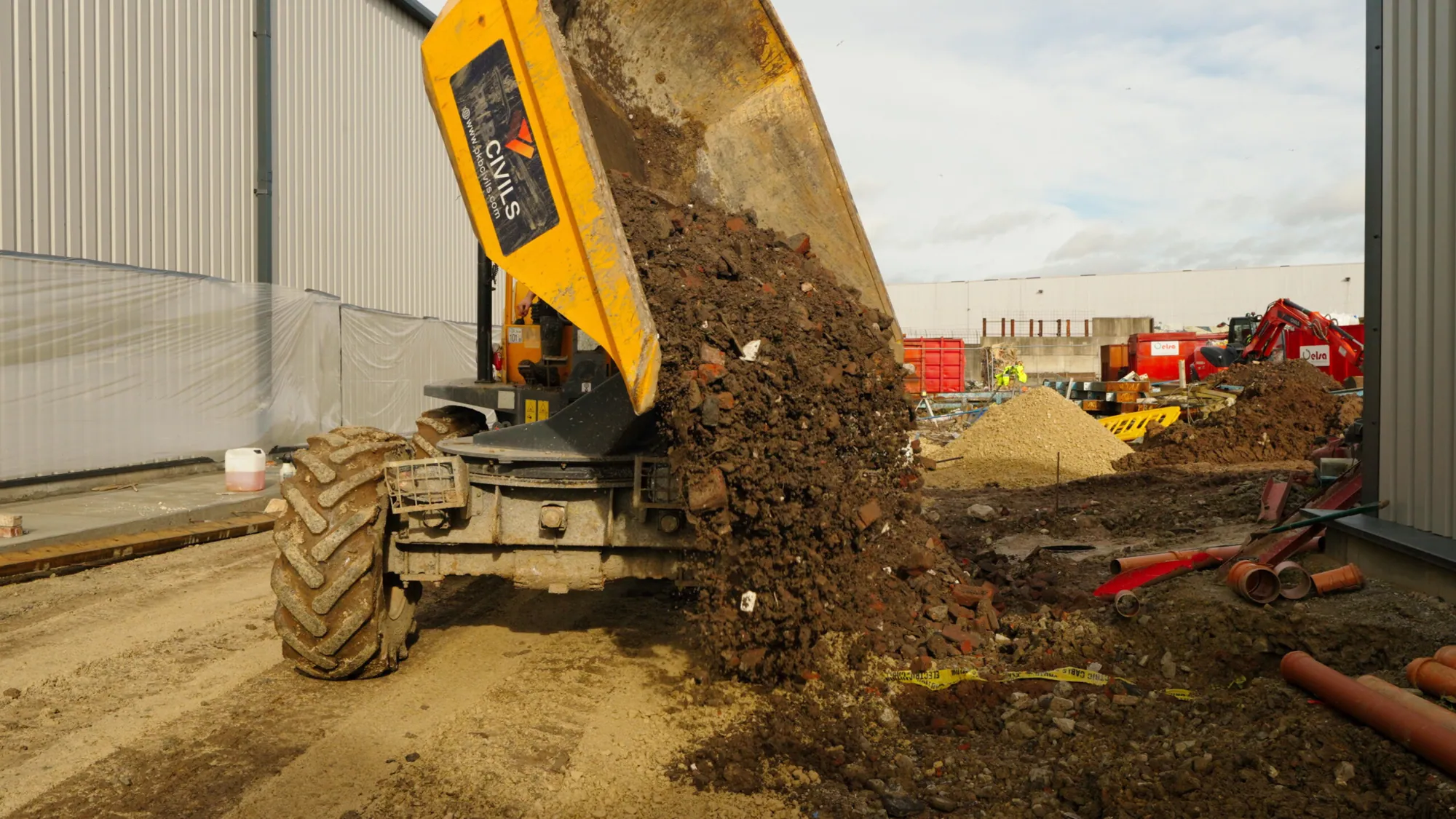
The same people survey, plan and build your job, and your site keeps running while we do it.
Send your briefWe trace the drains on a London yard by camera before the design is drawn, because Thames Water treats foul, combined and surface water sewers differently. On Liebherr's yard in Wigan the drainage was jetted and surveyed by camera before and after the works.
On a London yard, anything from a business, industrial or trade process needs Thames Water's consent before it reaches the sewer, so the separator, the silt trap and the route for any process water are settled before the channels are laid.
Where drains under a London yard have to be dug up, we reinstate the concrete over them in the same programme, so a trading yard isn't left with open trenches waiting for another firm.
Send us a short brief and a few photos. If it's a good fit, we'll arrange a free site survey and plan the work around how your site runs.
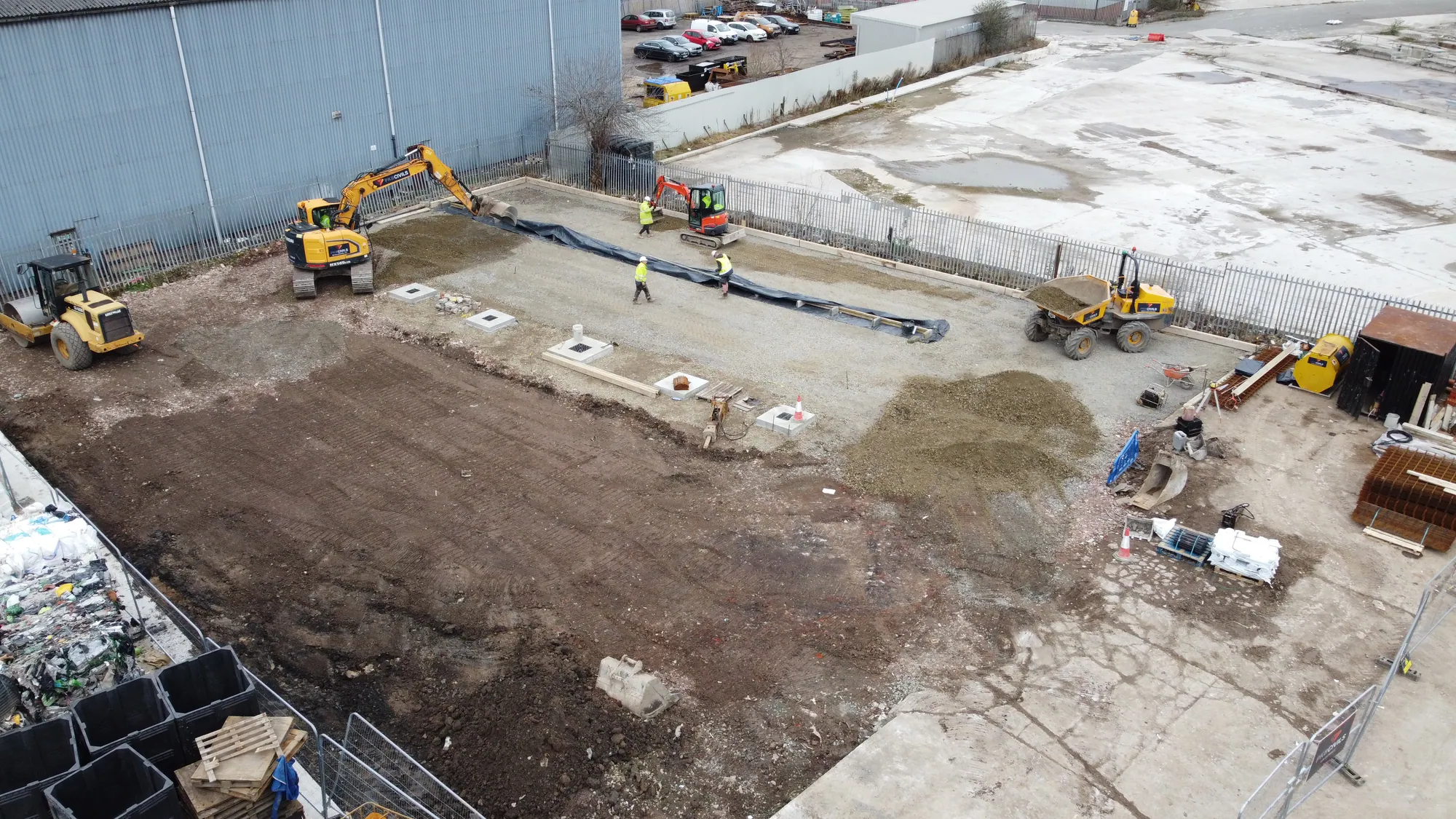
What we look for when water stands on a London yard after rain, and what each one usually points to.
New impermeable surfacing should normally be resisted in London unless it is shown to be unavoidable, under Part C of the London Plan's surface water policy. Where a new or enlarged HGV yard needs planning permission, expect to show why a sealed surface is unavoidable.
Years of alterations can leave a London yard's process drains and surface water drains joined where they shouldn't be, and a camera survey finds out before anything is rebuilt.
Blocked or collapsed channels seldom fail overnight. Ben sees them get worse gradually, with the standing water lasting longer every winter, until a London yard's busiest bay stops clearing.
On a yard extended over the years, channels sized for the older, smaller yard back up first at the lowest gully, so the survey checks each outlet against the area now draining to it.
The jobs closest to London, with this kind of work first.
Feedback from the people who run these sites, shown with the job we did for them.
Really happy with the result. Your team were great to have on site and we were trading throughout which was important. Thank you.

The fact you have a road sweeper coming on-site to clean up, is very much appreciated and shows attention to detail. Your team always work clean and tidy, and what really stood out is their communication and the fact nothing is too much trouble. The concrete repairs exceeded my expectations and should make the area much safer to work in.

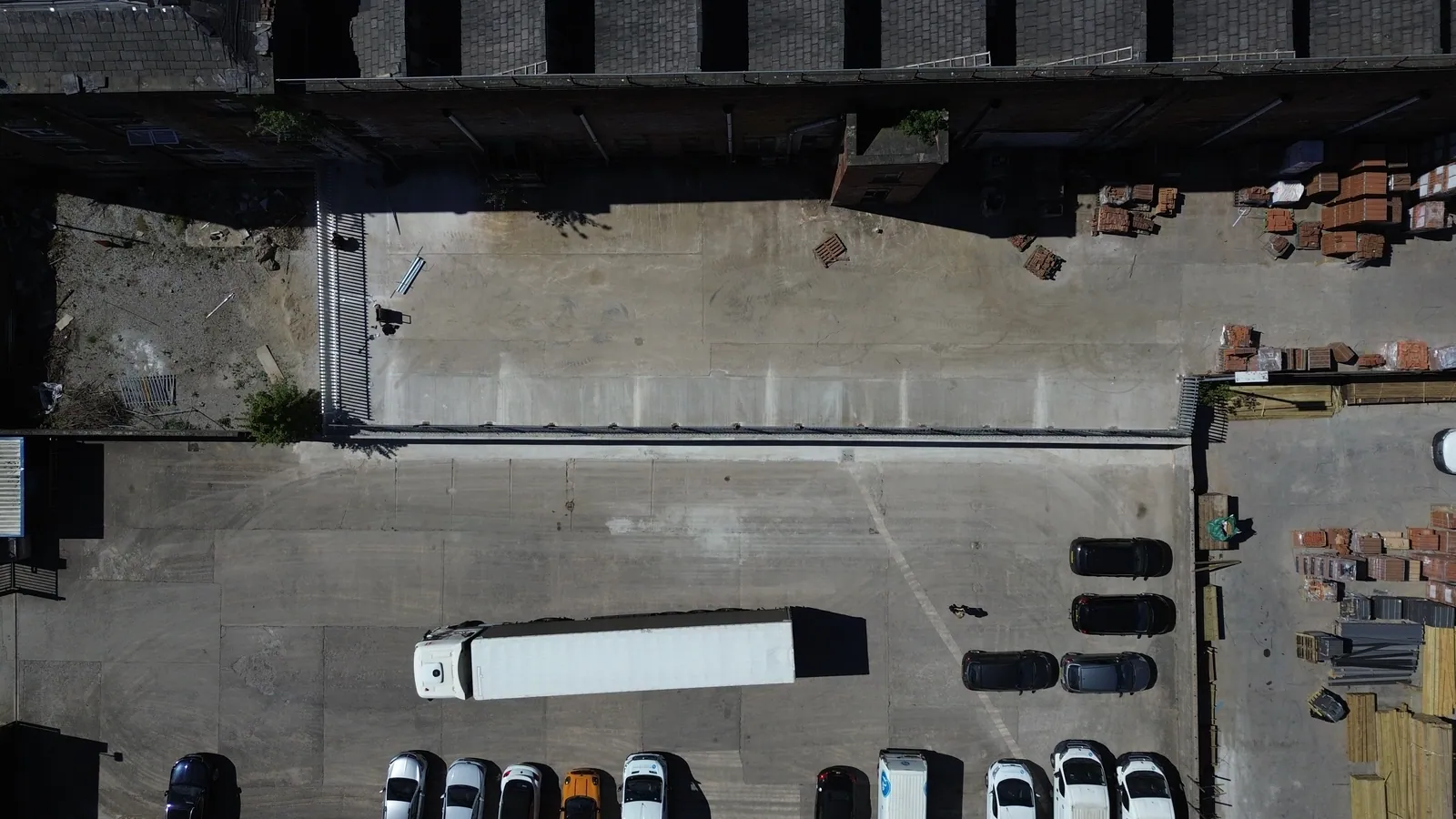
Really impressed with your team and how you kept the yard open, the new works look fantastic. Brilliant job.

London is at particular risk from surface water flooding, mainly because of the large extent of impermeable surfaces, according to the London Plan, and a working yard adds to it from edge to edge, with every square metre shedding water to the drains. On a major scheme, the planning application carries a sustainable drainage strategy, and Policy SI 13 asks for run-off to be managed as close to source as possible.
Tidal flooding is a separate risk. The Thames Barrier protects 125 square kilometres of central London from tidal surges, and it had closed 221 times for flood defence since it became operational in 1982, as at November 2025. When closed, it holds back tidal surges; rain falling on a yard behind it still has to be drained by the yard itself, through channels, gullies and storage sized for the storm.
Below the slab, the ground decides whether water can soak away at all. A soakaway needs ground that will take water, so a soakage test in a trial pit comes before one is designed, and where the ground won't take it, the water goes to storage under the slab and a controlled outlet to the sewer instead. What lies under London yards, and where, is covered on groundworks in London.
If nothing about the yard is changing, a London drainage strategy may not be needed at all. Policy SI 13 works through planning applications, so like-for-like repairs to channels, gullies and pipes are simply repairs.
Not every wet patch on a London yard is a drainage fault either. Ben separates passing surface water from water still standing hours after rain: the first may need nothing, and where the second comes from channels that have silted up without any single failure, a jet and a camera survey may be all the yard needs this year. His article on how standing water ruins yard concrete sets out the signs.
Postcode districts in London and around the M25 where we've delivered: DA4, EN3, EN11, IG11, RM19, SE6, SW11, TW16.
See them on the map
Can't see your question? Call us or send your brief and we'll come back to you.
Send your briefIf it counts as trade effluent, yes. Thames Water says effluent from a business, industrial or trade process needs its consent under the Water Industry Act 1991, must never be discharged to a surface water sewer, and can only go to a foul or combined sewer with a consent in place. It lists commercial car washes and construction works among those that would normally need one, as a guideline, with each customer assessed individually.
It depends on whether the work needs planning permission. London Plan Policy SI 13 sets a drainage hierarchy for development: rainwater use first, then infiltration, green attenuation, a watercourse, a surface water sewer, and last a combined sewer. The policy works through planning applications, so a like-for-like resurface that needs no permission isn't assessed against it, while new or enlarged hardstanding that does will be.
London's 33 Lead Local Flood Authorities, which in April 2019 introduced the London Sustainable Drainage Proforma for major development referred to them. The London Plan says they are responsible for managing surface water drainage through the planning system, so a yard scheme that needs planning permission can expect its drainage to be looked at. Ask the planning authority for your site which body that is, and what it wants to see, before the drainage design is fixed.
Some of it. A council can set a site's working hours by notice, and in Ealing, for one, work outside standard hours needs prior approval through a Section 61 consent or dispensation. Camera surveys are quieter and easier to fit around a trading yard, and the noisy sections can be phased into the standard hours.
Yes. The yard is split into sections, the drains under each are dug, replaced and reinstated in concrete before the next section opens, and routes for HGVs and forklifts are agreed with your site team at the survey. Where process water has to keep flowing during the work, its route to the foul sewer is kept open throughout.

Ben has over 10 years of experience in contracting management, specialising in pre-construction with some of the UK's largest contractors. Ben now leads pre-construction, project planning and client engagement.
Tell us what's happening on site. We'll review your brief and, if it's a good fit, arrange a free site survey.