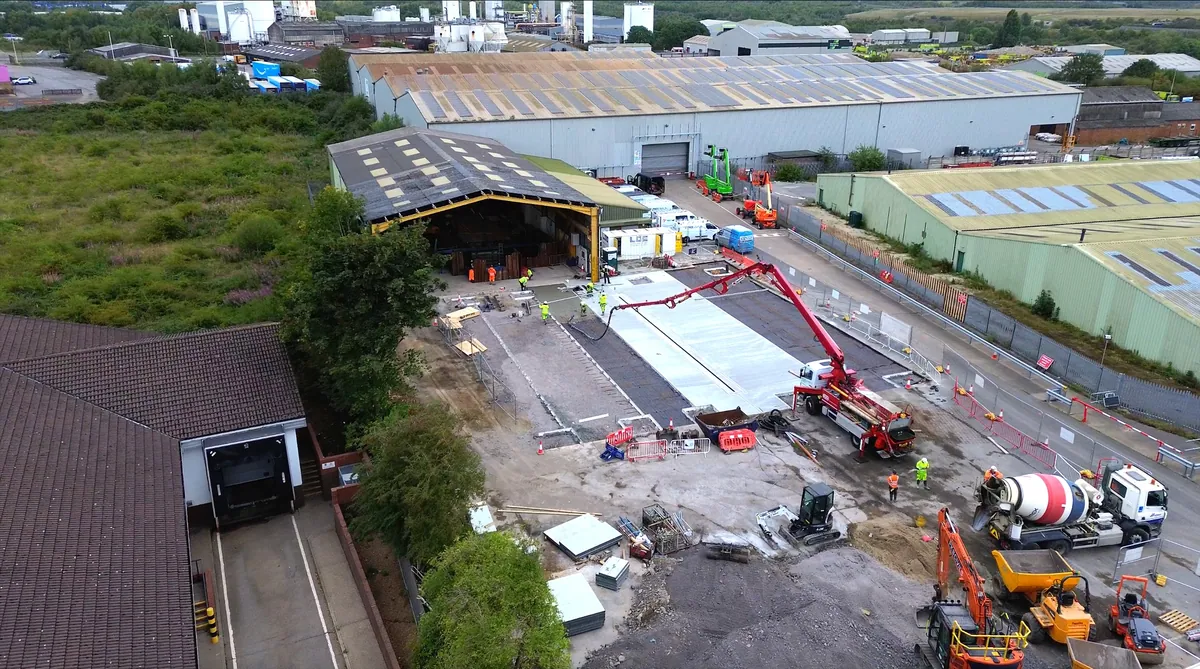
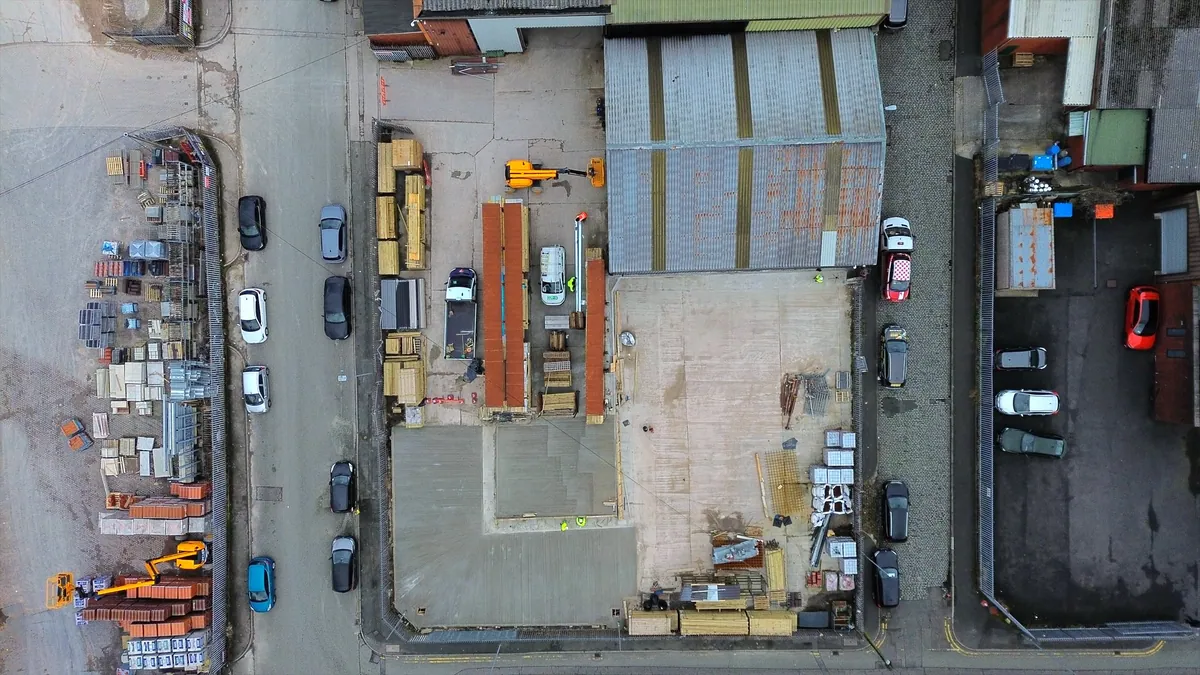
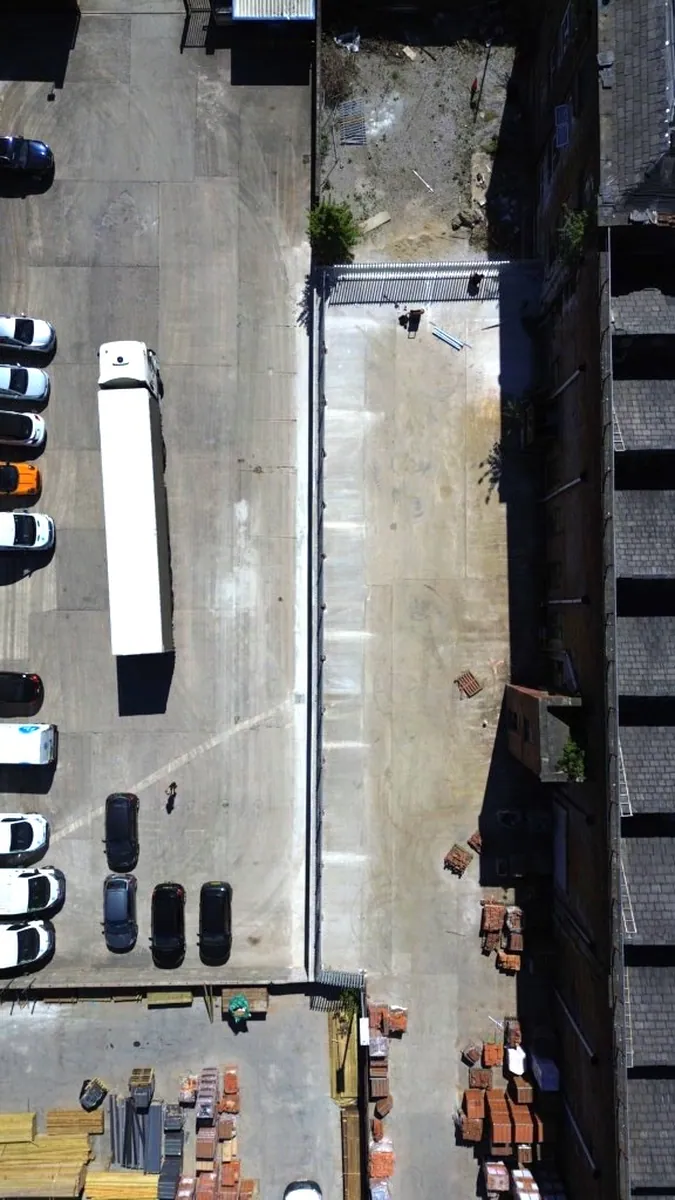
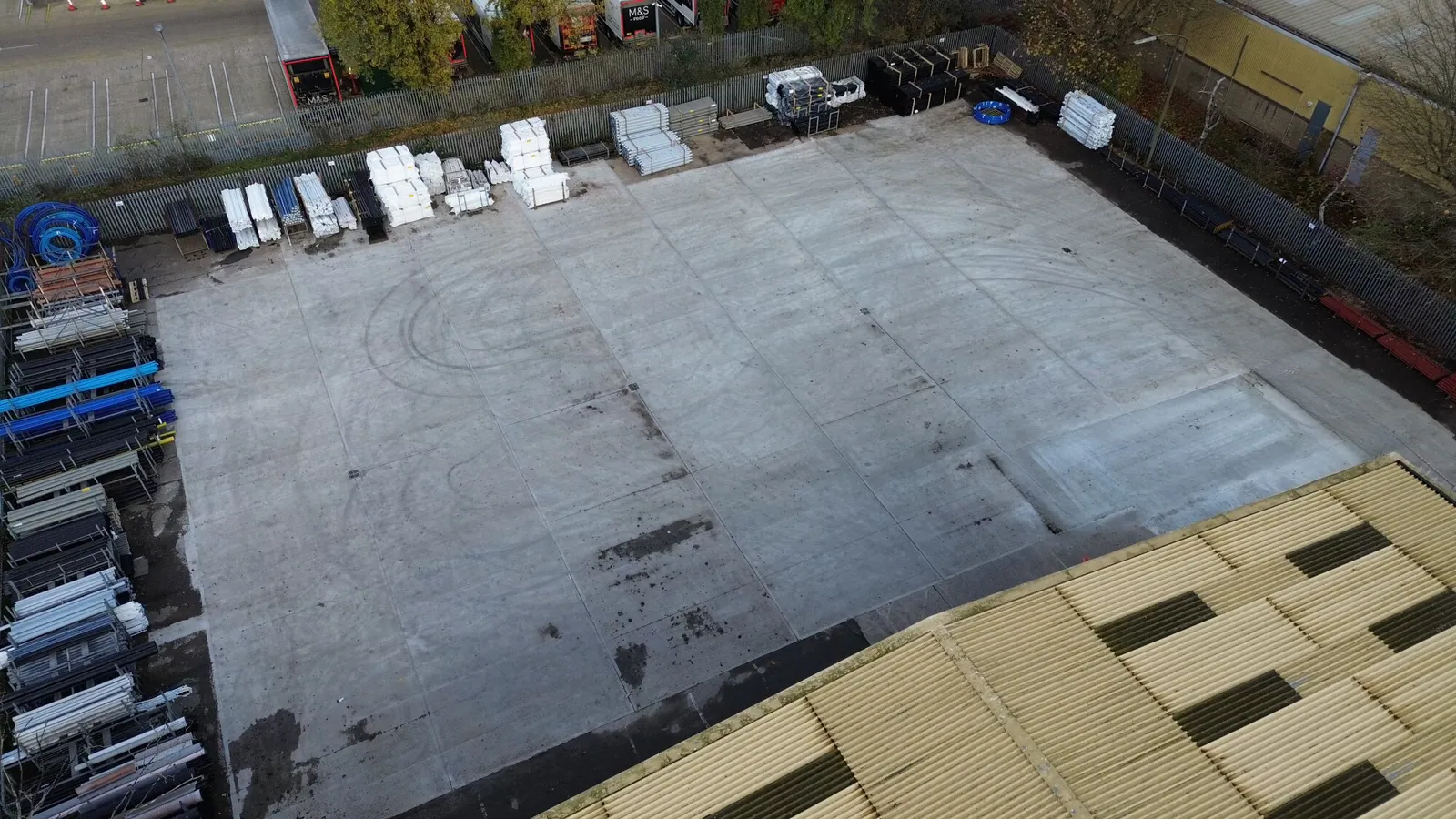
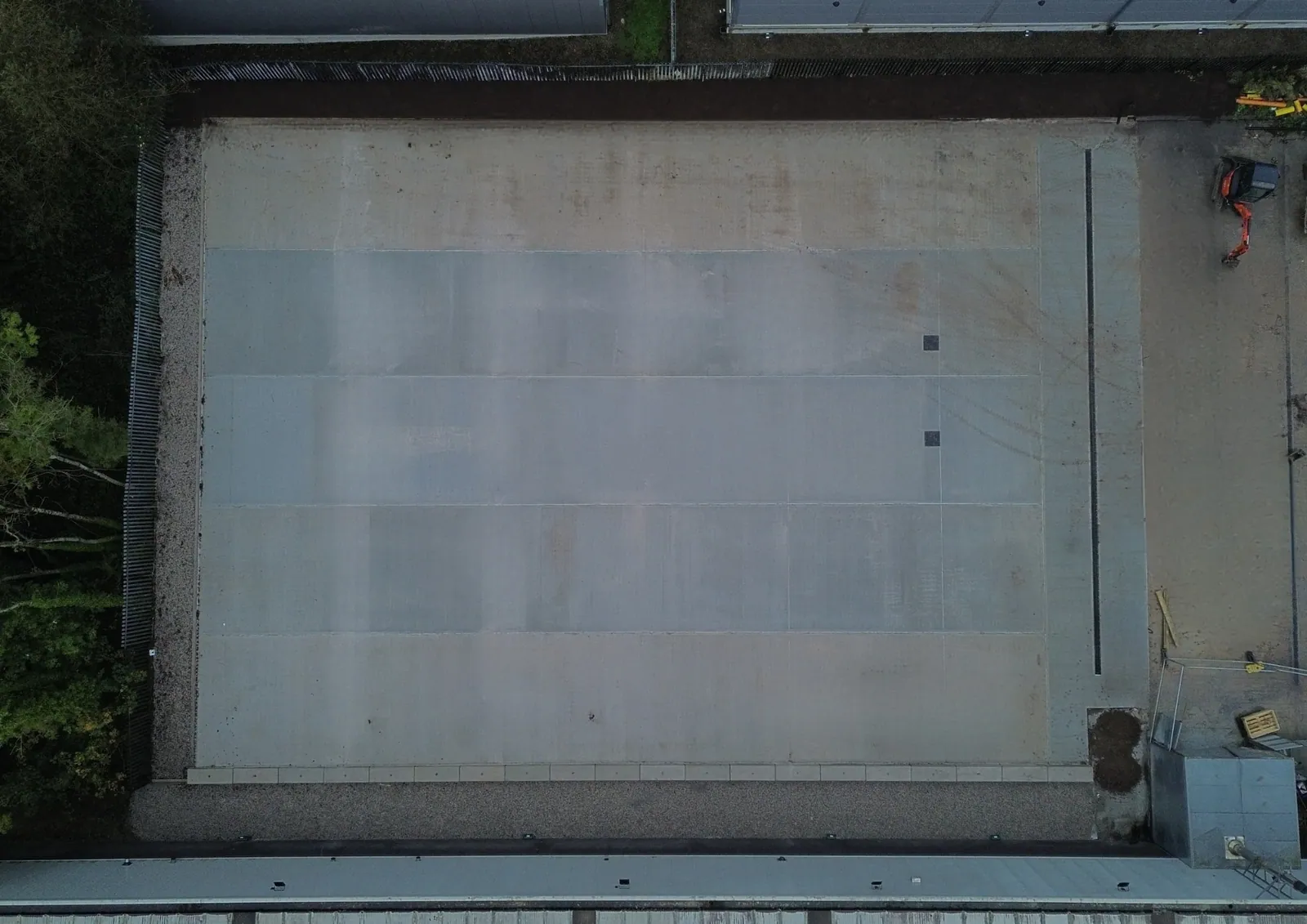
Thanks guys, really happy with how this came out. The yard is great, staff can move around and we've got our space back. Will definitely be coming back to you again.

New concrete yardLondon, Builders merchants, 4 weeksSee the job

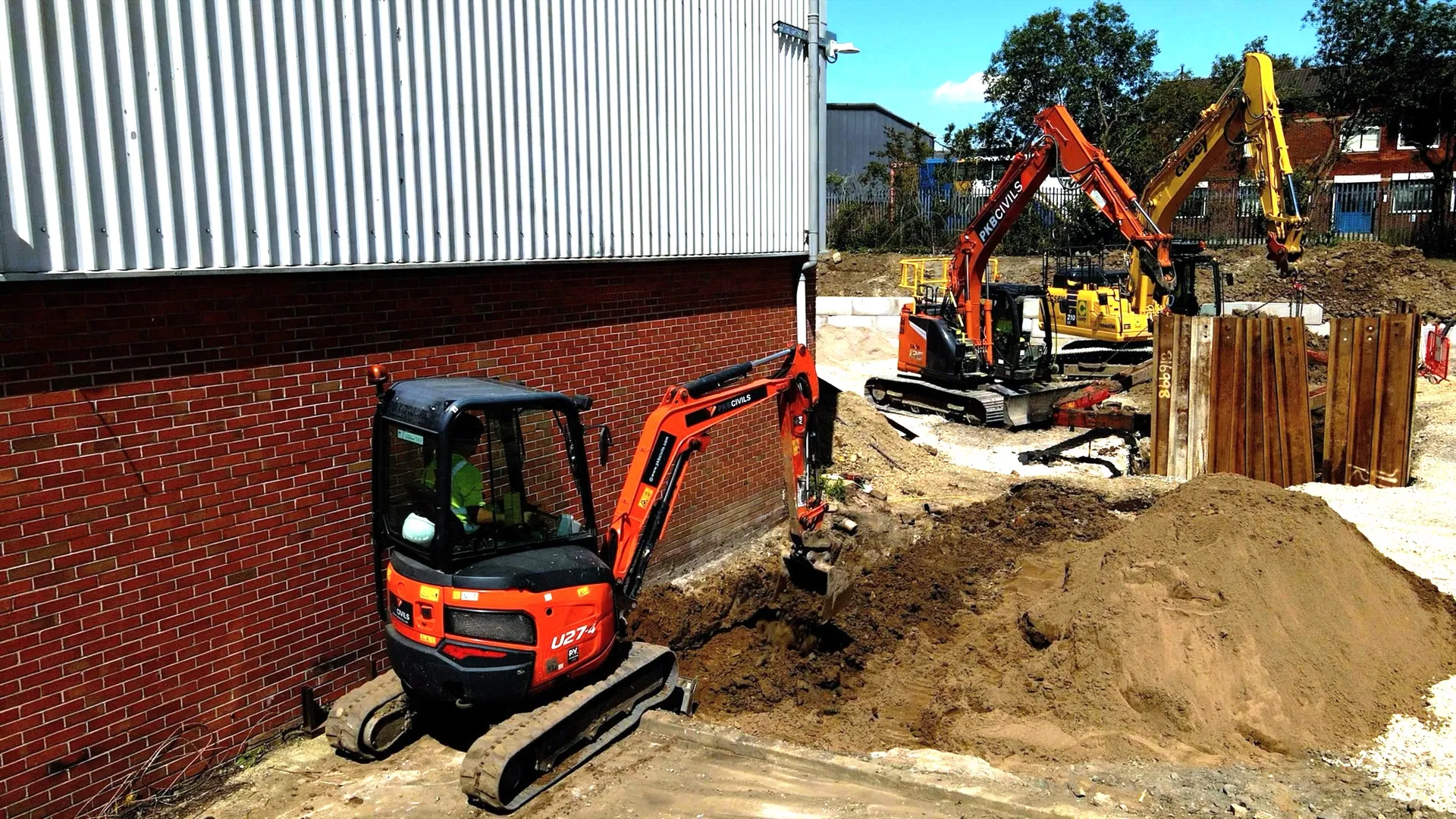
PKB Civils builds groundworks for London's commercial and industrial sites as a specialist contractor, on ground where London Clay lies at or near the surface over large areas and the east adds buried gravel, peat and landfill. Our own crews and plant come from Rochdale, and the yard stays open while bases, trenches and walls go in.
Bases for new plant or racking, trenches for drainage and ducts, walls where a yard's levels change and sub-bases rebuilt under failing slabs: on a London site each one is designed around the ground, and above all around London Clay that swells and shrinks with its moisture. Our own crews dig and build them with our own plant while the yard keeps working. Our delivered districts include IG11, RM19, DA4, EN3 and TW16.
East London adds peat and landfill to the clay, and the BGS records old chalk mines and sinkholes in places, so trial holes on a London job go where the records point. Our groundworks service sets out the bases, walls and drainage we build.
Everything we can take on for you. Not sure which you need? Send your brief and we will tell you.
Pads and bases for plant and racking taken to the depth the site investigation sets, which near trees on London Clay can mean going much deeper.
Send your briefDrainage and duct trenches dug, bedded and backfilled in short lengths, so a London yard keeps its routes open round the dig.
Send your briefRetaining walls where a London yard grows into a slope or a change of level, built for the clay pressing behind them.
Send your briefSoft clay, peat or fill dug out and replaced with compacted stone to a tested formation before a new London slab goes down.
Send your briefTrial holes and plate bearing tests before the levels are fixed, to show whether a London yard sits on clay, gravel, peat or fill.
Send your brief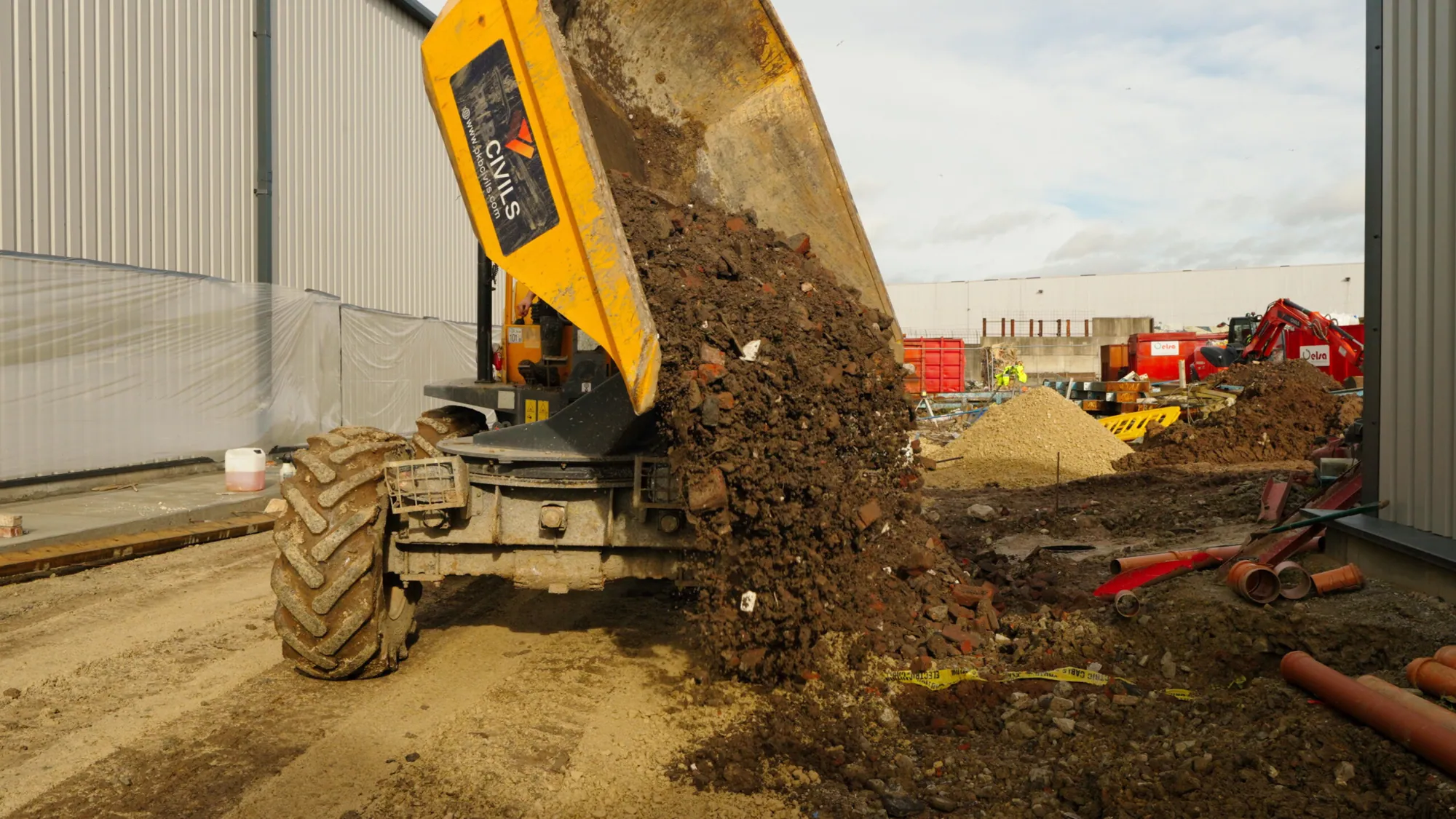
The same people survey, plan and build your job, and your site keeps running while we do it.
Send your briefBefore a new yard for AVK in Hyde, the subgrade was tested by plate bearing and CBR, the kind of check that matters on London Clay, which is softer where it has weathered near the surface.
Between the Lea and Tilbury, peat and old landfill can sit under a yard, so a base or slab there is planned from trial holes spread across the footprint, with the soft layers taken out and replaced to a tested formation before anything is built on them.
As Ben puts it, a yard is load-bearing infrastructure. On London Clay that means sizing a base from the load and the investigation together, deep enough to sit below the clay that moves through the year.
Send us a short brief and a few photos. If it's a good fit, we'll arrange a free site survey and plan the work around how your site runs.
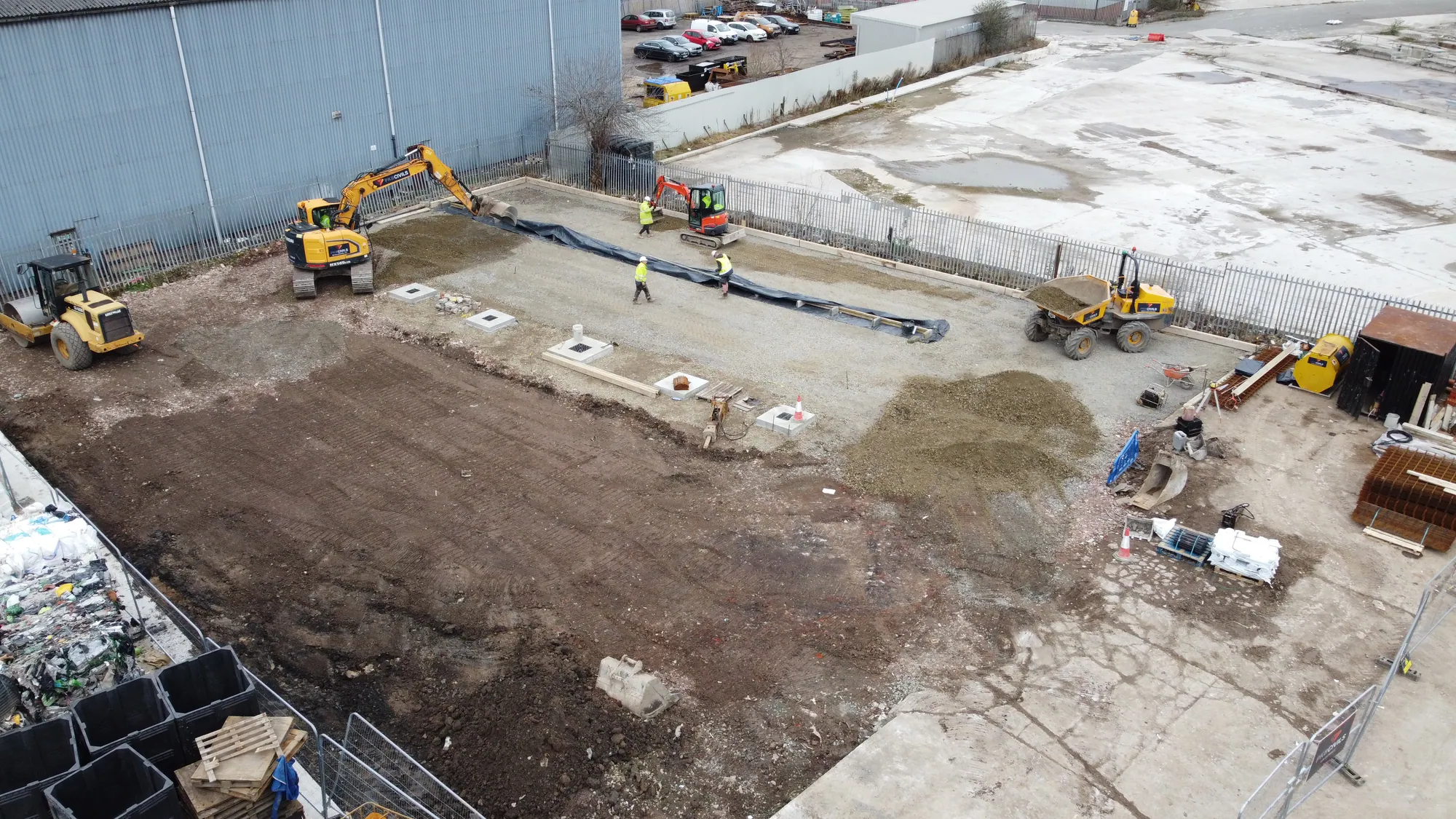
What can lie under a London site, from swelling clay to old chalk mines and landfill, and where the evidence comes from.
Dene holes, old chalk mine shafts typically 10 to 20 m deep, are recorded at Pinner, Chislehurst, Plumstead and Blackheath, and the BGS says their backfill can suddenly subside. On a site in those areas, the records come before the base.
The BGS records numerous dissolution sinkholes in the Chalk around Erith and Crayford. A base or soakaway there needs the records checked and the ground looked at first.
The floor of an excavation in London Clay may heave as the weight comes off and the clay takes up water, says the BGS. Dig, blind and backfill in one dry spell.
Natural slopes in London Clay stand only at shallow angles, so a level change beside a new yard may need a wall instead of a bank. The angles are on earthworks in London.
The jobs closest to London, with this kind of work first.
Feedback from the people who run these sites, shown with the job we did for them.
Thanks guys, really happy with how this came out. The yard is great, staff can move around and we've got our space back. Will definitely be coming back to you again.
The guys have been brilliant from start to finish... Thanks again to all the team and really appreciate the work you have done for us. Who knows you may end up at another AVK site in the future...

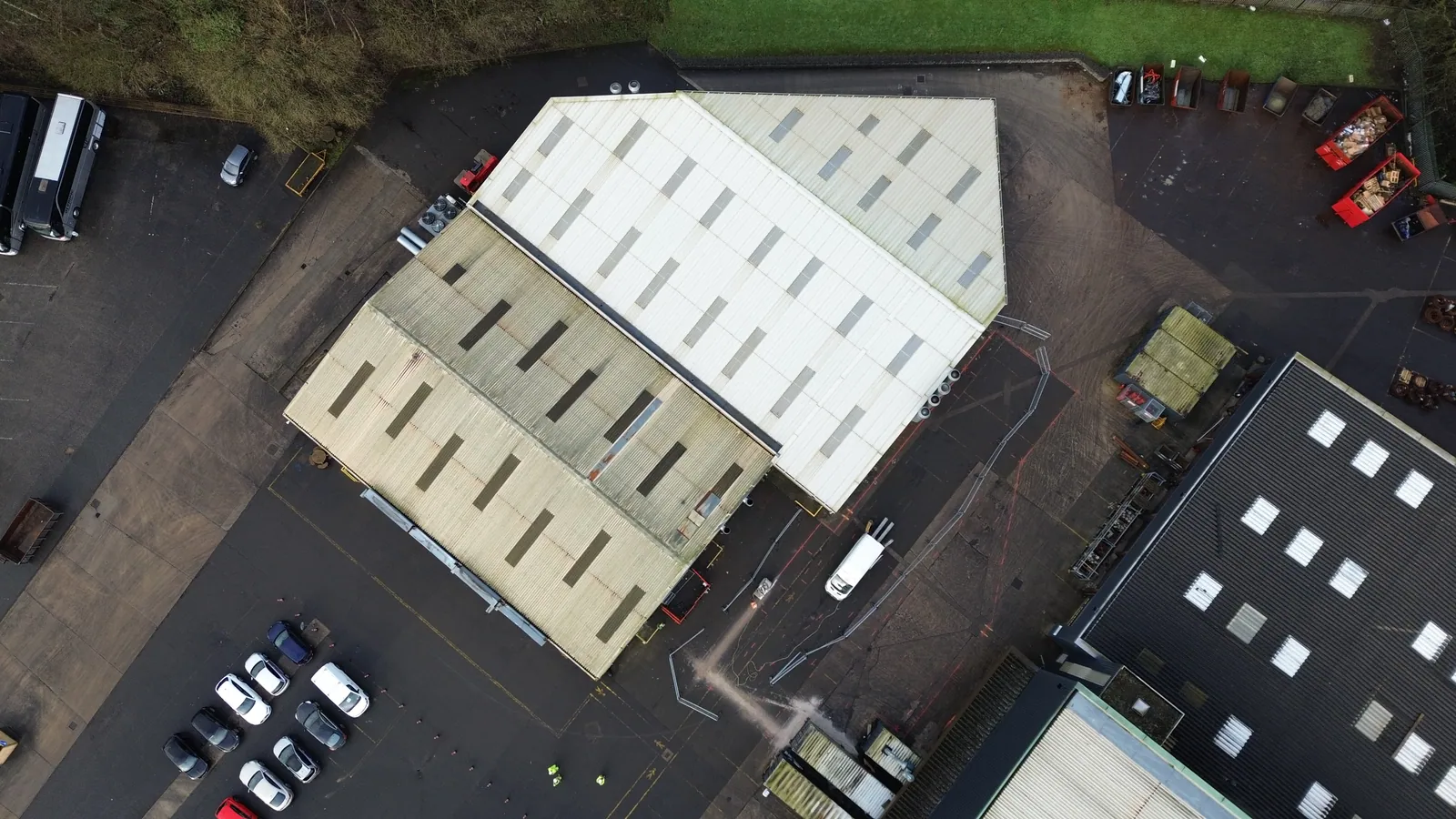
The fact you have a road sweeper coming on-site to clean up, is very much appreciated and shows attention to detail. Your team always work clean and tidy, and what really stood out is their communication and the fact nothing is too much trouble. The concrete repairs exceeded my expectations and should make the area much safer to work in.

Large areas of London have London Clay at or near the surface, and the British Geological Survey says it swells and shrinks as its moisture changes. Grass-covered ground can rise and fall by 50 mm a year, and by up to 100 mm near trees. A shallow base on that clay moves with it, which is why depth and the nearest trees are the first things settled on a London groundworks job.
East London is different ground. East of Woolwich and Poplar the Kempton Park Gravel lies buried under alluvium, and between the point where the Lea meets the Thames and Tilbury, peat beds total more than two metres over large areas, according to the BGS account of London's Quaternary deposits. Peat compresses under a base or slab, so on that ground the soft layers are taken out and replaced, or the load is carried down past them.
Made ground adds another layer. BGS mapping of artificial ground in east London picks out Rainham Marshes as a site of major modern landfill for London's domestic refuse, and the Thurrock chalk pits as an extensive legacy of quarrying, infill and redevelopment. On land like that, several trial holes across the footprint tell you far more than one, and what the fill contains decides what can stay and what has to go.
If a slab is moving because nearby trees are drying the clay, or because trees have been felled and the clay is swelling back, relaying it at the same depth won't stop it. The answer may be a deeper base, or a decision about the trees, made before anyone digs.
And if a yard only needs a new surface over a sound sub-base, that's a concrete repair, covered on concrete yards in London. Our groundworks are for external commercial and industrial sites, and if a London enquiry turns out to be a home or the inside of a building, we'll say so at the first conversation.
Postcode districts in London and around the M25 where we've delivered: DA4, EN3, EN11, IG11, RM19, SE6, SW11, TW16.
See them on the map
Can't see your question? Call us or send your brief and we'll come back to you.
Send your briefDeeper than the clay the trees are drying out. The British Geological Survey says trees can dry the soil to a depth of 5 m, and that clay near trees moves more than clay under grass. The right depth for a particular base depends on the trees, the load and the design, so it's set from the site investigation for that base.
Yes, as a rule. The British Geological Survey describes weathered London Clay as brown and soft to stiff, while the unweathered clay below it is grey, stiff to very stiff, and becomes hard with depth. So the depth at which the clay changes colour is worth recording in every trial hole, because it shows where the firmer clay starts.
It can. The British Geological Survey notes that 80 mm of heave has been recorded after trees were removed. So the survey records felled trees and where they stood, and the base depth and slab design allow for clay swelling back.
Particularly north-west and south-west London, where large areas have London Clay at or near the surface, according to the British Geological Survey. Within those areas, grass, trees and the time of year all change how much the ground moves, so a base is designed around the clay's movement through the whole year, from a dry summer to a wet winter.
On London Clay, the depth at which brown weathered clay gives way to firmer grey clay, and any trees near the works or felled recently. On eastern sites, peat, alluvium and made ground, with trial holes spread across the footprint. Near the chalk mines and sinkholes above, the BGS records for the site. Keep the results: Paul's piece on ground conditions and insurance explains why an insurer may ask.

Ben has over 10 years of experience in contracting management, specialising in pre-construction with some of the UK's largest contractors. Ben now leads pre-construction, project planning and client engagement.
Tell us what's happening on site. We'll review your brief and, if it's a good fit, arrange a free site survey.