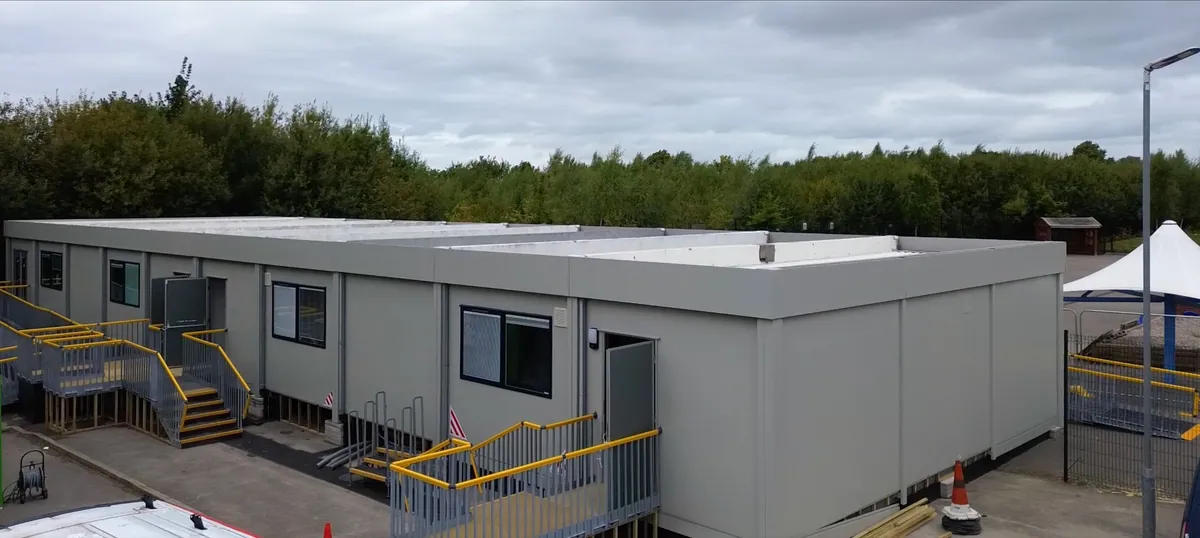
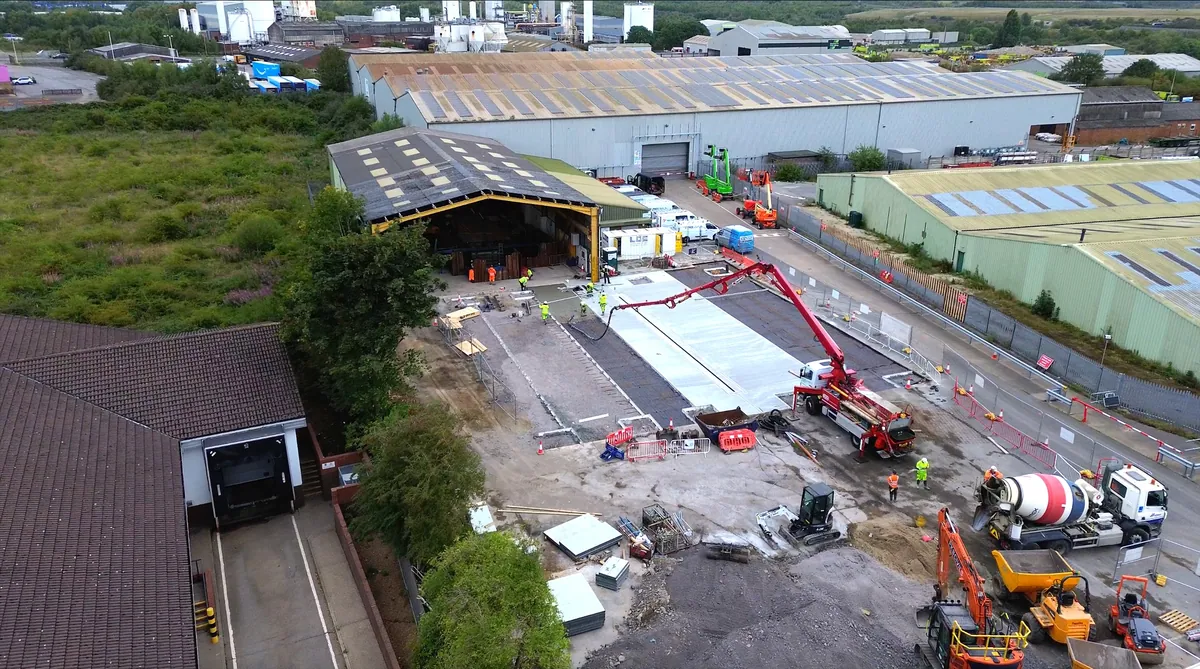

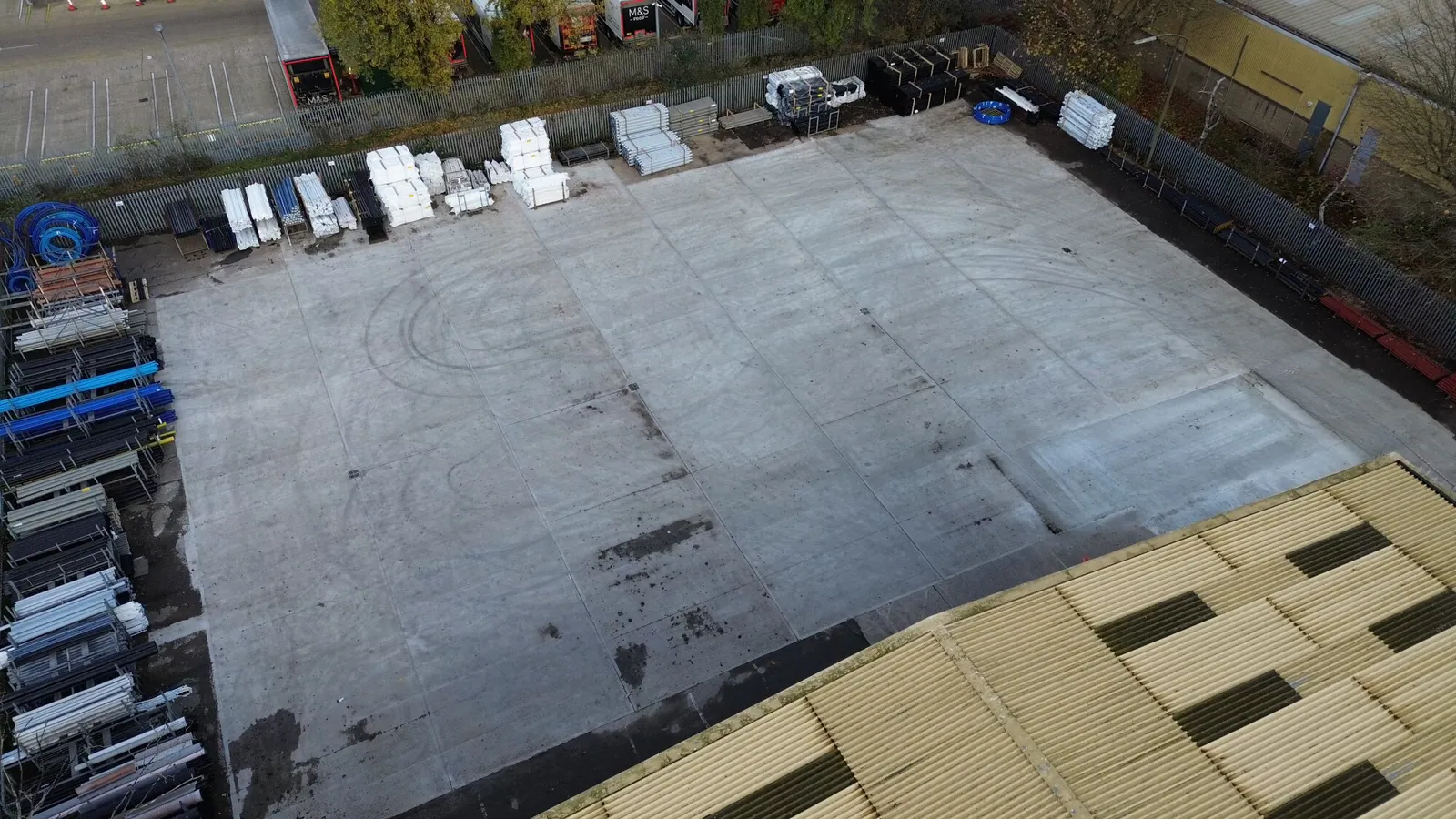
Thanks guys, really happy with how this came out. The yard is great, staff can move around and we've got our space back. Will definitely be coming back to you again.

New concrete yardLondon, Builders merchants, 4 weeksSee the job

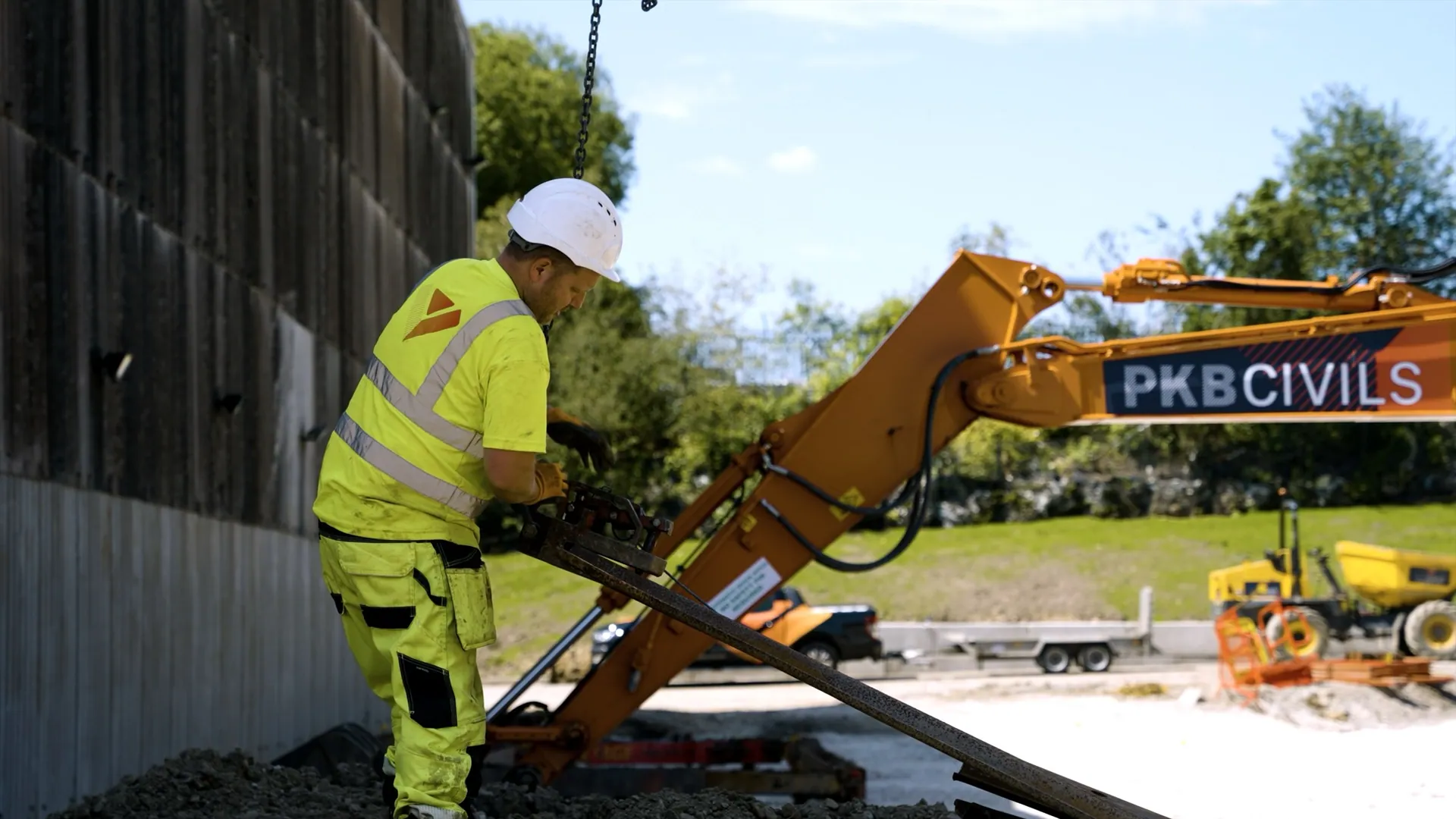
Groundworks on a Southampton yard means building on ground that runs from London Clay in the north of the city to peat, estuary mud and dock fill beside the Test and the Itchen. PKB Civils does it as a specialist contractor, with our own crews and plant from Rochdale, while the yard keeps working round the bases, trenches and walls.
When a Southampton yard needs a base for new plant, a trench for a drain or duct, or a wall where it steps down towards the water, the ground decides most of the design. Our own crews dig and build it, our own machines do the lifting, and the people who survey the yard stay with the job until it's handed back.
Across the city the ground changes quickly: clay in the north, soft organic mud and peat by the rivers and, under the docks, land built out over the estuary. So on a Southampton job the trial holes go in before the levels are set, and any water struck is logged as they're dug. Our groundworks service lists what we build.
Everything we can take on for you. Not sure which you need? Send your brief and we will tell you.
Pads and plinths for plant and racking sized from the trial holes, with peat or soft estuary mud dug out and replaced, or the load taken down past it.
Send your briefDrain and duct trenches by the Test and the Itchen dug in short lengths, with water pumped and the sides supported where the ground won't stand.
Send your briefWalls where a yard steps down a slope or towards the water, designed for the clay or fill behind them and drained so water can't build up.
Send your briefSoft spots in dock fill and organic silt dug out and rebuilt in compacted stone to a tested formation before a new slab goes down.
Send your briefTrial holes across the yard and plate bearing tests on the formation, with any water struck written down, before the levels for a base or slab are fixed.
Send your brief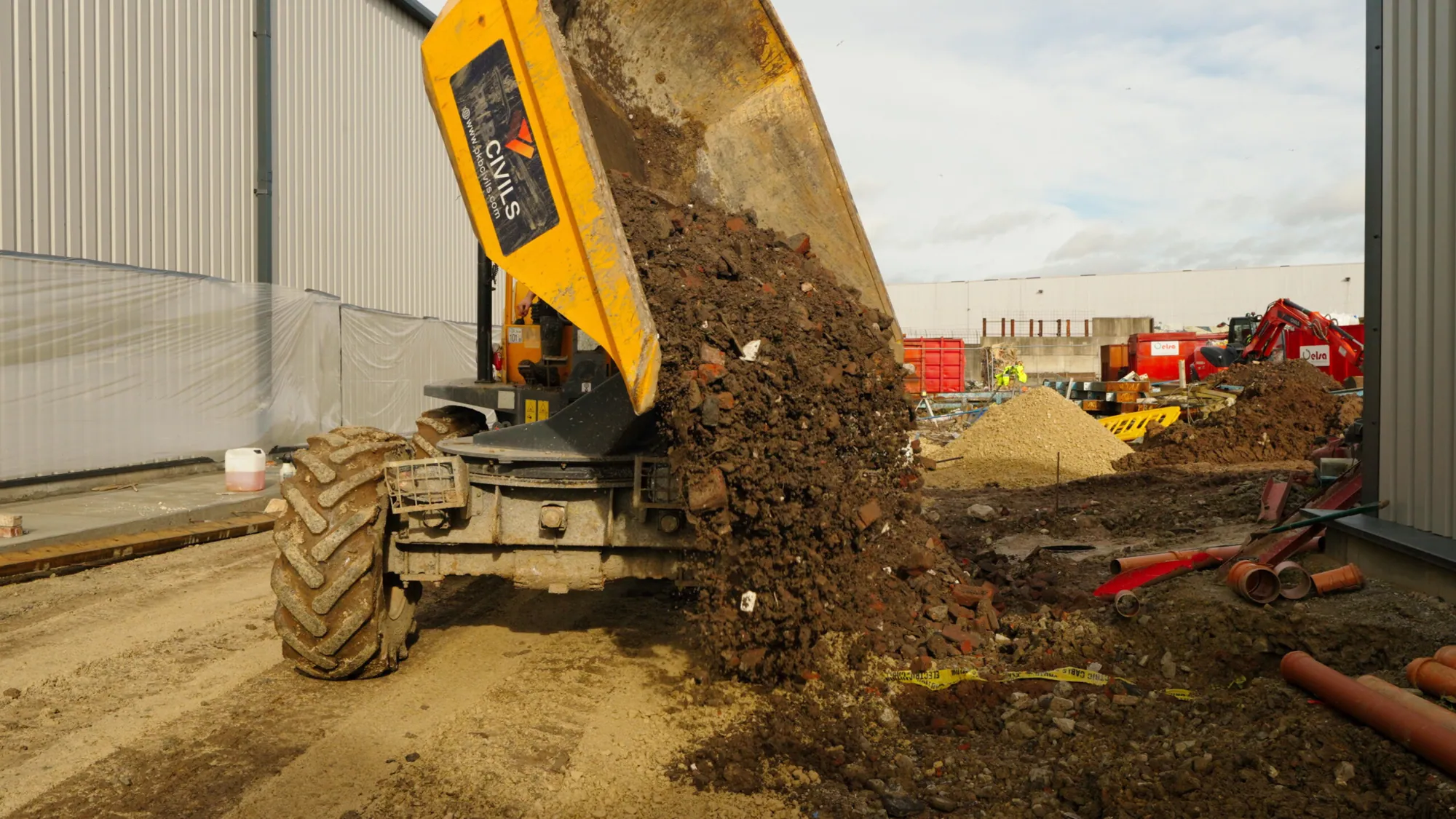
The same people survey, plan and build your job, and your site keeps running while we do it.
Send your briefSouthampton's ground can change from clay to peat across a short distance, so trial holes and plate tests go in before the programme is fixed. The crew that travels down from Rochdale arrives knowing what it's digging into.
Near the Test and the Itchen, and on reclaimed land, water can sit high. If the trial holes find it, pumps and trench support are in the plan before the crew sets off, and any dewatering is checked against the rules on earthworks in Southampton.
On peat or organic silt, a base sized for firm ground keeps settling. We size each one from the trial holes and the load, taking the soft layer out where it's shallow and carrying the load down where it isn't.
Ben's experience is that water carries sub-base away from under a slab long before the surface sinks. Where an old Southampton yard has failed, we dig far enough to see how much has gone before the rebuild is priced.
Send us a short brief and a few photos. If it's a good fit, we'll arrange a free site survey and plan the work around how your site runs.
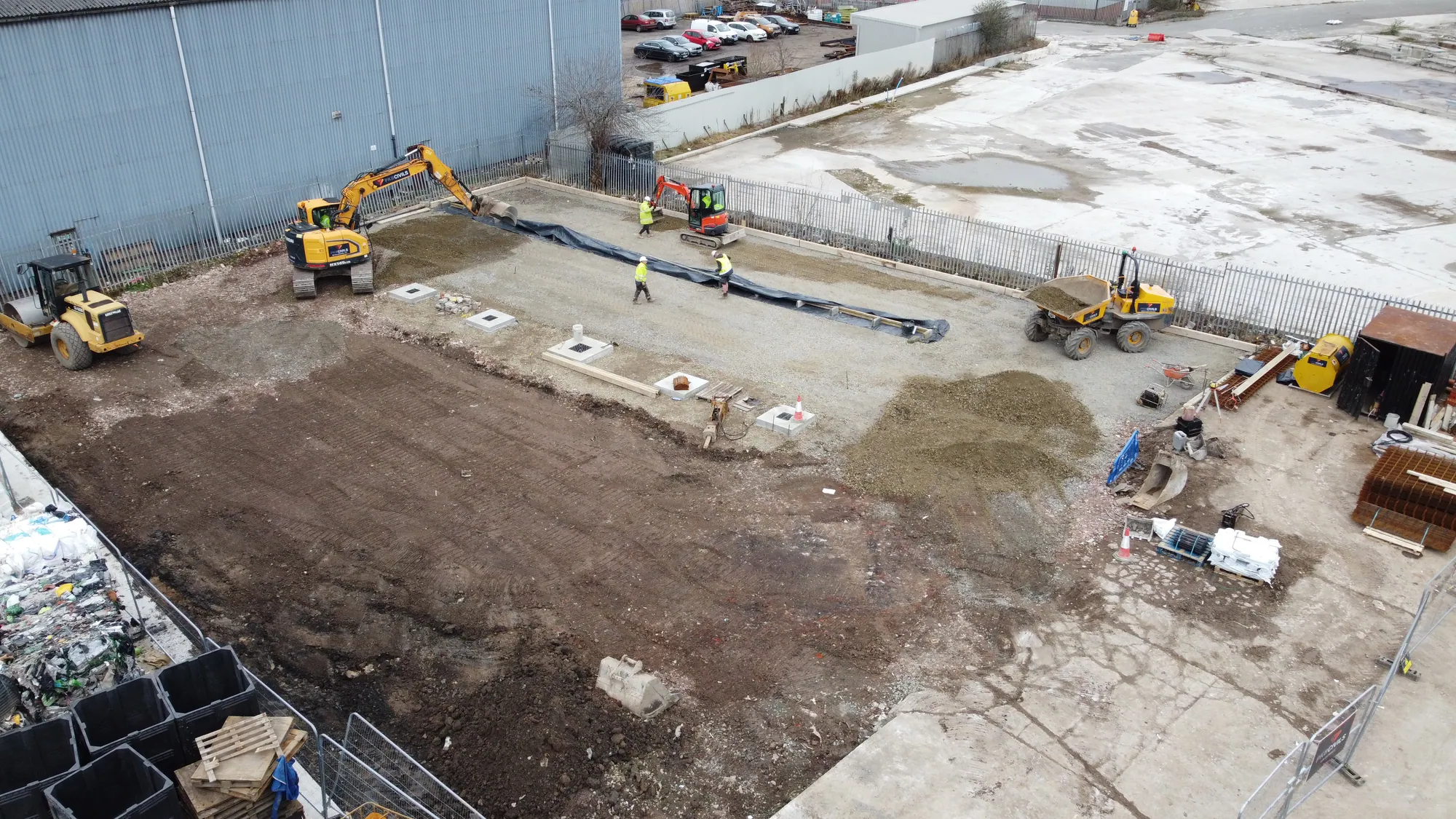
Points in Southampton's ground that change how a base, trench or wall is built, and the records that show them.
Landslips in the district are confined to slopes around Romsey and near Bitterne, where laminated Wittering clays lie under river terrace gravels, says the British Geological Survey. A cut or wall on those slopes is designed before anyone digs.
The same survey puts a 1979 slip at Merry Oak, in made ground and head alone, down to a rise in the water table in the made ground. A wall retaining fill needs drainage behind it as much as strength.
Peat under a loaded base compresses for months after it's built, so a plinth set on it can drift out of level long after handover unless the peat is dealt with first.
Soft organic silt by the rivers won't hold a vertical face for long, so trenches there are supported or dug in short lengths and backfilled the same day.
The jobs closest to Southampton, with this kind of work first.
Feedback from the people who run these sites, shown with the job we did for them.
Thanks guys, really happy with how this came out. The yard is great, staff can move around and we've got our space back. Will definitely be coming back to you again.
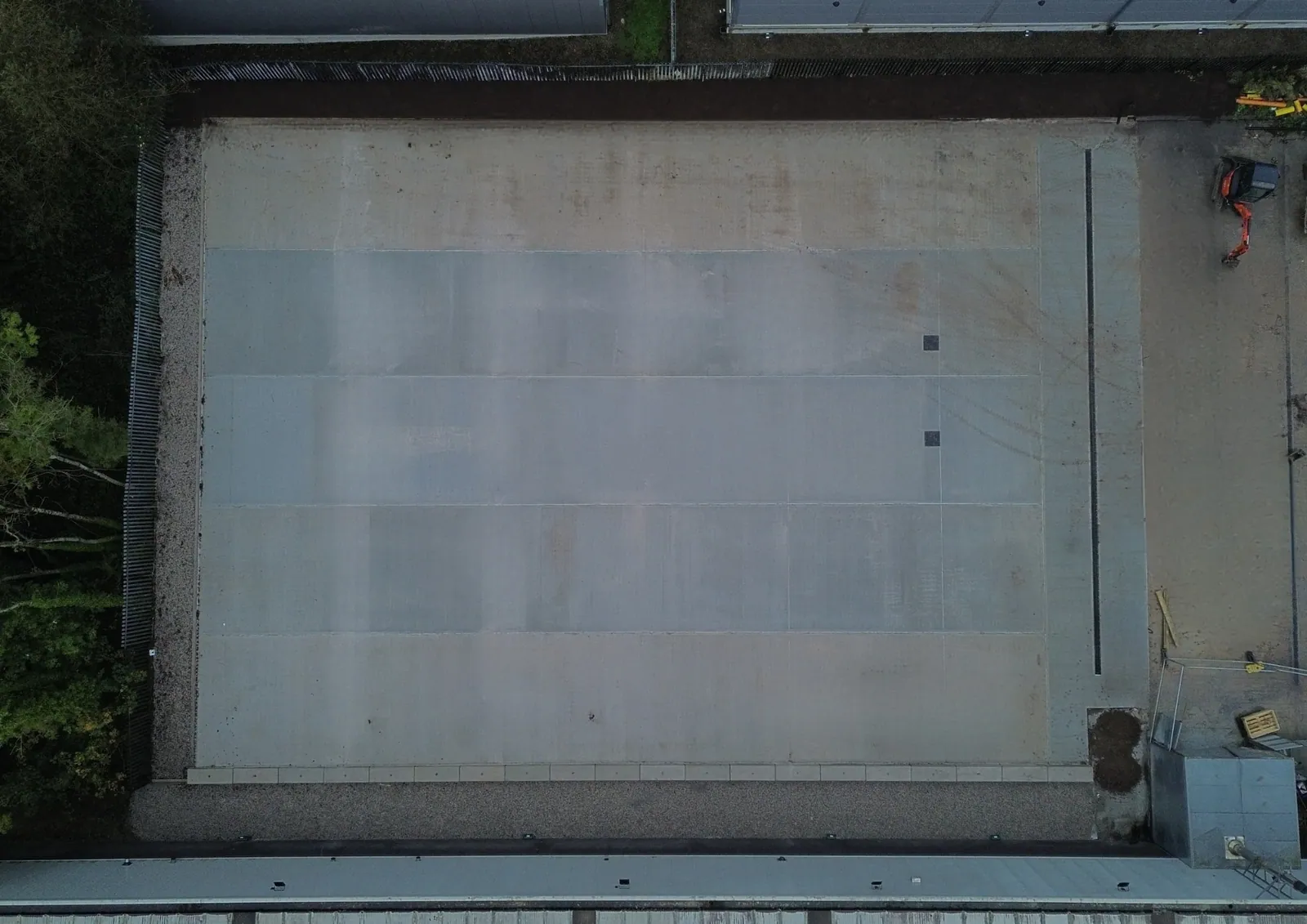
The guys have been brilliant from start to finish... Thanks again to all the team and really appreciate the work you have done for us. Who knows you may end up at another AVK site in the future...

The bedrock is mainly London Clay in the north of the city, with pockets of Whitecliff Sand and Portsmouth Sand, and the Wittering Formation in the south, with bands of Earnley, Marsh Farm and Selsey Sand along the coast, according to the council's drainage guidance. Tidal flat deposits lie over it beside the Test and the Itchen, and river terrace deposits cap the higher ground.
The low ground is the soft part. Every one of Southampton's docks, from the older docks at the mouth of the Itchen to the newest container berths, stands on made ground built out over estuarine alluvium and buried channel deposits, the British Geological Survey records, and that alluvium is mud, silt and sand high in organic matter. Fill over soft organic ground can carry a light load and still settle under a heavy one.
Up the Test it is softer still. The same BGS memoir records that boreholes for the M27 embankment between Hillstreet and Nursling proved up to 9.1 m of alluvium, including 2.6 m of soft black peat, and peaty deposits lie over gravel in the Itchen valley too. A loaded base on ground like that goes on settling unless the soft layers come out or the load is taken down past them.
Not every failed patch of yard needs digging out. If one spot breaks up however often it's filled, Ben's point is that a pothole patched over failed sub-base soon breaks up again, so the sub-base is rebuilt and whatever washed it out, usually water, is dealt with first. Our article on potholes that return after repair explains how.
Ground that sounds hollow is the case for stopping to look. Ben's rule for a slab that rings hollow underfoot is to investigate straight away, since it usually means voids have opened beneath; on dock fill, the drains under it get a camera survey first, as drainage in Southampton explains.
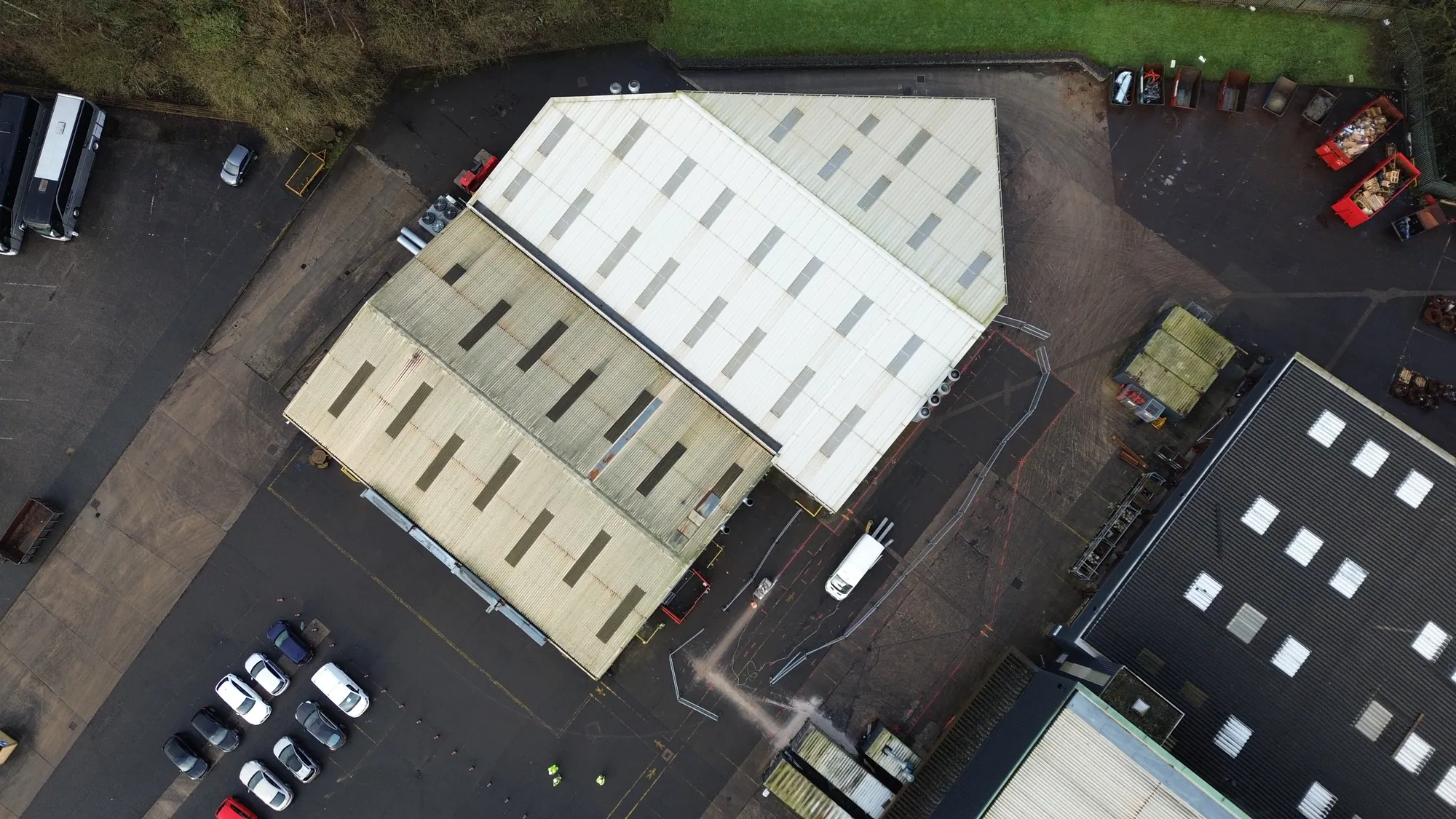
Can't see your question? Call us or send your brief and we'll come back to you.
Send your briefOften high, though the records are thin. The council's drainage guidance says records of groundwater levels in the city are limited, but areas close to the Test and the Itchen can have high groundwater, particularly where built on reclaimed land. Some areas have perched water tables that form local springs, and groundwater flooding has been noted in Shirley. Each job's trial holes record any water struck before a trench is planned.
Yes. On dock fill a base is sized once plate tests and trial holes show how firm the fill is and how deep the soft estuary ground below it lies. Soft spots found on the way down are dug out and replaced in compacted stone. The rest of the yard stays in use, with the dig fenced off from the traffic round it.
It can. Detailed design for the River Itchen Flood Alleviation Scheme, on the river's west bank, included fully understanding the sheet piles needed to manage groundwater and its interaction with the tide. A deep trench or base close to the river may meet the same thing, so the ground investigation records water levels, and how they change, before the dig is planned.
Yes, for commercial and industrial yards. Nursling sits by the soft alluvium of the Test valley described above, and Marchwood on reclaimed land across Southampton Water. The survey and trial holes come first, and our crews and plant travel from Rochdale for the work itself.
If it's shallow, it comes out and is replaced with compacted stone to a tested formation. If it's deeper, the base needs a different foundation, which the engineer designs before the dig carries on. Either way the change is agreed with you on site, with the cost and the time it adds, before the crew goes any further.

Ben has over 10 years of experience in contracting management, specialising in pre-construction with some of the UK's largest contractors. Ben now leads pre-construction, project planning and client engagement.
Tell us what's happening on site. We'll review your brief and, if it's a good fit, arrange a free site survey.