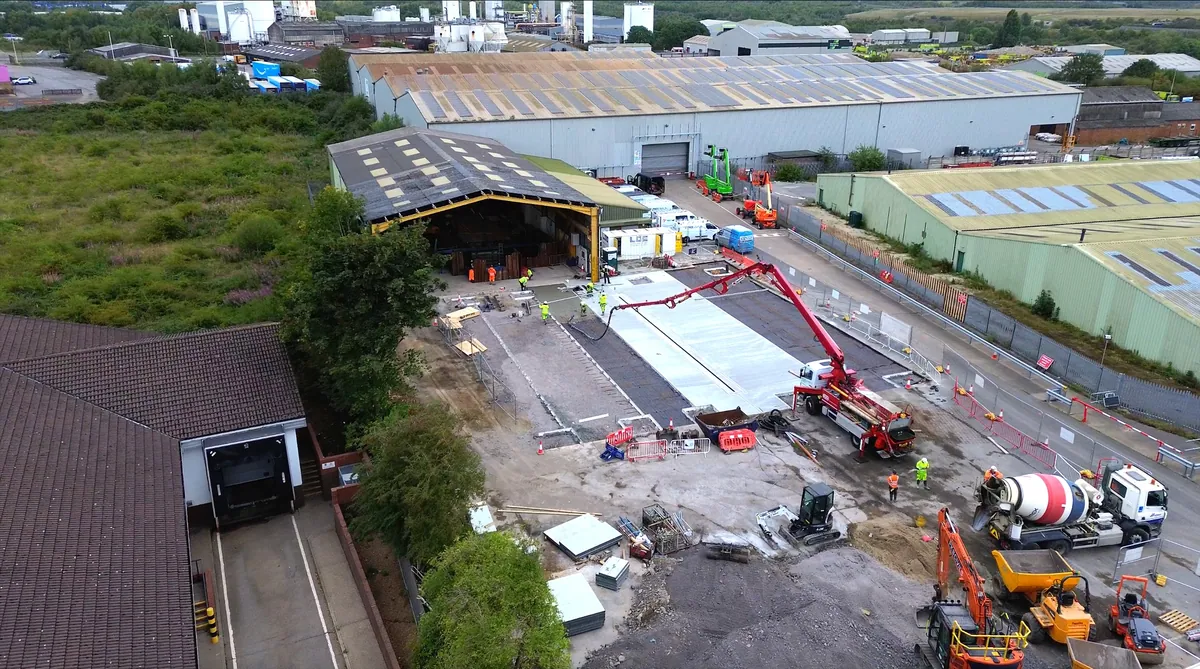
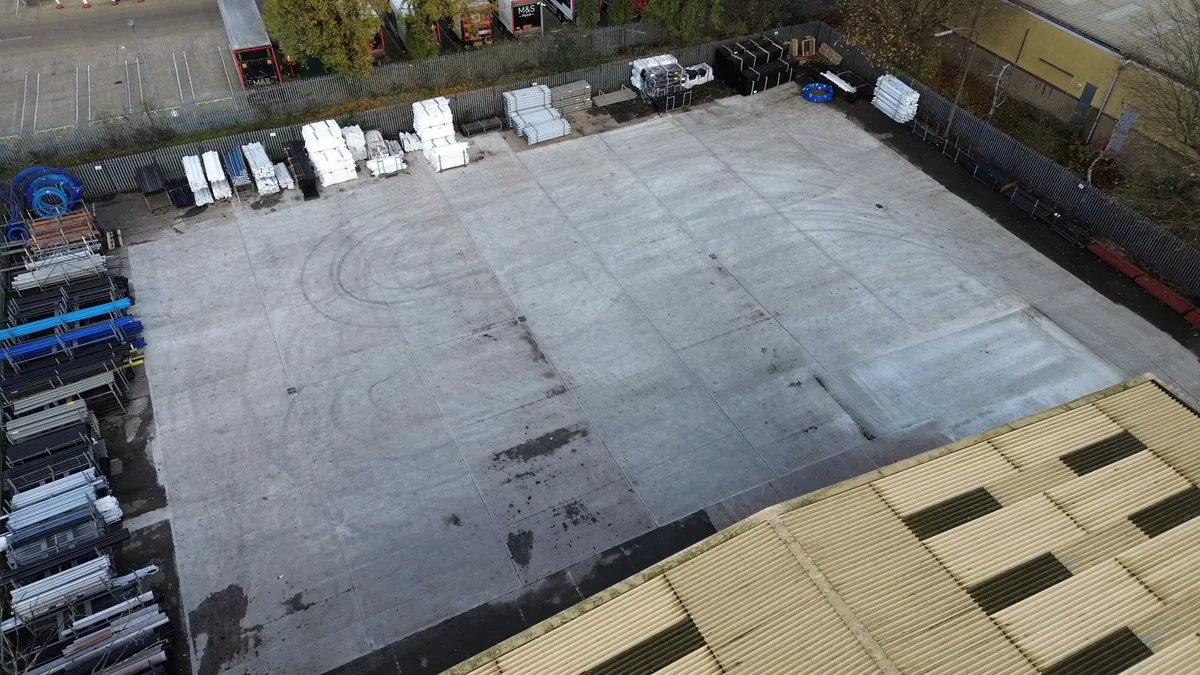
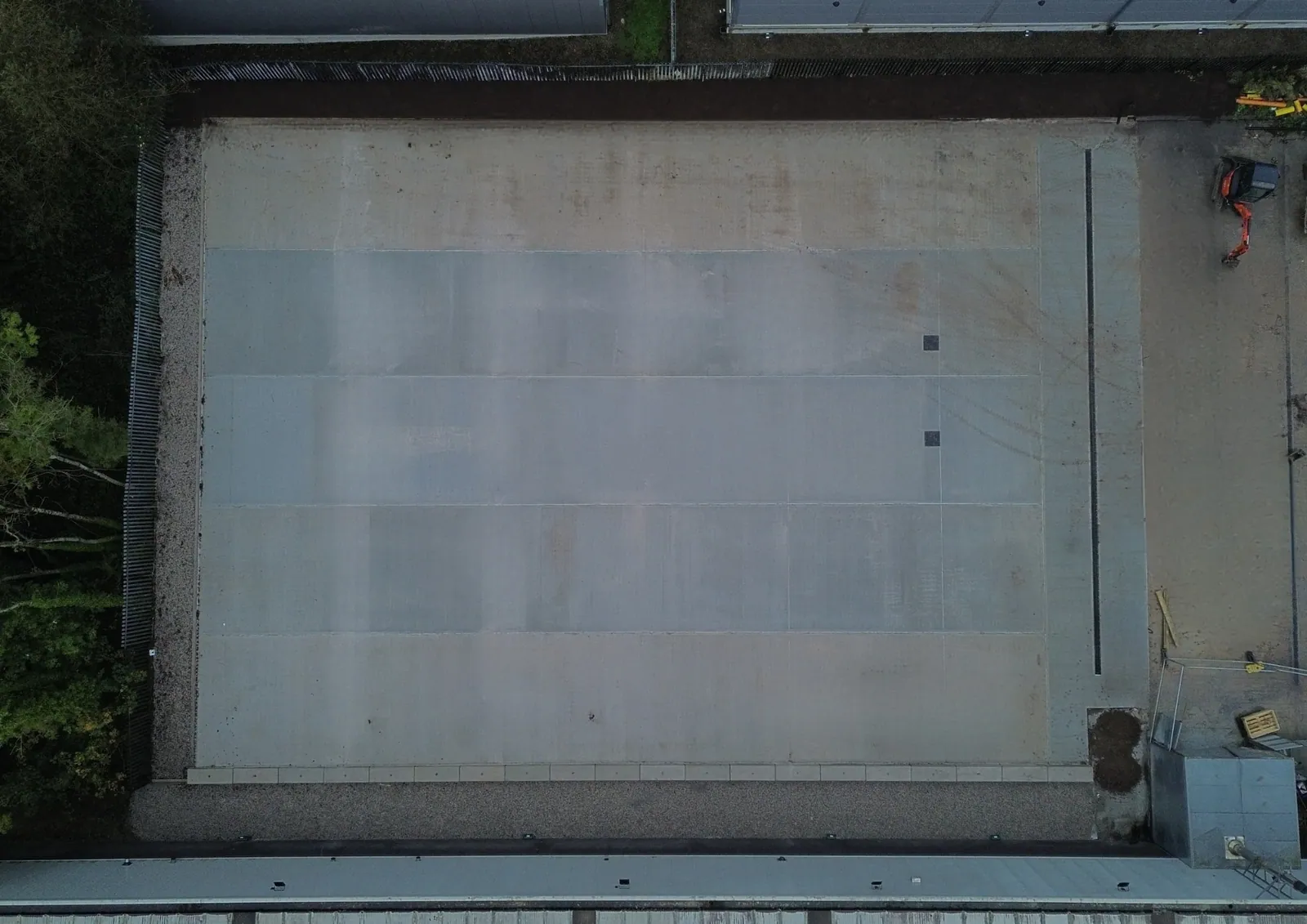
PKB Civils is a specialist earthworks contractor for commercial plots and yards around Southampton, where a dig can open into old city rubble, a filled clay pit or land built from river dredgings. Our own operators and plant travel from Rochdale, and every load is tested and planned, kept for reuse or booked away, before the first cut.
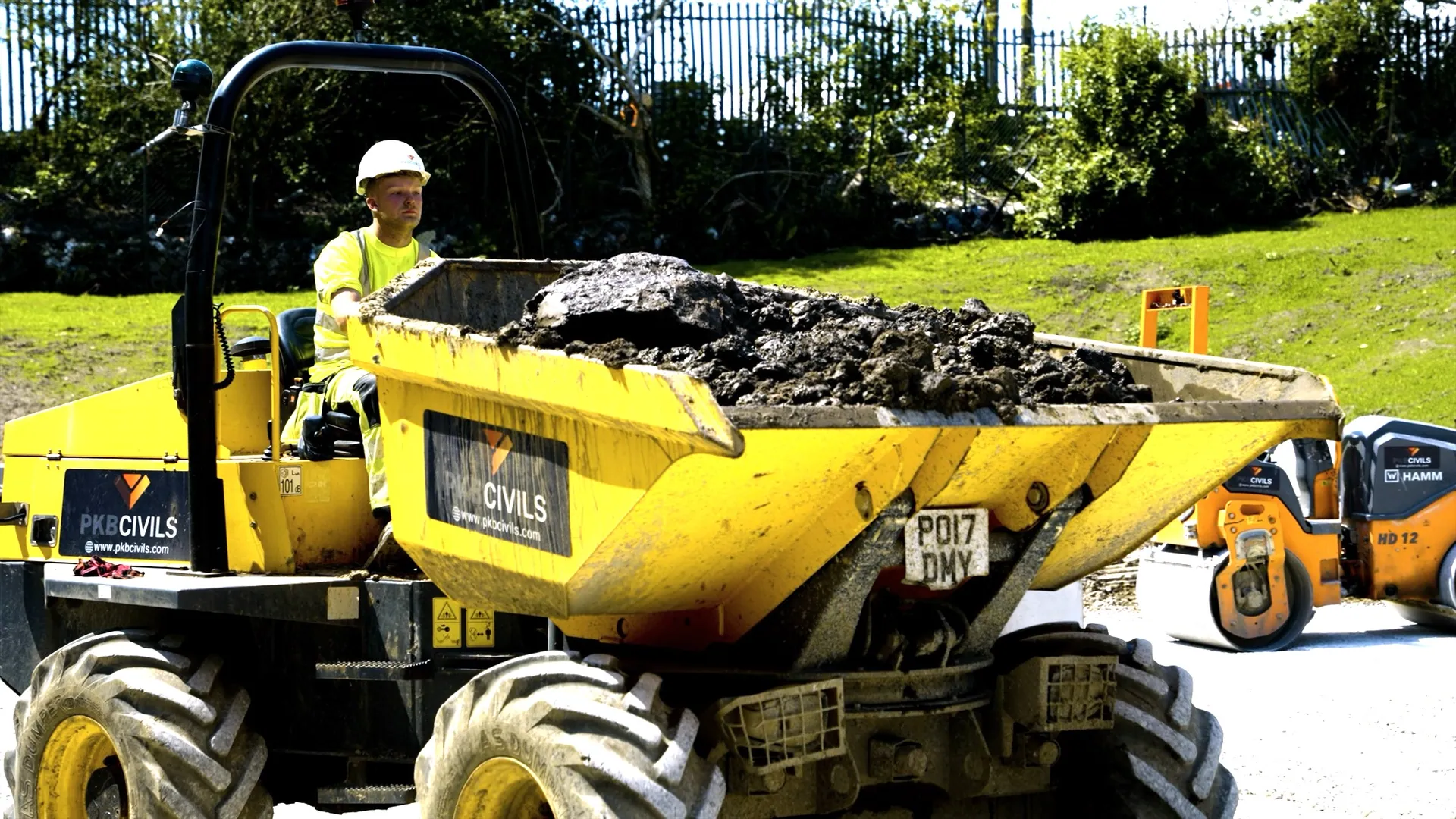
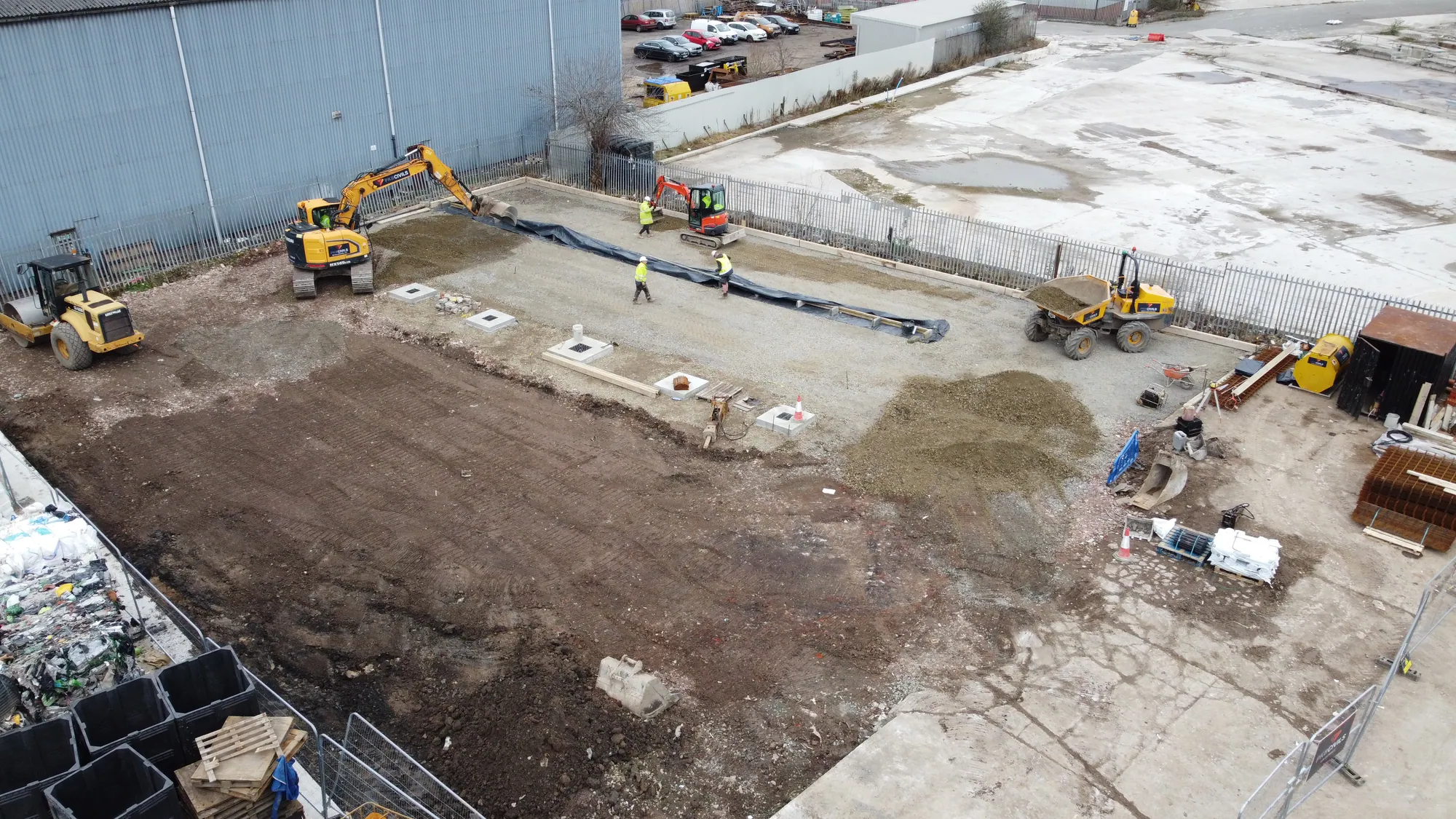
Earthworks on a commercial plot or yard comes down to two questions: what level the ground has to finish at, and what happens to everything dug out to get there. Our operators run our own excavators and dumpers, and whoever plans the levels plans where the spoil goes as well.
In Southampton the second question is often the harder one. Much of the low ground is made ground, and some of it is river dredgings, so a load that looks like soil may need testing before it can stay on site or go to a tip. Raising a plot near the water meets limits of its own. Our earthworks service explains how a dig is planned.
2,000+Projects completed across the UK
150,000m²Concrete poured across all our jobs
40yearsFamily-run in Rochdale since 1986
Earthworks in Southampton: what we do
Everything we can take on for you. Not sure which you need? Send your brief and we will tell you.
Reduce digs on old yards
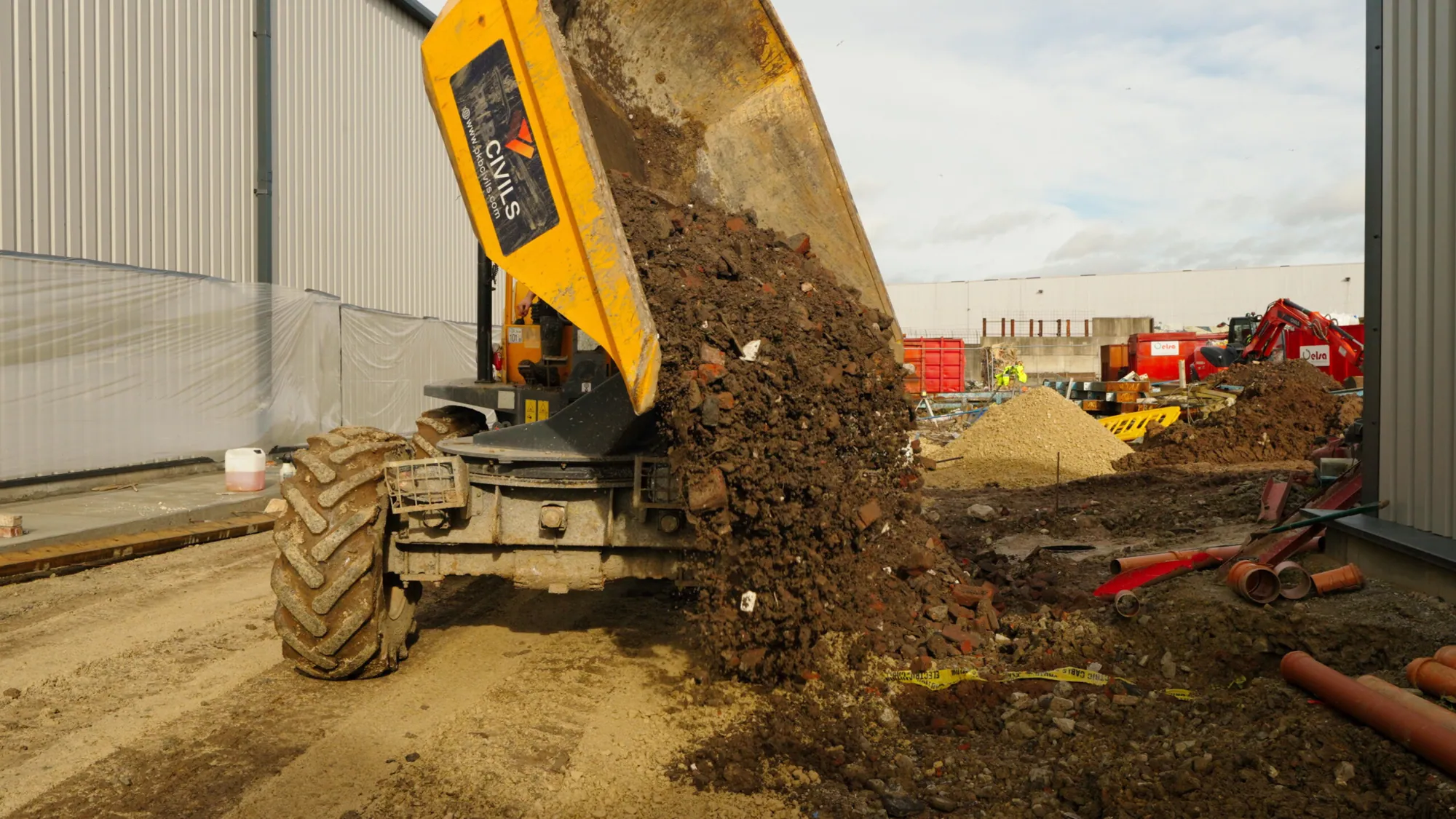
Old yards taken down to firm ground, with brick and concrete rubble sorted from soil at the dig face so each heap has somewhere to go.
Our plant and operators travel from Rochdale, so the spoil plan is settled before they set off: which material stays, which goes and where it goes. A dig stopped while someone finds a tip that will take refuse fill would cost days.
Samples taken at the survey
On ground that may be dredged silt, old refuse or city rubble, samples are taken at the survey stage, so the classification of each load is known before the price is.
Fewer lorries on Southampton's roads
Every load compacted back into the site is one fewer HGV to route across the city. Material that tests well is placed and rolled back in on the plot, and only what can't be used is booked onto a lorry.
Earthworks planned for a Southampton site?
Send us a short brief and a few photos. If it's a good fit, we'll arrange a free site survey and plan the work around how your site runs.
Where cut, fill and spoil are most likely to run into trouble on Southampton plots, and why.
Fill that changes across a plot
On reclaimed or long-used land, one end of a plot may be dredged silt and the other old rubble, so trial pits go in across the whole footprint before any quantities or prices are fixed.
Wet silt that won't compact
Dredged and estuarine material holds water, so a heap of it slumps and a layer of it won't take a roller. Testing decides whether it can be spread, dried and reused on the plot or has to leave.
Rubble ground in the old city
Ground made from earlier buildings is brick, stone and concrete as much as soil, and it digs, sorts and classifies very differently from the natural ground beneath it.
Nowhere to stockpile
Tight waterfront plots leave little room to heap spoil while it waits for test results, so the sampling is done before the dig and each load's destination booked in advance.
Our nearest projects to Southampton
The jobs closest to Southampton, with this kind of work first.
Feedback from the people who run these sites, shown with the job we did for them.
1 / 2
“
The guys have been brilliant from start to finish... Thanks again to all the team and really appreciate the work you have done for us. Who knows you may end up at another AVK site in the future...
New concrete yardHyde, Manufacturing, 6 weeksSee the job
“
Really impressed with your team and how you kept the yard open, the new works look fantastic. Brilliant job.
Yard extension and retaining wallBolton, Builders merchantsSee the job
What ground and site conditions should you expect in Southampton?
The British Geological Survey sorts Southampton's made ground into three kinds. In the older city it is rubble from buildings going back to Roman times, typically 1.2 to 1.5 m thick and much more in places. In worked-out pits it is fill, including up to 4 m of household refuse in an old clay pit at Aldermoor. And between Marchwood and Hythe it is reclaimed land, built out over estuarine alluvium mainly from river dredgings. Each digs differently, and each needs testing before any of it is counted on as fill.
Raising land by the water has limits. The council's 2022 review of industrial land says redeveloping the Hazel Road waterfront site on the Itchen would need the land raising, which creates problems with the internationally protected mudflats around it. On a plot like that, the finished level and the edge of the fill are agreed with the flood and ecology design before a load is brought in.
Water is the other limit. Groundwater can sit high near the Test and the Itchen, as groundworks in Southampton explains, so a reduce dig there may meet water before it reaches formation, and any pumping has to fit the Environment Agency's rules set out in the FAQs below.
When earthworks isn't the right call
Where the plan is to raise a waterfront plot, the earthworks come last. The finished level has to suit the flood risk design and the protected habitat next door, and both are settled before any fill is ordered; until then, trial pits and a levels survey are as far as a dig should go.
And where the job is one failed patch of yard over sound ground, a full reduce dig is more than it needs. Ben's rule is to find what failed underneath first, which on old yards is usually water washing out the sub-base, and size the repair to the damage. Our piece on the hidden cost of yard potholes explains why.
Can we pump groundwater from a dig near the Itchen without a licence?
Sometimes. The Environment Agency's regulatory position statement on small-scale construction dewatering, published in April 2026, covers pumping in England for under 270 days. It can't be used within 50 metres of a watercourse, or within half a kilometre of a European or Ramsar site, and it needs a hydrogeological impact assessment and notice to the Environment Agency before pumping starts. So a dig beside the river needs its position checked before that statement is relied on.
Is the soil reuse code about to change in England?
It's being revised. The Environment Agency is working with CL:AIRE on the third version of the Definition of Waste Code of Practice, to be published under a new title, The Soil Passport Scheme: Code of Practice, and expected to keep the existing mechanisms and scenarios. Check which version is in force when the materials plan for a Southampton dig is written.
Will the council know if our plot's soil is contaminated?
It may hold records. A 2006 desk study by Southampton City Council identified 1,517 places in the city where potentially contaminating land uses have existed, and its Land Quality Strategy for 2018 to 2023 centred its inspection work on 53 priority sites. Ask the council what it holds for your plot, and test the soil anyway before any of it is reused.
Can spoil from a Southampton dig go back under the new yard?
Some of it can. Clean granular ground that tests well can be compacted back in layers under the new sub-base. Refuse fill and soft organic silt seldom make a firm formation, so those are usually the loads that leave. The testing at the survey stage tells you which is which, and how much of each, before the dig is priced.
How soon can plant get to a Southampton dig?
Once the survey, the testing and the spoil plan are done. Our plant is kept at our yard in Rochdale, about 191 miles away in a straight line, and it travels down with the operators for each job. The start date goes in the proposal, so you know when the machines will arrive and how long they'll be on your plot.
Ben has over 10 years of experience in contracting management, specialising in pre-construction with some of the UK's largest contractors. Ben now leads pre-construction, project planning and client engagement.
We use cookies to see how people use our site and to measure our adverts. They're on unless you choose Reject all. Privacy policy
Necessary
Needed for the site to work, such as remembering your cookie choice. They don't store anything that identifies you.
Always active
Analytics
Google Analytics and Microsoft Clarity show us how people use the site, such as which pages they visit and where they came from, so we can improve it.
Advertising
HubSpot, Google Ads and WhatConverts cookies measure how our adverts perform and connect an enquiry or phone call to the advert or page that led to it.