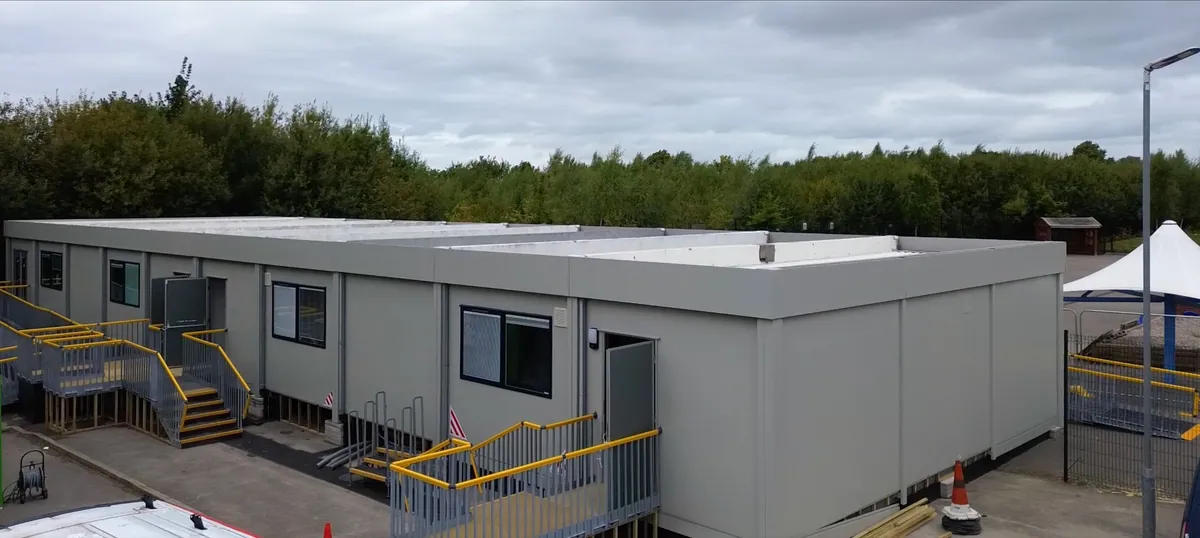
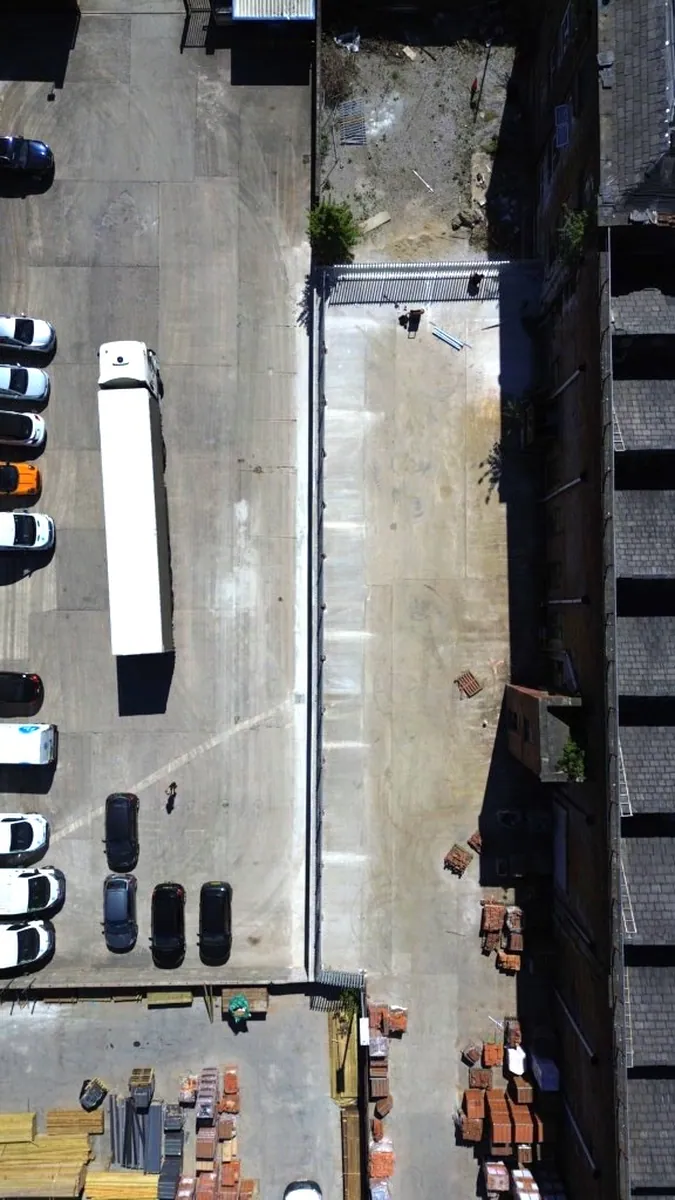
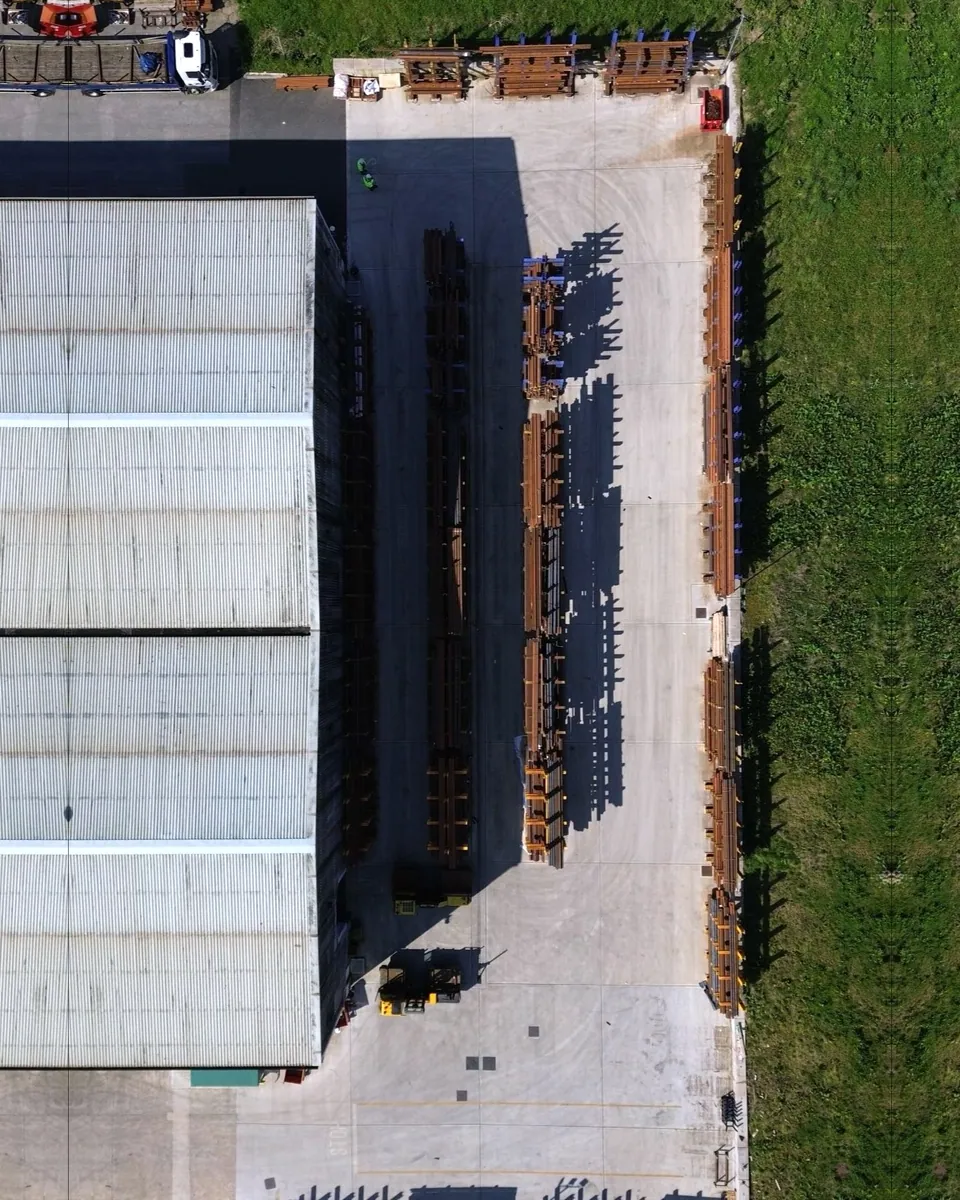
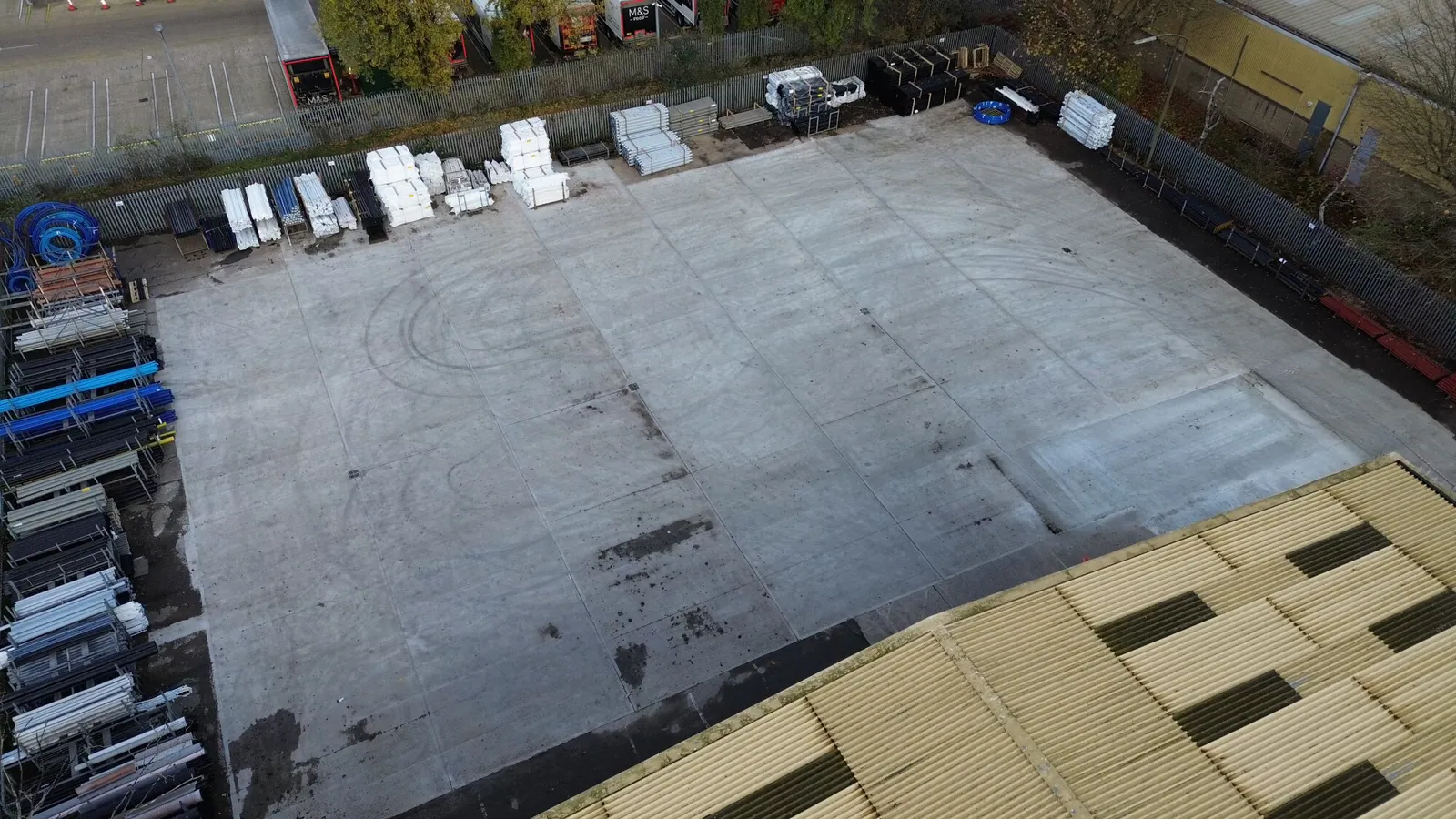
Thanks guys, really happy with how this came out. The yard is great, staff can move around and we've got our space back. Will definitely be coming back to you again.

New concrete yardLondon, Builders merchants, 4 weeksSee the job

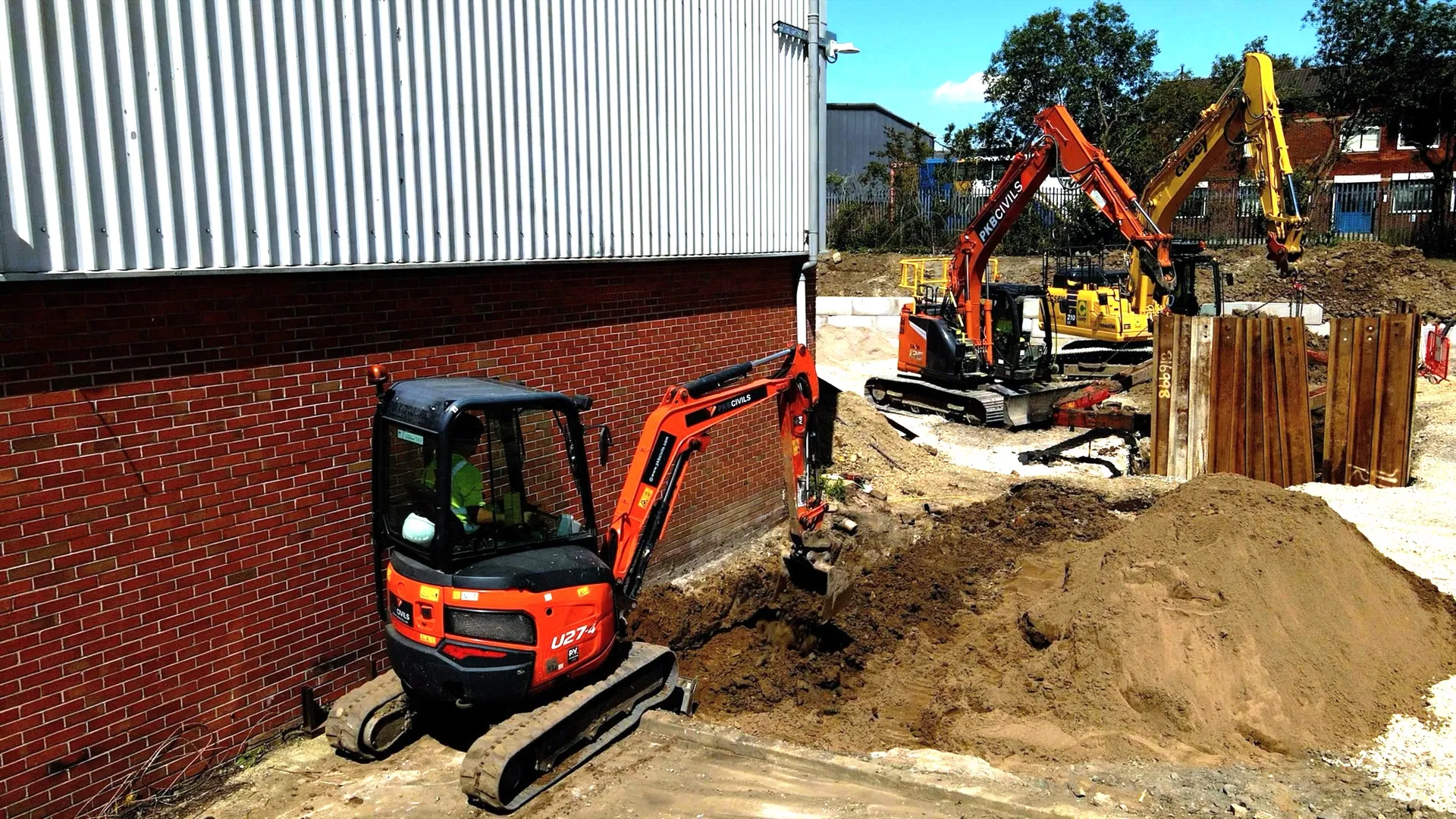
PKB Civils builds the groundworks under Bristol's commercial and industrial yards: bases, trenches and retaining walls on the reclaimed dock land of Avonmouth and Severnside and the Blitz rubble under the city centre. Our own crews and plant travel from Rochdale, phase the work so the yard stays open, and test the ground before the levels are set.
On a Bristol yard, groundworks starts with what the yard was built on: reclaimed dock land at Avonmouth and Severnside, soft estuary deposits beside the Severn, or wartime rubble under the city centre. We build bases, trenches, retaining walls and new sub-bases round a working yard with our own crews and machines, and the same team stays from site survey to handover.
Because that ground varies so much across the city, we test it before the levels are fixed and design each base and trench around the results. Our groundworks service covers the work in detail, from pads to retaining walls.
Everything we can take on for you. Not sure which you need? Send your brief and we will tell you.
Plinths and pads for plant and racking, each designed from what the test pits show under that spot, from dock fill to soft estuary mud and peat.
Send your briefDuct and pipe trenches cut through Blitz rubble or dock fill, with the sides supported as they go down and the backfill chosen to suit what came out.
Send your briefWalls where a Bristol yard is extended or its levels step, including the boundary of a plot raised above the land around it.
Send your briefSoft spots and failed sub-base dug out and rebuilt in compacted stone to a tested formation, ready for a new slab on reclaimed ground.
Send your briefPads, service trenches and drainage connections for new units on a working Bristol estate, laid out so the yard round them stays in use.
Send your brief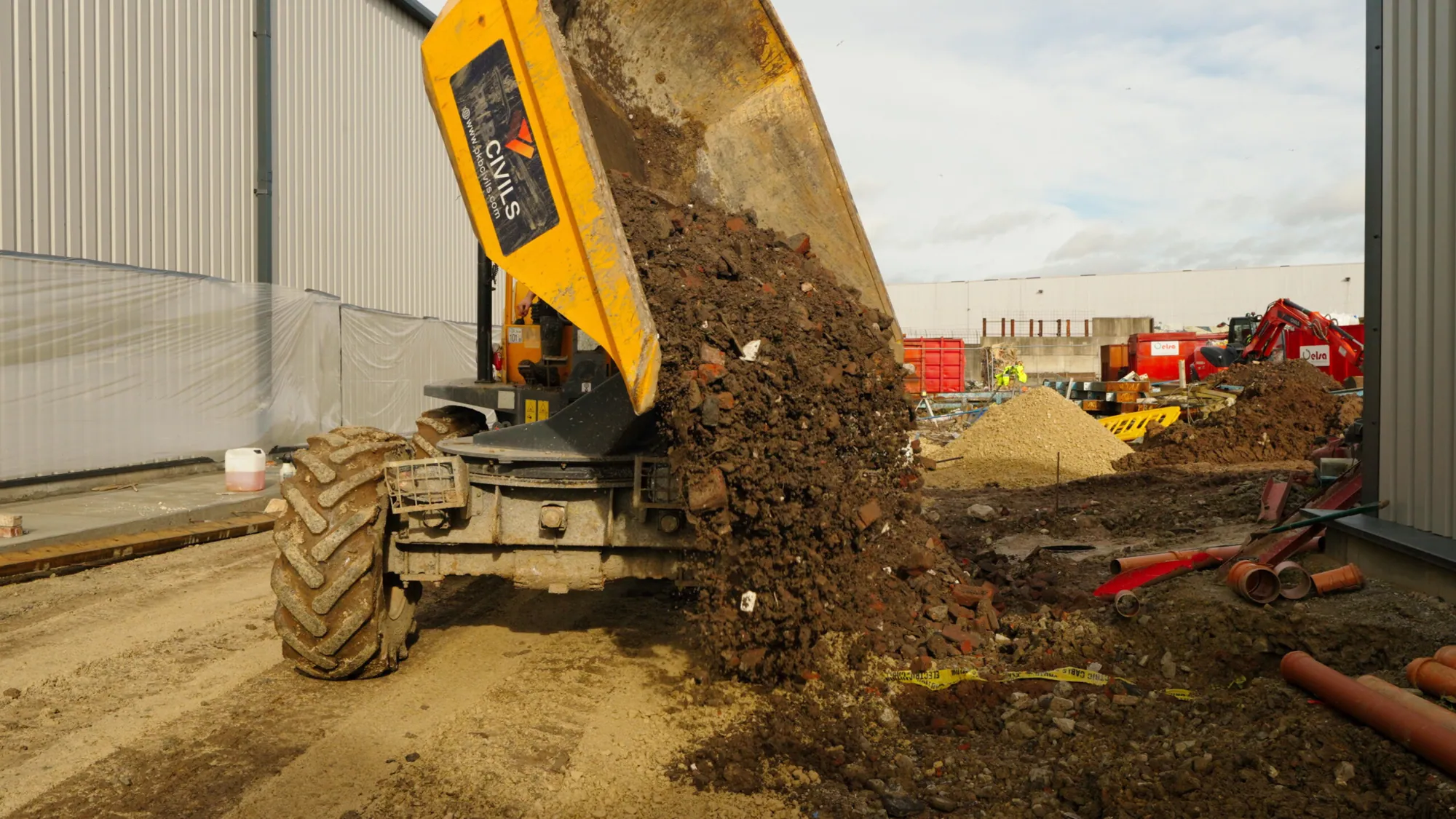
The same people survey, plan and build your job, and your site keeps running while we do it.
Send your briefOn reclaimed land at Avonmouth or Severnside, our trial holes and plate bearing or CBR tests go in before the base design and the price are fixed, the same order of work that started our new yard for AVK in Hyde.
On soft tidal flat mud and peat, an open trench can squeeze in and a fresh base can settle, so on Avonmouth sites we dig in short lengths and backfill as we go, and size each base from what the trial holes found.
BGS has linked groundwater changes in east Bristol to old mine drainage levels blocked by foundations and sheet piling, so before a deep dig or sheet piling there, the mining records are checked and the dig is planned for water where the old levels ran.
Send us a short brief and a few photos. If it's a good fit, we'll arrange a free site survey and plan the work around how your site runs.
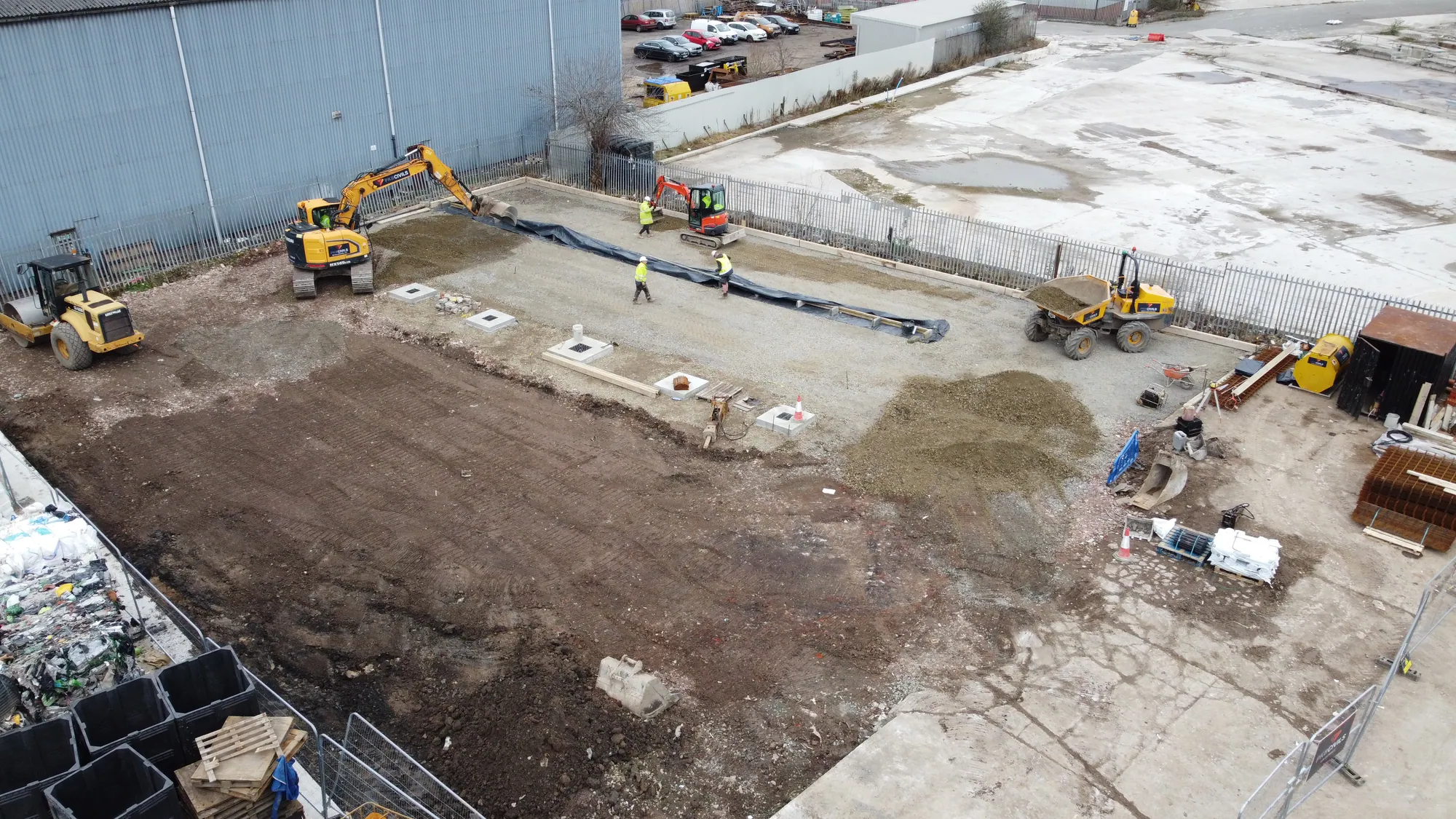
What the ground under Bristol yards can hide, and the records that point to it.
On soft tidal flat mud and peat, a loaded pad or slab can go on settling after it's built. The trial holes and the design load decide whether the answer is a wider base, a deeper sub-base or a specialist foundation below it.
Ben treats a hollow sound underfoot as a sign of voids under the slab, to be investigated at once. On reclaimed land, fill settling away from the underside of the slab is one cause, and the dig finds out which.
In the city centre and Broadmead, raised ground sits on wartime rubble, so a trench may go further than planned before it meets natural ground.
Modern trading estates on Bristol's low ground have in many cases been built on raised ground, so the first cut through an estate yard may be into imported fill. Its depth decides how a new trench or base is supported.
The jobs closest to Bristol, with this kind of work first.
Feedback from the people who run these sites, shown with the job we did for them.
Thanks guys, really happy with how this came out. The yard is great, staff can move around and we've got our space back. Will definitely be coming back to you again.
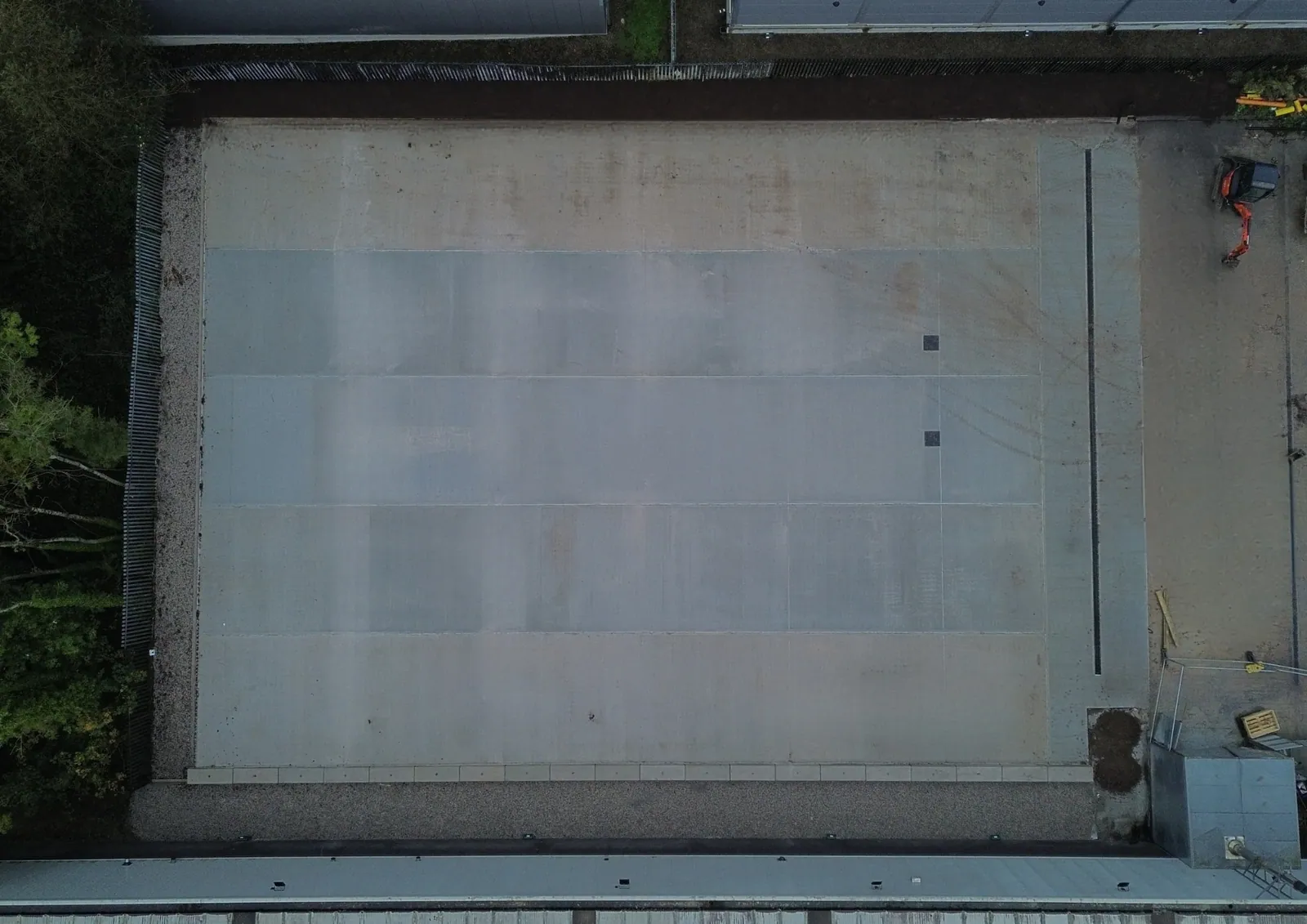
The guys have been brilliant from start to finish... Thanks again to all the team and really appreciate the work you have done for us. Who knows you may end up at another AVK site in the future...

Along the Severn Estuary, the British Geological Survey maps tidal flat and peat deposits of mud, peat, silt and sand on a gravel base, up to 20 m thick, and at Avonmouth a broad spread of them rests on the soft Mercia Mudstone. Inland, peat deposits can be up to 5 m thick. Ground like that compresses under a loaded base, and unevenly where its thickness changes, so the trial holes decide how wide and how deep a base needs to go.
Reclaimed port and dock land around Avonmouth, Portbury and Severnside is the most extensive made ground in the Bristol district, according to BGS, and at Avonmouth and Portbury much of the land is raised several metres by man-made deposits. In many areas, modern trading estates have also been built on raised ground to lessen flood risk, and in the city centre and Broadmead, extensive raised ground sits on Blitz rubble. Fill placed for a dock or an estate can change in depth and content from one bay to the next.
East and north-east of the city, BGS records abandoned shafts and subsidence on the old Bristol Coalfield, and, in several cases in east Bristol, groundwater changes linked to old mine drainage levels blocked by new foundations and sheet piling. A 2025 planning decision for a site on Marlborough Street recorded the Coal Authority, which now trades as the Mining Remediation Authority, confirming it lay in the Development High Risk Area.
Deep soft ground under a heavy new building can call for piles or ground improvement, and that is a decision for the structural engineer's design. Our trial holes and plate tests give the designer a clear picture of what's under the yard before the design is fixed.
A sinking or hollow-sounding slab is another case. Ben's experience is that water washing out the sub-base does its damage long before the surface shows it. On a Bristol yard that means a camera survey of the drains comes before any breaking out, and a drainage fault is fixed before new groundworks go in: see drainage in Bristol, and our article on why yard potholes keep coming back.
Postcode districts in Bristol and Avonmouth where we've delivered: BS3, BS5, BS11.
See them on the map
Can't see your question? Call us or send your brief and we'll come back to you.
Send your briefSometimes, once it's been tested. Reclaimed dock land is made ground, so whether its top layer can stay under a new sub-base depends on what it is and how well it was placed when the docks were built. Trial holes across the yard and plate tests on the formation answer that before the slab is designed.
Possibly, but there's little evidence either way. The 2011 flood risk assessment for Avonmouth and Severnside found little data on how much groundwater adds to surface flooding, and its 2010 update identified no groundwater data and no evidence that groundwater flooding was a key factor. So we don't assume a wet trench or a dry one: the site investigation records any water struck, and the dig is planned from that.
Most yard groundworks, once the ground is understood. Plinths, trenches and walls on the tidal flat deposits are designed from trial holes and plate tests, and bases are widened or taken deeper where the mud and peat are soft. Where a heavy structure needs more than that, the engineer's design carries the load down to firmer ground.
There can be. Besides the estuary deposits, the British Geological Survey records inland peat deposits up to 5 m thick. Peat squeezes down under load far more than firm ground does, so a base or slab over it needs the peat's depth known first. If it's shallow, it usually comes out; if it's deep, the design works around it.
For yard groundworks, trial holes spread across the site, plate bearing or CBR tests on the subgrade, and a levels survey, plus the records for that location. Near the estuary, that means the flood and drainage picture; east of the city, the mining records. Done before the design, it means each base is drawn for the ground that's actually there.

Ben has over 10 years of experience in contracting management, specialising in pre-construction with some of the UK's largest contractors. Ben now leads pre-construction, project planning and client engagement.
Tell us what's happening on site. We'll review your brief and, if it's a good fit, arrange a free site survey.