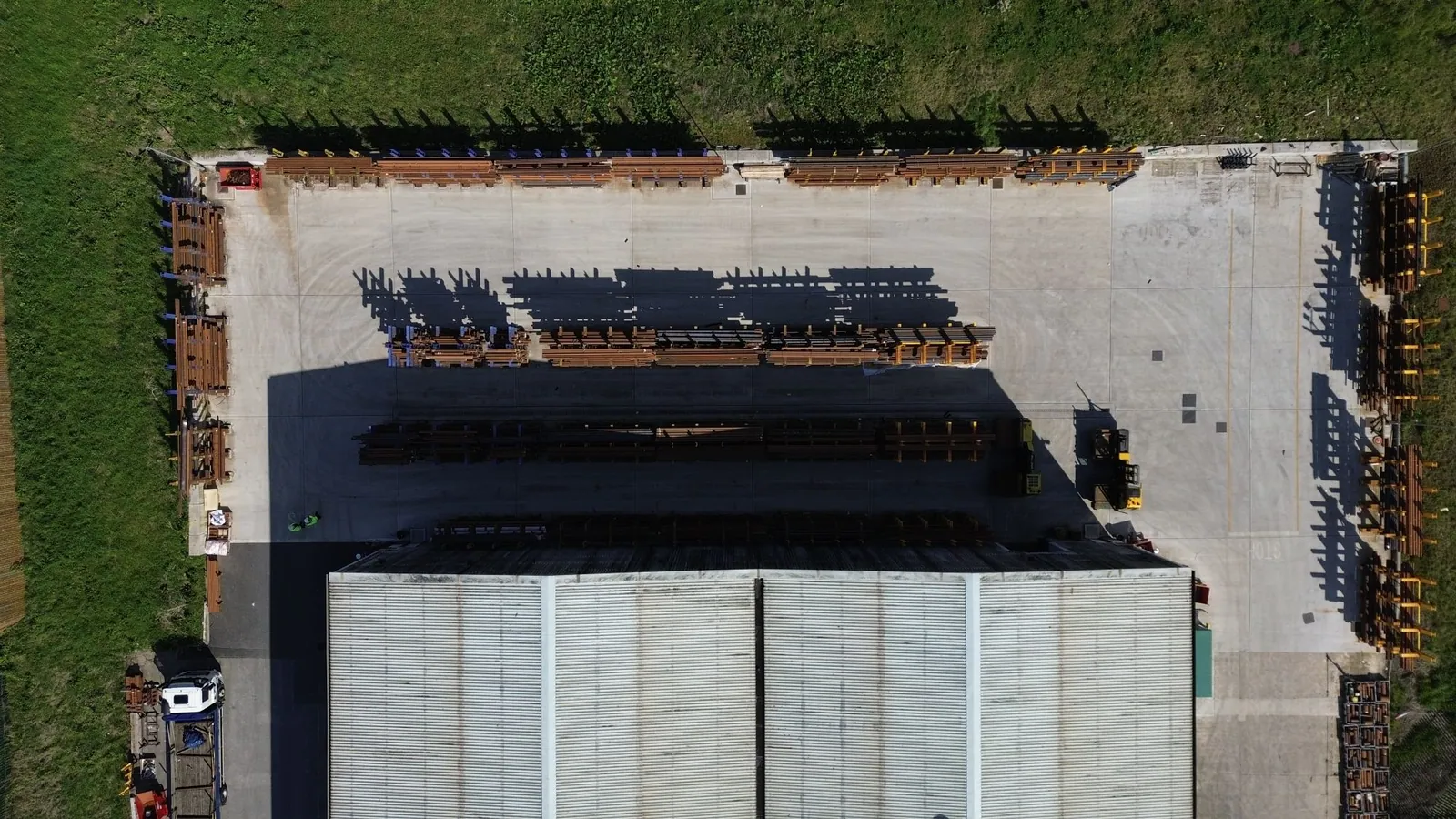
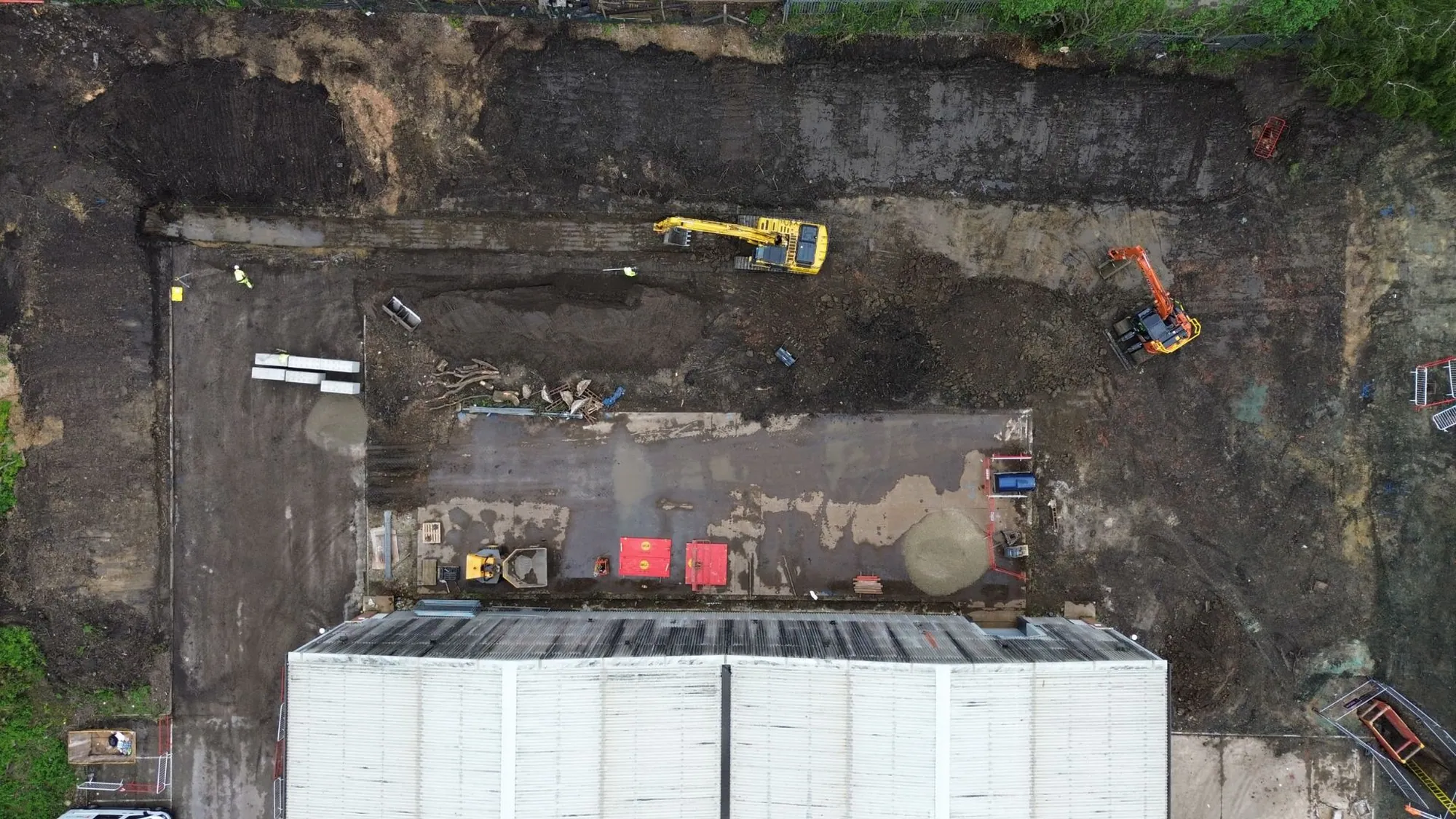
The guys have been brilliant from start to finish... Thanks again to all the team and really appreciate the work you have done for us. Who knows you may end up at another AVK site in the future...

PKB Civils is a specialist groundworks contractor for industrial sites in Sheffield and Rotherham, where a yard may sit on soft river deposits in the Don valley or on a slope above it. We dig and build with our own crews and plant from Rochdale, from a single plant base to a stepped yard with its own retaining walls.
A crane base beside a working plant, a duct run across a busy yard, a retaining wall on a slope: on a Sheffield or Rotherham works, groundworks has to fit round the site. Our own crews dig, form and build it, and the people who look at your ground at survey are the ones who build on it.
Sheffield ground can change within one plot, from soft river deposits on the valley floor to spring water on the slopes, so on a Sheffield job trial holes come before levels are set or a price is fixed. Everything we take on is listed under our groundworks service.
Everything we can take on for you. Not sure which you need? Send your brief and we will tell you.
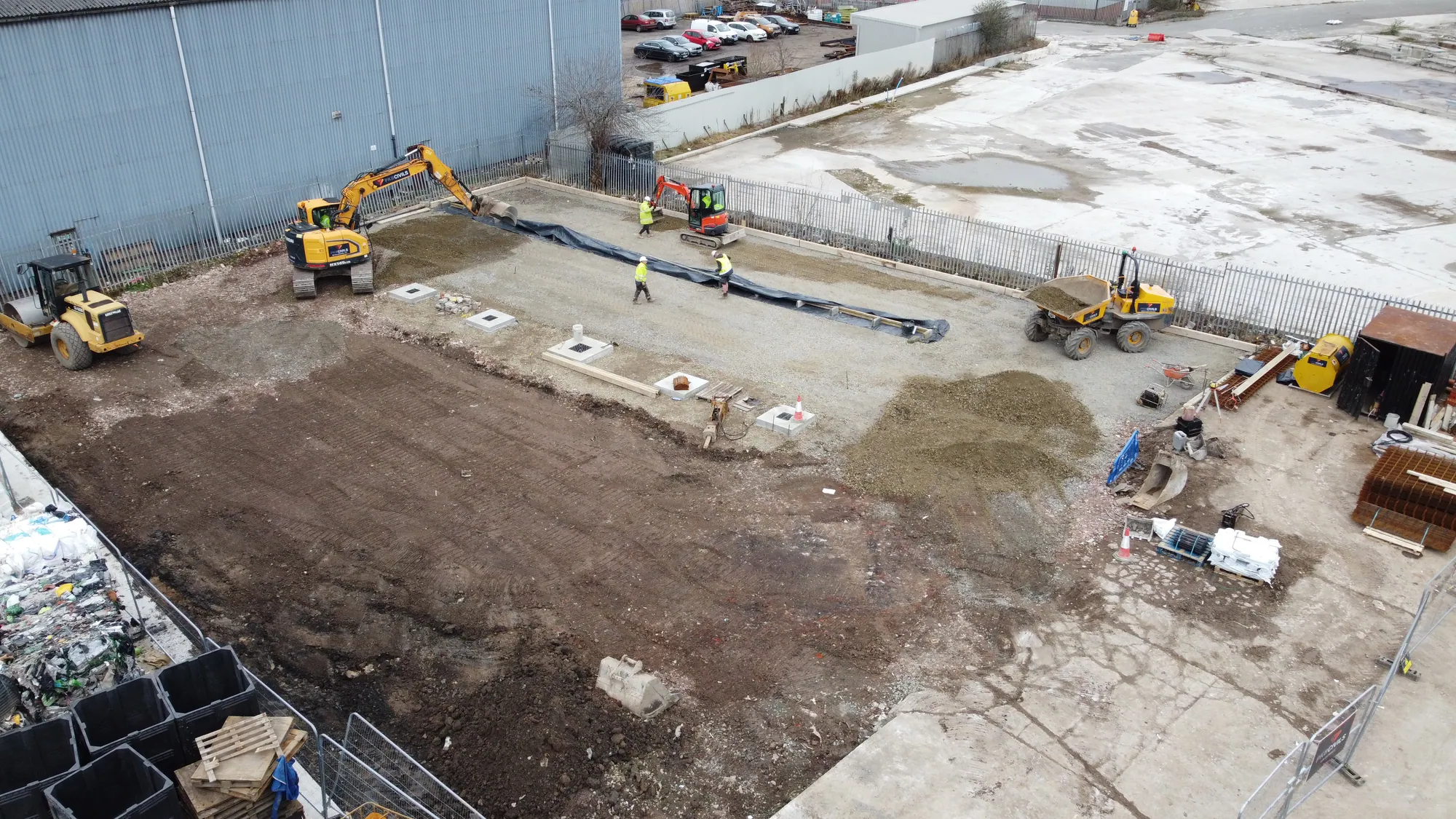
Pads and plinths for cranes, presses and racking, sized once the ground under them on a Don valley site is known.
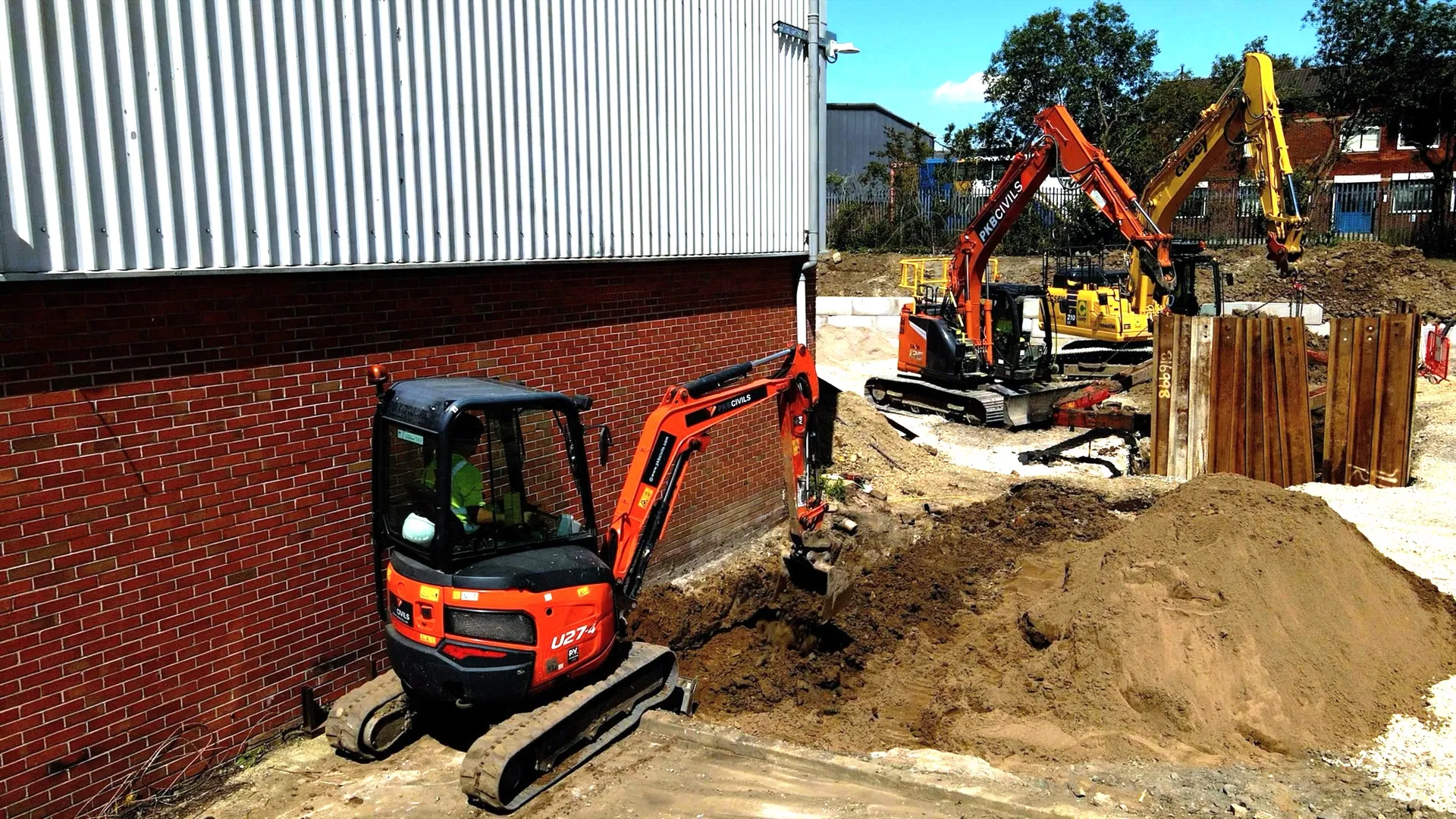
Send your briefTrenches for ducts, pipes and channels, dug in lengths across a working yard and planned for water that may come into the dig.
Send your briefNew and strengthened walls where a yard steps down a Sheffield hillside, drained at the back so water doesn't press on them.
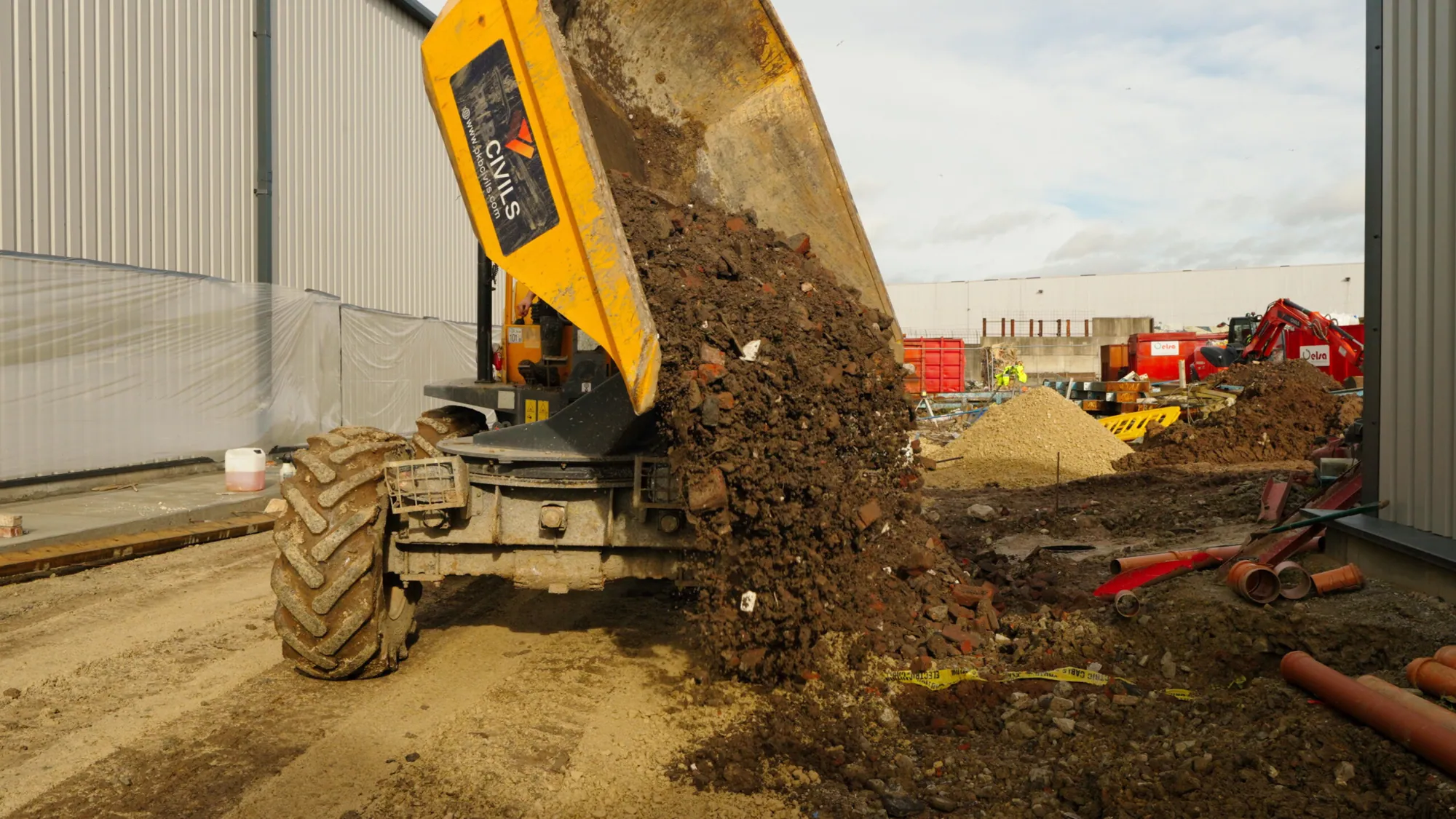
Send your briefOld fill and soft ground dug out under a new slab and rebuilt to formation, so the concrete has firm, even support.
Send your briefFoundation pads, ramps and service trenches for cabins and modular units on a works, ready before the units arrive.
Send your brief
The same people survey, plan and build your job, and your site keeps running while we do it.
Send your briefLauren, our business development and marketing manager, describes a Yorkshire manufacturing site on clay where one edge of the yard cracked in the same place every year for three years. The cracks were put down to vehicles and kept returning after repair, until a survey found differential settlement as the clay dried out each summer. An edge beam and improved drainage at that edge stopped it. Clays on Sheffield's valley floors can behave the same way, so it's a pattern we look for.
In Ben's words, “Over time, material is carried away from beneath the slab, creating voids. By the time the surface shows visible sinking or deflection, the sub-base damage is already extensive.” Ben treats a works yard as load-bearing infrastructure, so on a Lower Don Valley yard a sinking bay gets its sub-base and the river deposits under it opened up before anything is rebuilt. He sets it out in his article on drainage and yard concrete.
For a Bolton builders merchant we strengthened a retaining wall so the car park beside it could become yard, the kind of wall that turns a Sheffield bank into level, usable ground.
Send us a short brief and a few photos. If it's a good fit, we'll arrange a free site survey and plan the work around how your site runs.

Ground problems that can surprise a dig on a Sheffield or Rotherham site, and where the evidence for each comes from.
Large areas of derelict Lower Don Valley land were regenerated after the Sheffield Development Corporation was set up in 1988 (enabling works in Sheffield has the history), so buried slabs and bases from earlier uses can turn up in a trench.
A cut into a Sheffield slope can meet a spring line, and water that keeps running into a trench needs somewhere to go before a base or a wall is built in it.
Where the valley deposits are clayey, the ground can shrink in a dry summer and swell again in winter, so a yard edge or a light base on them is designed with that movement in mind.
Steelworks fill can look like ordinary made ground until it's tested, and what it contains decides whether it can go back under a new slab. Earthworks in Sheffield covers that decision.
The jobs closest to Sheffield, with this kind of work first.
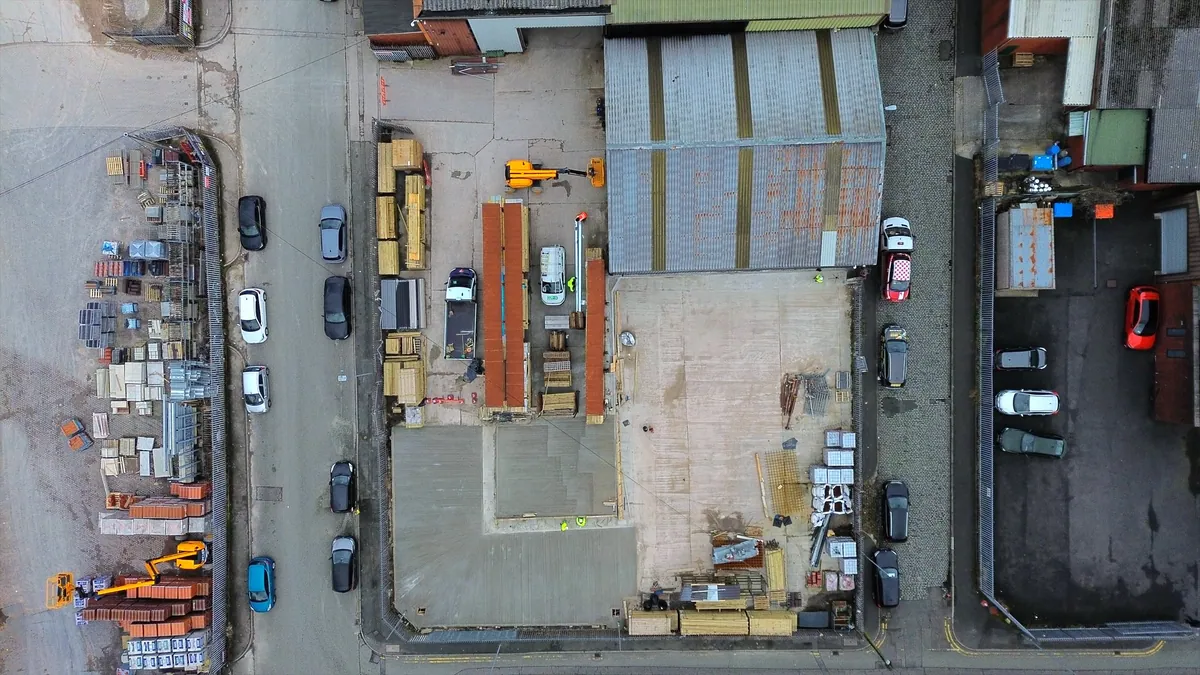
Feedback from the people who run these sites, shown with the job we did for them.
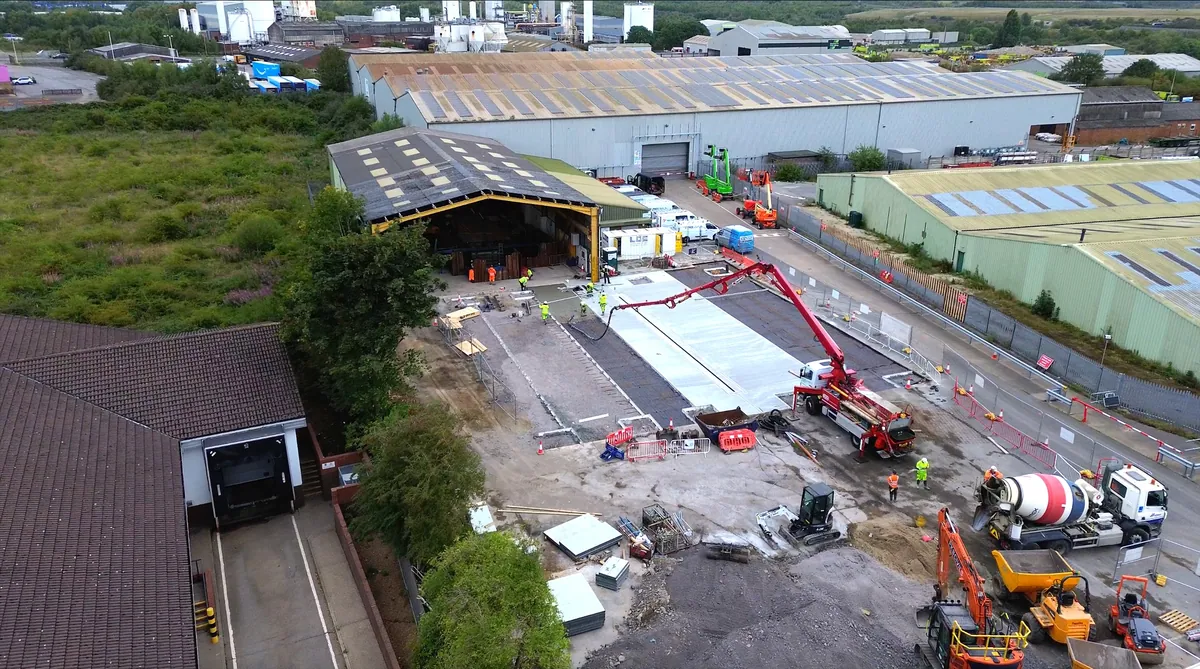
The guys have been brilliant from start to finish... Thanks again to all the team and really appreciate the work you have done for us. Who knows you may end up at another AVK site in the future...
The fact you have a road sweeper coming on-site to clean up, is very much appreciated and shows attention to detail. Your team always work clean and tidy, and what really stood out is their communication and the fact nothing is too much trouble. The concrete repairs exceeded my expectations and should make the area much safer to work in.

Thanks so much to the team, great work as always. The yard is already making a difference to how we move around site.

On the valley floors, the British Geological Survey describes the main superficial deposits as alluvial tracts generally less than 0.75 km wide along the Don and the Rother, with a few metres of silts and clays over a lower, more gravelly part. Rotherham Council adds first terrace deposits and sands and gravels along both valleys, often where industrial development has happened, over Coal Measures that are extensively faulted. A base or trench there can meet soft, wet ground near the surface, and conditions that change across a single plot.
Steel plants sank their own wells too. A number of steel manufacturing and processing plants and other industrial users in the Sheffield district had their own boreholes for process water, most of them less than 150 m deep, the BGS records, so on a former works site the old plans are worth reading for one before a deep base is set out.
Under the east of the city, including Attercliffe, Carbrook and Tinsley, the bedrock is the Pennine Middle Coal Measures, the council's contaminated land strategy records, and a deep base there may finish on it.
Off the valley floor, water is the thing to plan for. Sheffield is characterised by spring lines that bring groundwater to the surface, according to the council's SuDS guidance, which asks for a risk analysis before water is soaked into the ground, so it causes no down-slope or ground stability problems.
If the plot itself isn't ready, groundworks comes second. A sloping or low plot that has to be cut and filled to a platform needs bulk earthworks first, and a former works site with a remediation strategy agreed through planning follows that strategy before any base goes in. Earthworks in Sheffield covers both.
And if the trouble is the yard surface, new bases aren't the answer. Cracks running across a bay away from its joints point, in Ben's reading, to frost or a moving sub-base more often than to vehicle load, and a bay that sounds hollow underfoot suggests voids beneath it that he'd investigate straight away. Those are yard repairs, covered on concrete yards in Sheffield.

Postcode districts in Sheffield, Rotherham and north Derbyshire where we've delivered: S9, S44, S60, S65, S80.
See them on the map
Can't see your question? Call us or send your brief and we'll come back to you.
Send your briefYes. Water reaching the back of a wall pushes against it, and on Sheffield's slopes a spring can bring groundwater to the surface well away from any drain. So a new wall on a slope gets drainage behind it, carried to a proper outfall, and a wall being strengthened has its old drainage checked. A soakaway near the top of a bank is worth avoiding, for the stability reasons the council gives.
It varies from plot to plot, which is why trial holes come first. The BGS describes a few metres of silts and clays over a lower, more gravelly part on the valley floor, and on a former works site there's often old fill above that. A heavy crane or press base may need to go through all of it, or onto piles, while a pad for a light cabin may not.
Typically firm to stiff, with cobbles and boulders, on the plot that was reported on. A 2023 Rotherham planning report on one Waverley plot described made ground of opencast backfill in the former Orgreave opencast area, and said reinforced spread foundations suit lightly loaded structures there, as on other Waverley plots. Plant bases and heavy yards carry more, so they need their own investigation, and the boulders are worth allowing for in the dig.
The old plans, for process-water boreholes and buried bases. Any ground investigation, for the depth of fill and where firm ground starts. And the planning conditions, in case a remediation strategy has to be agreed before anything is dug. With those in hand, a groundworks programme on old works land can be priced and planned without nasty surprises halfway through.
It can be. The lower, gravelly part of the valley deposits can carry water into a deep trench, and on former works land that water may need testing before it's pumped away, because Sheffield and Rotherham's long tradition of steel and iron-working has left contaminated land that can pose a groundwater resource hazard, according to the BGS. The investigation should record any water struck.
Tell us what's happening on site. We'll review your brief and, if it's a good fit, arrange a free site survey.