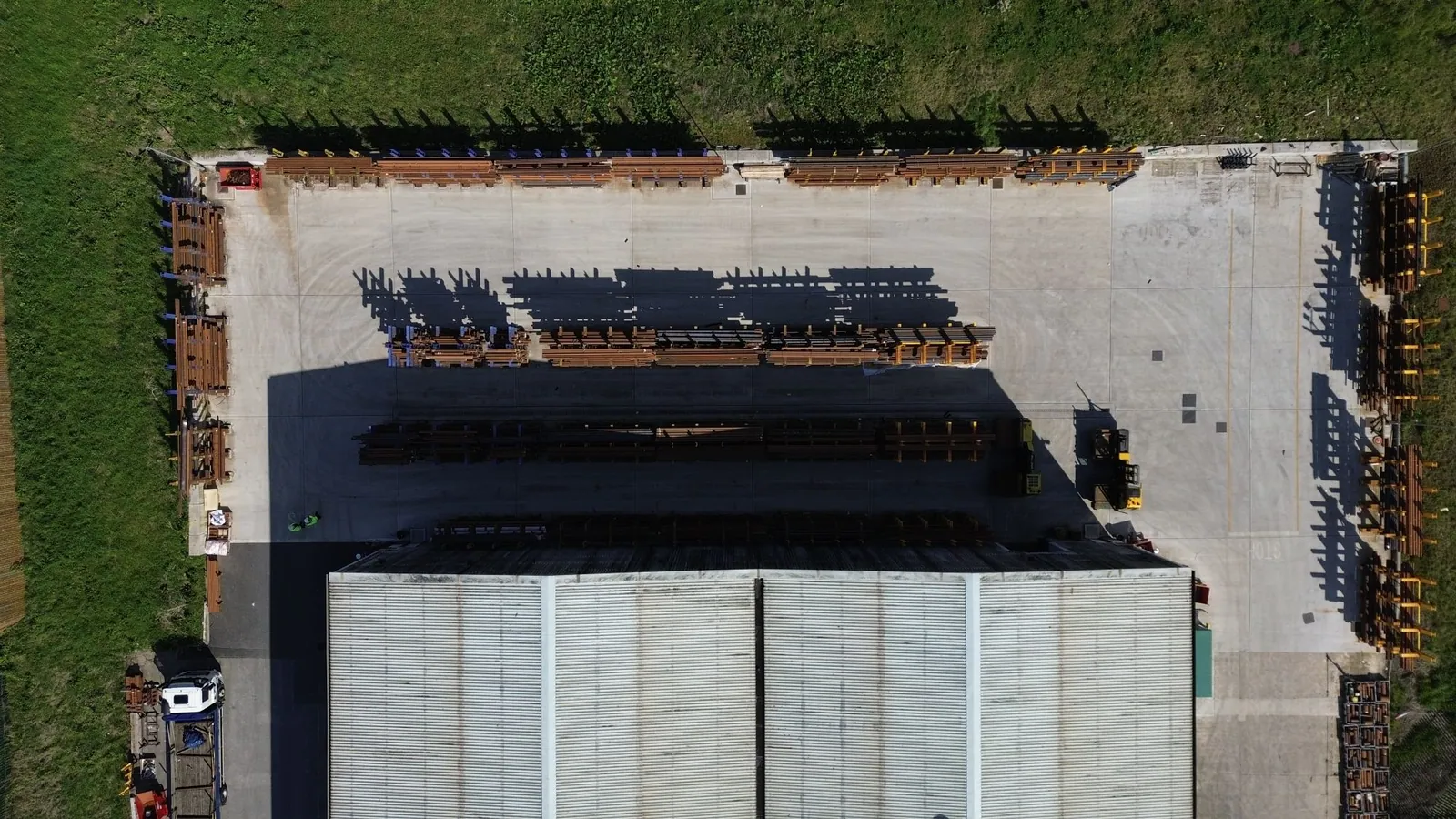
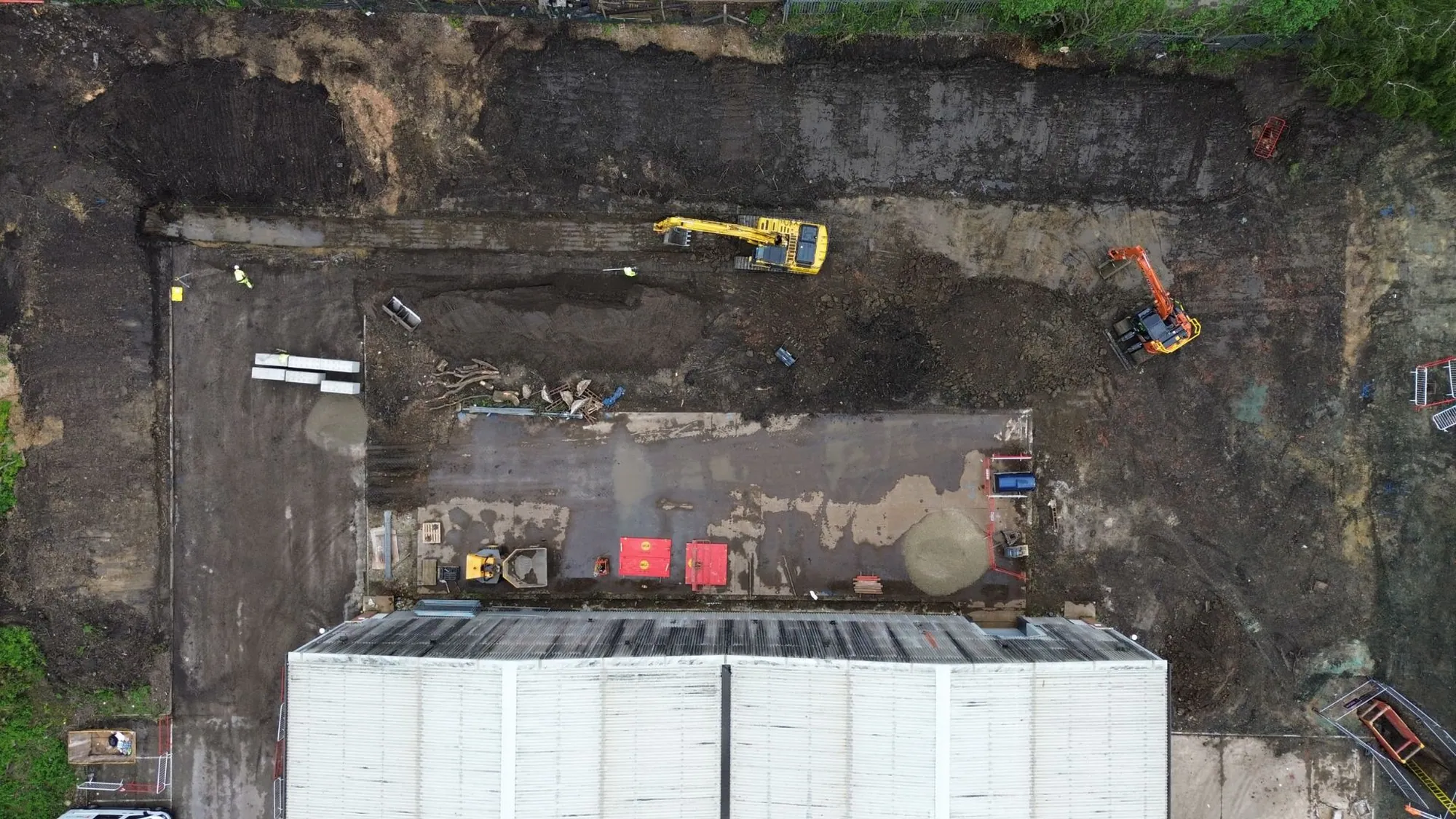
PKB Civils is a specialist groundworks contractor for commercial and industrial sites in Leeds, where estates such as Cross Green and Stourton hold manufacturing, distribution and waste businesses. Our own crews and plant come from Rochdale, we phase the work so a working site stays open, and every job starts with a free site survey.
For site and facilities managers in Leeds who need bases, trenches, retaining walls or a new sub-base built without closing the yard. We are a contractor: our own crews dig and build, with our own plant, and the same team takes the job from the survey to handover.
Our delivered sites in Leeds are in LS9 in east Leeds, LS14 at Seacroft and LS27 at Morley, with more at Wakefield, Ossett and Batley. Parts of the Aire Valley are in the former coal mining area, according to the council's plan, so on those sites the mining records sit alongside our site investigation from the start. Our groundworks service lists the full scope.
2,000+Projects completed across the UK
150,000m²Concrete poured across all our jobs
40yearsFamily-run in Rochdale since 1986
Groundworks in Leeds: what we do
Everything we can take on for you. Not sure which you need? Send your brief and we will tell you.
Bases for plant and racking
Pads and bases sized for the load, set out once the mining records show what is under the yard.
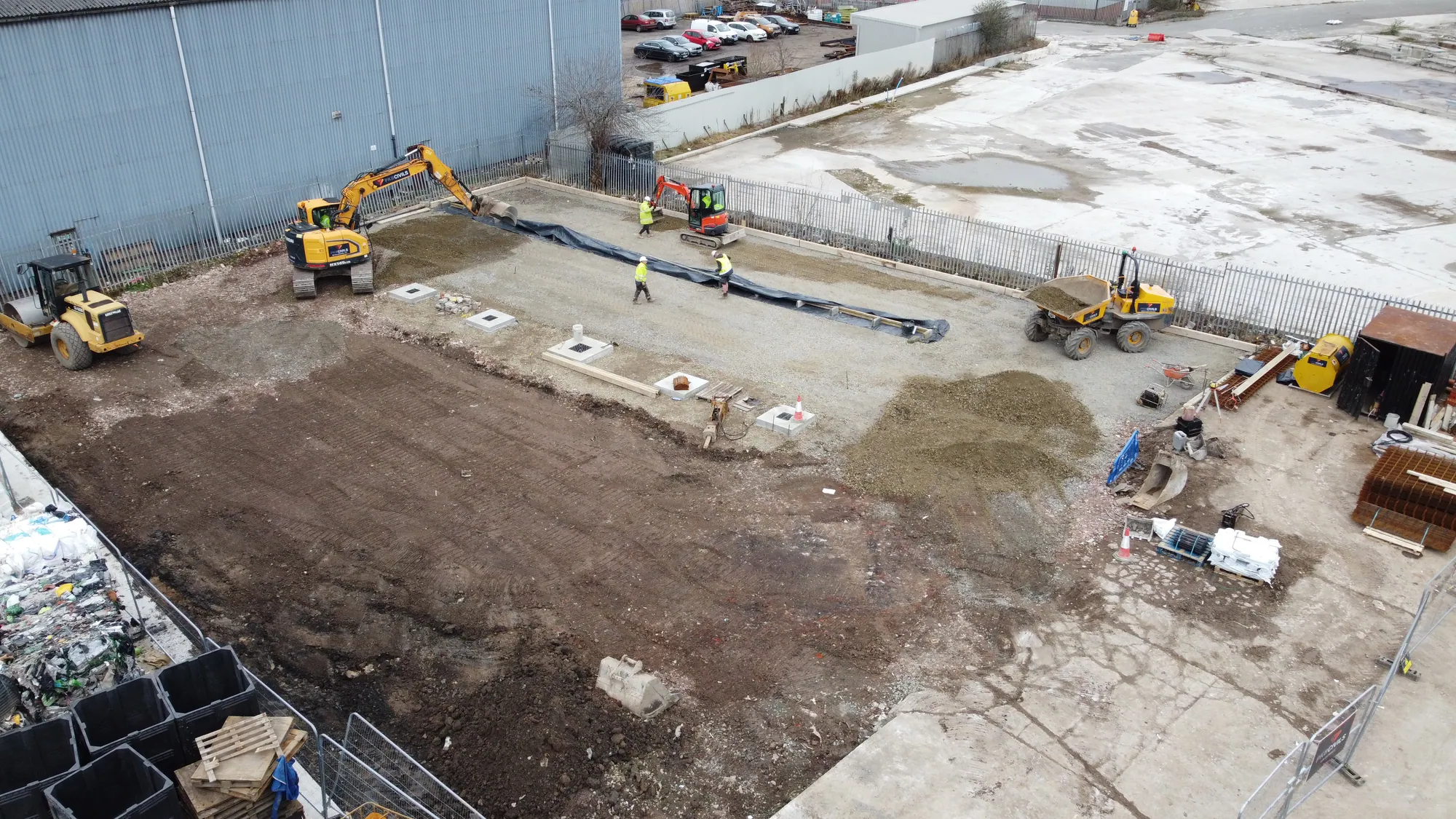
At a steel manufacturer in Scunthorpe we took down building sections, cleared and prepared the ground for new pile positions and laid new slabs, in sequence, so an external crane runway could go in while the site stayed live.
We find the cause before the fix
Ben's example is a recycling facility in Yorkshire where cracked channels had let water wash out the sub-base. In his words, “The facility had been patching surface cracks in this area for two years without identifying the drainage failure as the cause.” His full account is in why poor drainage destroys yard concrete.
Your yard stays open
We split the job into areas and hand each one back before opening the next, as we did on Liebherr's yard in Wigan, so vehicles keep moving round the part we're working on.
One team, our own plant
Leeds is about 28 miles from our yard in Rochdale in a straight line. The same team surveys, plans and builds the job, and we deliver around 90% of our work with our own people.
Planning groundworks on a Leeds site?
Send us a short brief and a few photos. If it's a good fit, we'll arrange a free site survey and plan the work around how your site runs.
The ground problems that catch out groundworks in Leeds, and where the evidence comes from.
Old workings under a new base
Where shallow workings lie beneath a yard, a pad or slab can settle long after it's poured, when a void below finally gives way. The mining records and the risk assessment are how you find out first.
A mine entry in the way
On Aire Valley sites the council's plan says mine shaft entries must be made safe, and each entry and its zone of influence kept free of buildings, so a plot's layout may have to work around one. Capping or filling needs a Coal Authority permit: see enabling works in Leeds.
Made ground that changes across a site
Around Leeds station, the area the HS2 statement covered, made ground was expected almost everywhere, and made ground rarely keeps the same depth or make-up across a yard. Trial holes ahead of setting levels save digging twice.
Subsidence years after closure
The British Geological Survey records that ground over old workings at Kippax and Garforth subsided six to eight years after the mines there closed in the mid 1980s, so a quiet site today is no guarantee.
Our nearest projects to Leeds
The jobs closest to Leeds, with this kind of work first.
Feedback from the people who run these sites, shown with the job we did for them.
1 / 3
“
The fact you have a road sweeper coming on-site to clean up, is very much appreciated and shows attention to detail. Your team always work clean and tidy, and what really stood out is their communication and the fact nothing is too much trouble. The concrete repairs exceeded my expectations and should make the area much safer to work in.
Concrete repairsRochdale, Manufacturing, 4 to 5 weeksSee the job
“
The guys have been brilliant from start to finish... Thanks again to all the team and really appreciate the work you have done for us. Who knows you may end up at another AVK site in the future...
New concrete yardHyde, Manufacturing, 6 weeksSee the job
“
Thanks so much to the team, great work as always. The yard is already making a difference to how we move around site.
Concrete yard extensionBolton, Manufacturing, 8 weeksSee the job
What ground and site conditions should you expect in Leeds?
Under central Leeds and parts of the Aire Valley the bedrock is the Pennine Coal Measures, which the British Geological Survey describes as repeating beds of sandstone, siltstone and grey mudstone with coal seams between them. Along the Aire, alluvium and river terrace deposits lie over that rock. A 2018 draft environmental statement for HS2's planned Leeds station recorded probable shallow workings in the station area, from Coal Authority records. That line to Leeds has since been dropped, but the ground is the same.
The BGS memoir for the Leeds district records workings just 3 m below the surface at one location in Richmond Hill, and says pillar and stall mining, which left voids between columns of coal, was generally carried out between 6 and 30 m down. Roofs and shafts in those workings can collapse more than a century after mining stopped.
The Aire Valley plan also records a legacy of land instability and combustion in the former mining area. On a site in the Coal Authority's Development High Risk Area (the authority now trades as the Mining Remediation Authority), most planning applications need a Coal Mining Risk Assessment covering mine entries, shallow workings, seam outcrops and mine gas. Where one is needed, it is the first thing to have in hand on a Leeds groundworks job.
When groundworks isn't the right call
If old workings are the worry, the first step is the mining records, and where planning applies the Coal Mining Risk Assessment. Shallow workings found under the yard are treated first, often by drilling and grouting under a Coal Authority permit, and the groundworks follow.
A hollow sound underfoot is a different case. Ben's view is that it suggests voids beneath the slab and should be investigated immediately rather than watched, which on coalfield ground means checking both the sub-base and what lies below it.
Standing water needs a closer look too. Ben separates puddles that clear within an hour or two from water that sits for several hours or longer. The second calls for a drainage check, often a CCTV survey, so nobody breaks out sound concrete to find a blocked drain.
A local track record
Postcode districts in Leeds and West Yorkshire where we've delivered: LS9, LS14, LS27, WF2, WF5, WF17.
Do I need a Coal Mining Risk Assessment before groundworks in Leeds?
If your site is in the Coal Authority's Development High Risk Area and the work needs planning permission, most likely yes. The assessment covers mine entries, recorded and probable shallow workings, seam outcrops, mine gas, fissures and old surface mining, and the council's Aire Valley plan asks for one on sites in that area. Even without planning, it's worth knowing what the Coal Authority's records show under the site.
How close to the surface are old coal workings in Leeds?
In places, very close. The British Geological Survey records workings just 3 m down at one location in Richmond Hill, within reach of a deep drainage trench. Most pillar and stall mining in the Leeds district was between 6 and 30 m below ground, deeper than most excavations, but those voids can collapse long after mining stopped and show at the surface as a hollow or a sinking slab.
Are there old bell pits under Leeds sites?
There may be, and many were never recorded. The British Geological Survey says bell pit shafts in the Leeds district were sunk up to 10 m below ground level, and that most were dug before the Mines Register of 1872, so many of their locations are unknown. That is one reason a site on old coalfield land gets trial holes and a look at the mining records first.
Will we hit groundwater digging near the River Aire?
Possibly. The HS2 statement for the Leeds Station area classes the Aire's alluvium and river terrace deposits, and the Coal Measures beneath them, as Secondary A aquifers: ground that can hold and carry water. Whether a trench meets water depends on the site and the season, so the ground investigation should record any water struck before the excavation is planned.
Do you cover Wakefield and Batley as well as Leeds?
Yes. Alongside east Leeds, Seacroft and Morley, our delivered sites include Wakefield, Ossett and Batley, in the WF2, WF5 and WF17 districts. The same team covers all of them from our yard in Rochdale, and each job starts the same way, with a free site survey ahead of any price or programme being agreed.
Ben has over 10 years of experience in contracting management, specialising in pre-construction with some of the UK's largest contractors. Ben now leads pre-construction, project planning and client engagement.
We use cookies to see how people use our site and to measure our adverts. They're on unless you choose Reject all. Privacy policy
Necessary
Needed for the site to work, such as remembering your cookie choice. They don't store anything that identifies you.
Always active
Analytics
Google Analytics and Microsoft Clarity show us how people use the site, such as which pages they visit and where they came from, so we can improve it.
Advertising
HubSpot, Google Ads and WhatConverts cookies measure how our adverts perform and connect an enquiry or phone call to the advert or page that led to it.