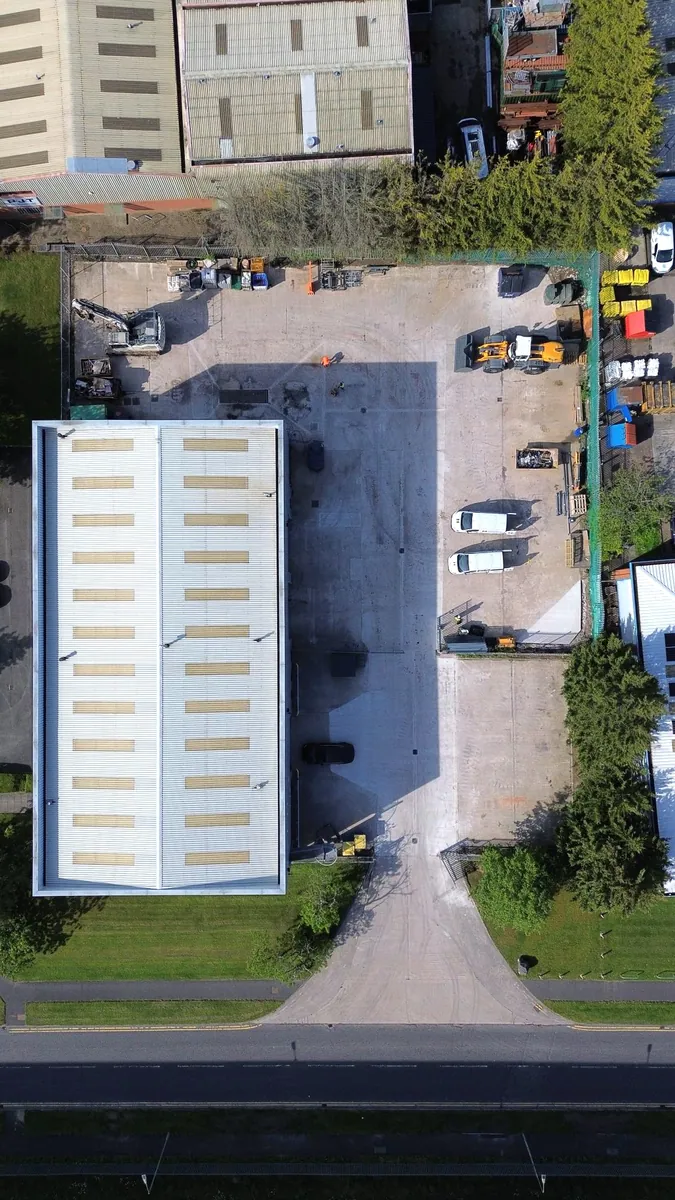

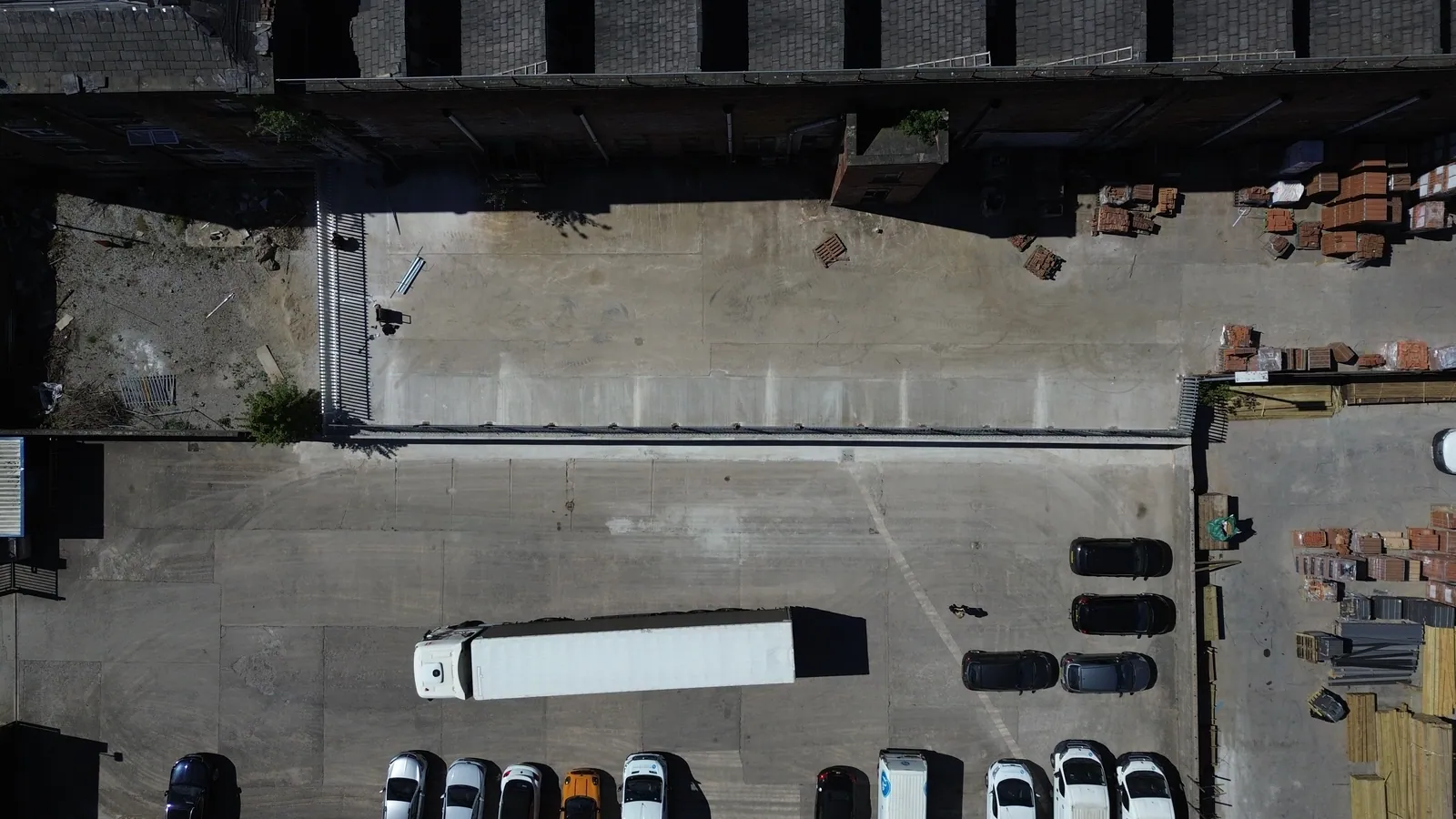
Really impressed with your team and how you kept the yard open, the new works look fantastic. Brilliant job.

Yard extension and retaining wallBolton, Builders merchantsSee the job

Yards that hold water in Liverpool, Bootle and Halton are the work PKB Civils takes on as a specialist commercial drainage contractor: channels, gullies, separators and sewer connections, fitted by our own crews from Rochdale while vehicles keep moving. A free survey comes first, and it shows whether the drains need work at all.
For facilities and site managers with a yard that holds water after rain, gullies that keep blocking, a separator nobody has looked at in years, or an extension that needs a new connection. Our crews dig, lay and connect, and reinstate any concrete they break out within the same programme. Everything we fit is listed on our drainage service page.
A new yard that needs planning goes in with the North-West SuDS pro-forma, or Sefton's own for major development there, the flood risk assessment notes, and each borough's SuDS guidance sets out how its rain is managed. Our delivered sites include Bootle (L20 and L30), Runcorn (WA7) and Ellesmere Port (CH65).
Everything we can take on for you. Not sure which you need? Send your brief and we will tell you.
Channels across HGV routes and loading bays on yards from Bootle to Knowsley, set to falls that carry water to them instead of leaving it at a slab edge.
Send your briefSeparators for fuelling areas and wash bays, so surface water is clean before it reaches a sewer or, in Halton, a brook.
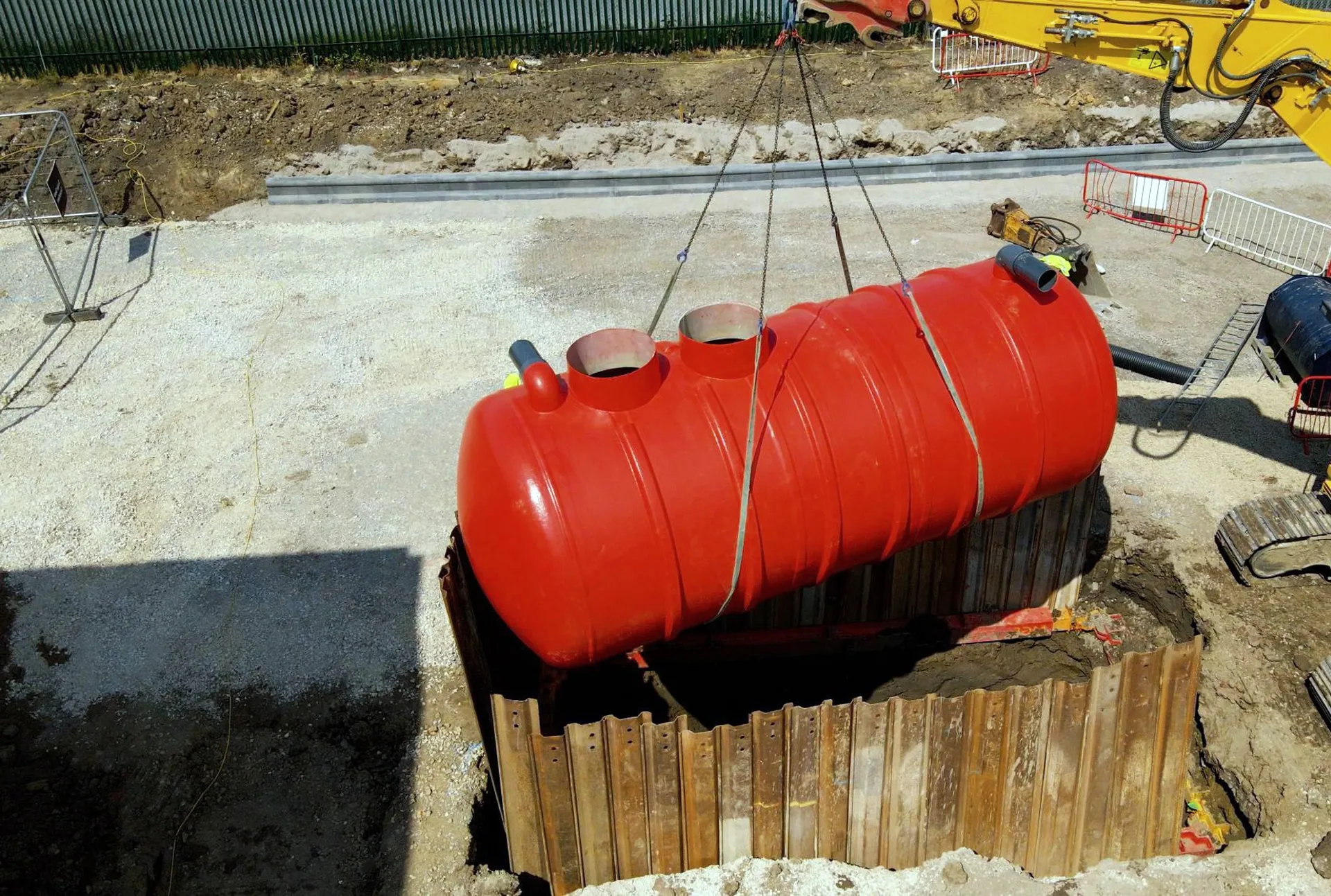
Send your briefTanks and oversized pipes that hold back rain from a large new yard, sized to the SuDS form the borough asks for.
Send your briefNew connections to a United Utilities public sewer, applied for and agreed before we break ground.
Send your briefJetting and camera surveys that find the failed run and, on older Liverpool sites, show whether the yard drains to a combined sewer, before targeted repairs.
Send your brief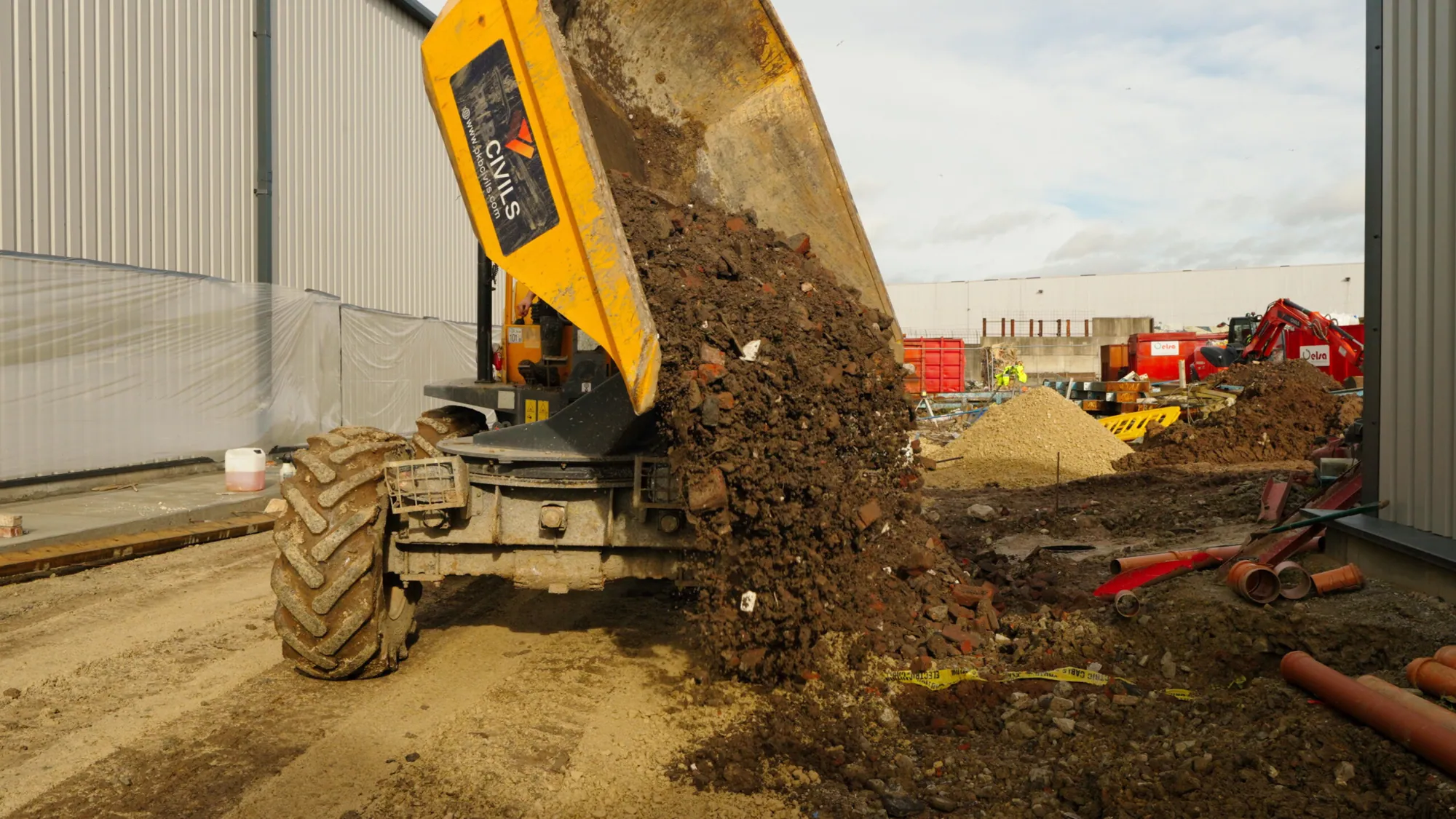
The same people survey, plan and build your job, and your site keeps running while we do it.
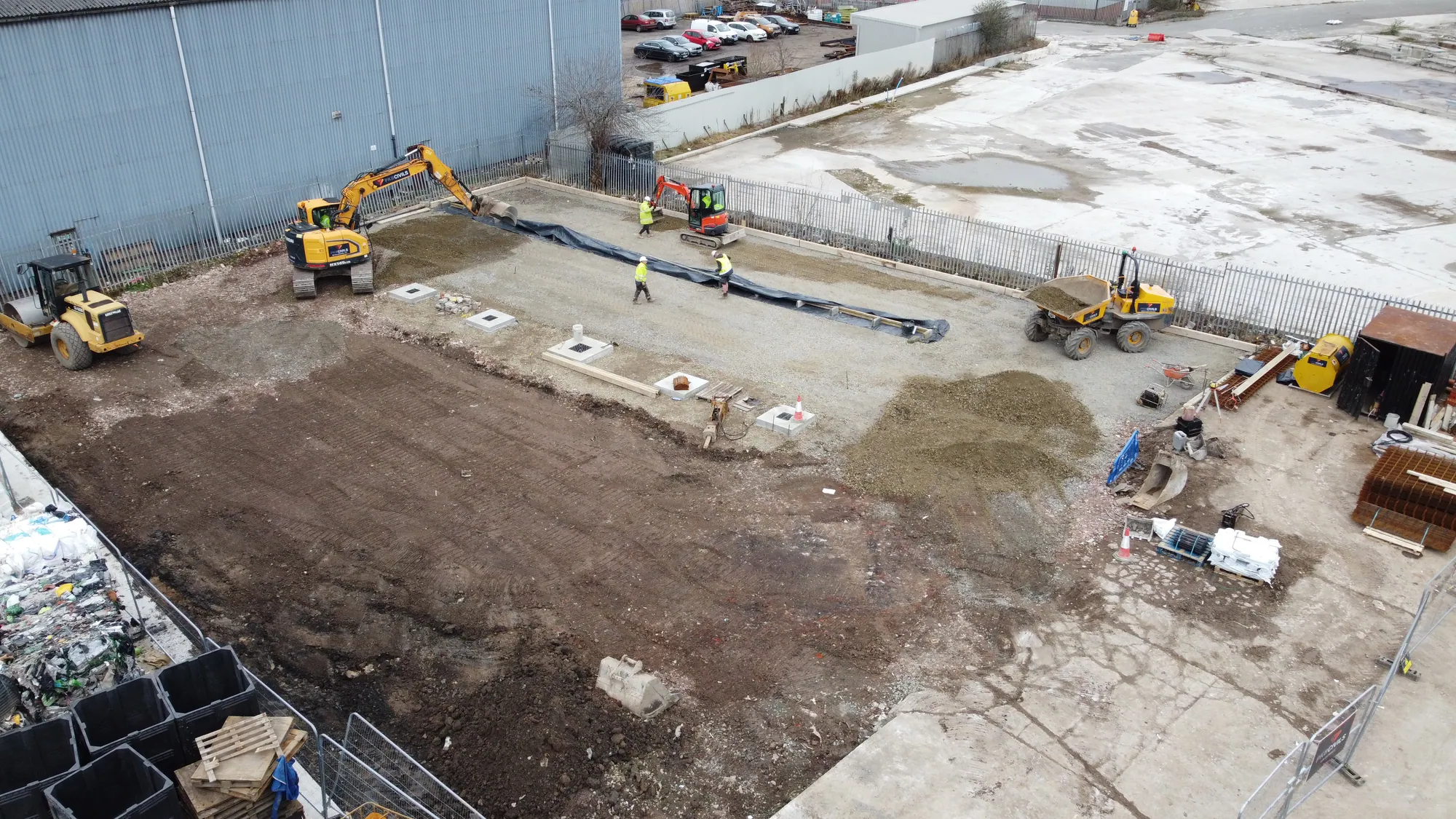
Send your briefOn Liebherr's yard in Wigan, our nearest yard case study to Liverpool, we jetted and CCTV surveyed all the yard drainage before the works and again after, moved and repaired the gullies, connecting them into the old pipework, and doubled the size of the wash bay pit. The slabs over them were replaced one area at a time, so plant kept using the rest of the yard.
In Ben's words, “Blocked or collapsed ACO channels are rarely a sudden failure. They deteriorate gradually, usually over a year or more, with standing water becoming more persistent each winter.” A Liverpool yard that holds water a little longer every winter is worth a survey before the next one. More in why reactive yard maintenance costs more.
Where a run crosses under the slab, the crew that lays the pipe reinstates the concrete in the same programme, so a Merseyside yard doesn't wait for a second contractor with a trench across it.
Send us a short brief and a few photos. If it's a good fit, we'll arrange a free site survey and plan the work around how your site runs.
The consents and site conditions that shape a yard drainage job around Liverpool, and what we check for each.
Work on a public sewer can't start until the appointed contractor has United Utilities' written permission, and a new connection also needs a Section 106 application. A connection dug ahead of either can stop a job halfway.
Getting rid of groundwater from land remediation into a foul sewer needs United Utilities' permission too. On ground being cleaned up for a new yard, that is asked before the pumps go in.
Trade effluent consent comes from United Utilities, applied for through your water retailer with a drainage plan, and the company calls it a legal requirement for trade effluent discharges. A wash bay draining to the surface water system is worth checking at survey.
On dockside and plant yards around the Mersey, machines track over channels day after day and the gratings fail under repeated loading. Heavy-duty ductile iron gratings rated for the actual wheel loads are worth the extra at the design stage.
The jobs closest to Liverpool, with this kind of work first.
Feedback from the people who run these sites, shown with the job we did for them.
Really impressed with your team and how you kept the yard open, the new works look fantastic. Brilliant job.

The fact you have a road sweeper coming on-site to clean up, is very much appreciated and shows attention to detail. Your team always work clean and tidy, and what really stood out is their communication and the fact nothing is too much trouble. The concrete repairs exceeded my expectations and should make the area much safer to work in.


Really happy with the result. Your team were great to have on site and we were trading throughout which was important. Thank you.

Where a Liverpool yard's water ends up shapes the whole design. In Halton, Ditton Brook, Stewards Brook and Keckwick Brook are main rivers, the City Region's assessment records, so a yard near one of them may discharge to a main river where most sites would go to a sewer.
The areas at greatest risk from surface water are hard to define, the assessment says, but the majority of urban areas are at some risk of surface water flooding. On a Merseyside yard that is the water its own channels and gullies have to clear, and the falls decide whether they get the chance: water that reaches a channel quickly has no time to pond against a building or soak into a joint.
Groundwater has risen in places as pumping from the sandstone has fallen, as groundworks in Liverpool explains, so water levels are checked before deep runs, manholes and tanks are set.
Combined sewers spread extensively across the urban areas, carrying waste and surface water to treatment works, while some areas have separate foul and surface water sewers, the assessment adds. Near the docks, a run is often laid in fill. Bedding and backfill are chosen for whatever the trench finds, from dock fill to boulder clay or sand, so a new pipe keeps its fall between manholes once the yard is back in use.
Some water after rain is normal. Ben separates water that clears soon after a downpour from water that stays, and only the second calls for work straight away; a condition survey on a Liverpool yard sorts one from the other.
Sometimes the drains are sound and just neglected. In Ben's experience a system specified properly but never maintained slowly stops working, with no single dramatic failure, so jetting and a camera survey come before any new channel is dug.
And if a yard floods because the public sewer it drains to is overloaded, the fix sits with United Utilities' network. A survey shows whether water is backing up from their pipe or escaping from yours.
Postcode districts in Merseyside, Cheshire and Warrington where we've delivered: CH2, CH4, CH65, L8, L20, L30, WA1, WA3, WA7, WA9, WA11.
See them on the map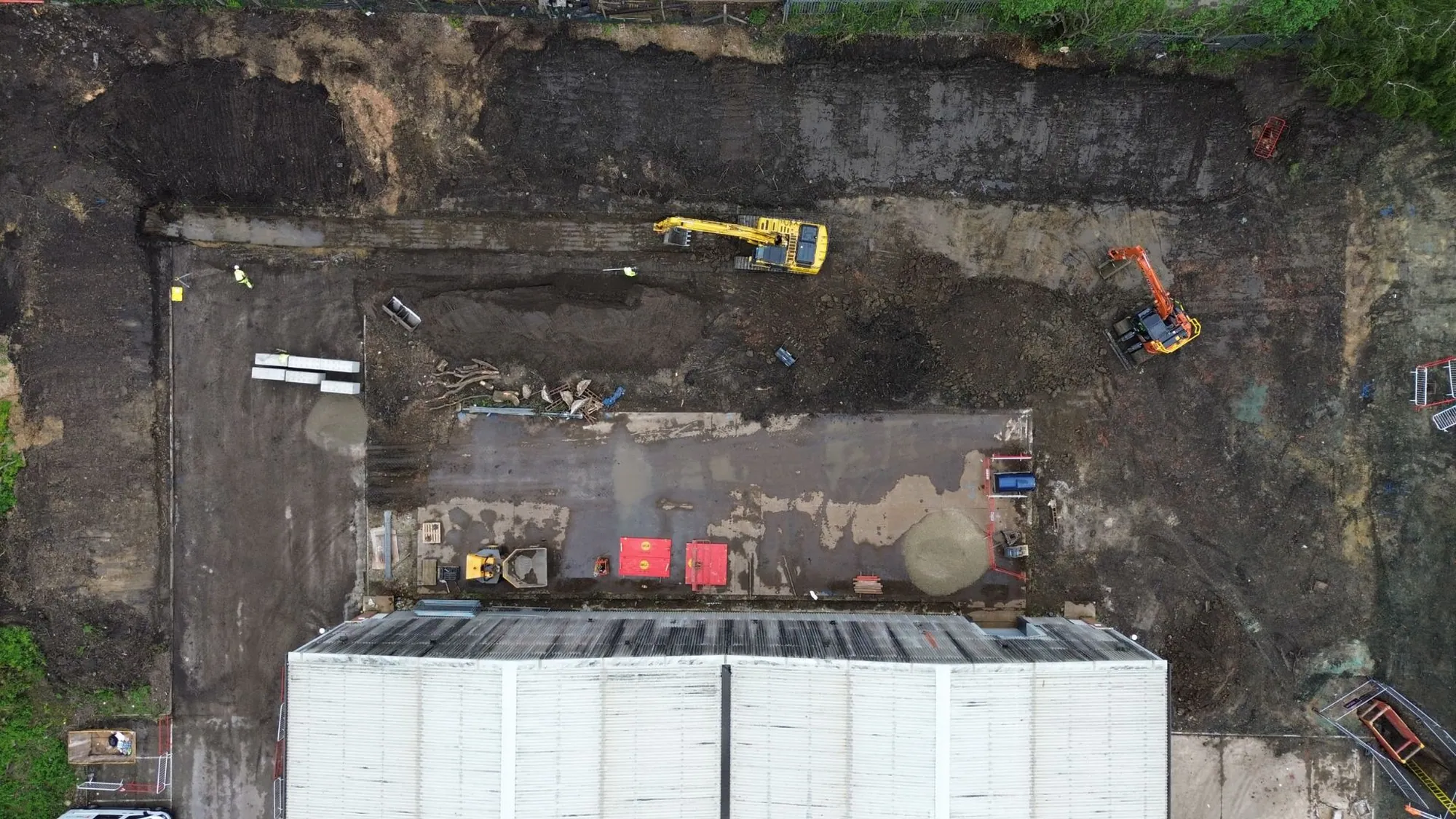
Can't see your question? Call us or send your brief and we'll come back to you.
Send your briefIt may, but the outfall is designed around the tide. The City Region's assessment places tidal flood risk at Hale Bank, in Halton, from both the Mersey estuary and Ditton Brook, a main river. So an outfall there is checked against high water, with storage or a flap valve if the design shows the brook can back up, before the yard's levels are fixed.
Possibly. The City Region's flood risk assessment, based on the Environment Agency's Flood Map for Planning, finds that tidal flood risk in Liverpool is greatest around the docks, from the Mersey estuary. Check your site on the flood map before planning a new yard there, and set its levels and drainage with that answer in hand.
Sometimes. The Sherwood Sandstone under the city is permeable, the BGS notes, but where clay or fill sits on top, or groundwater is high, a soakaway may not work. An infiltration test on the site itself settles it before the drainage is designed around one.
Monthly clearing of the surface channels and gullies, a check of the deeper runs every quarter and a yearly camera survey of the critical runs is the routine we suggest. On a Merseyside yard where water already lingers a little longer each winter, a condition survey comes first, so any repairs are done before the routine starts.
How water actually moves across the yard, ideally seen during or just after rain, then every channel, gully and grating, the falls, and the runs underground by jetting and camera. On an older Liverpool site it also finds out whether the yard drains to a combined sewer, which changes what a new extension can add to it.

Ben has over 10 years of experience in contracting management, specialising in pre-construction with some of the UK's largest contractors. Ben now leads pre-construction, project planning and client engagement.
Tell us what's happening on site. We'll review your brief and, if it's a good fit, arrange a free site survey.