
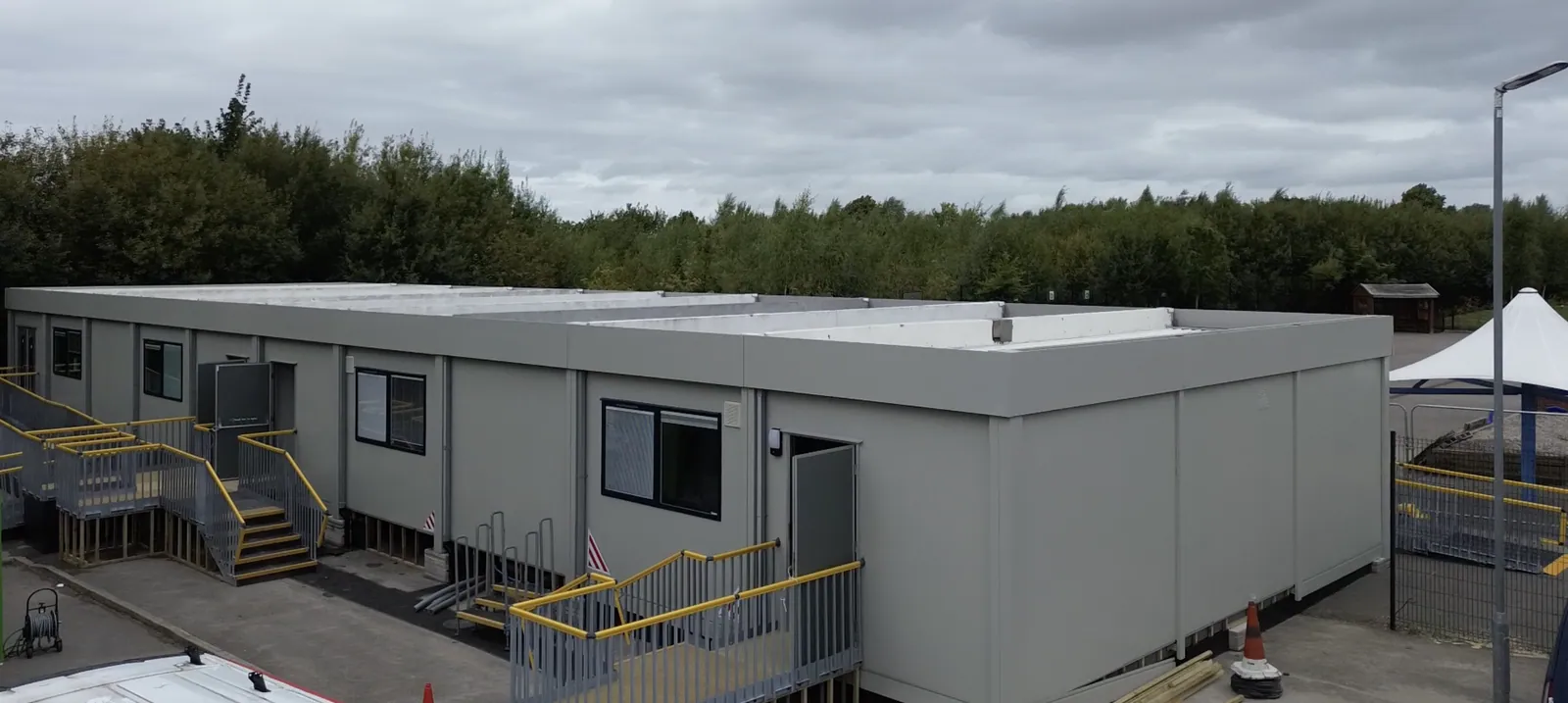
Everything was prepared when we arrived and the school was kept running throughout. Really pleased with how it went and look forward to working with you again

Modular classroom groundworksSt Helens, Modular, 4 weeksSee the job

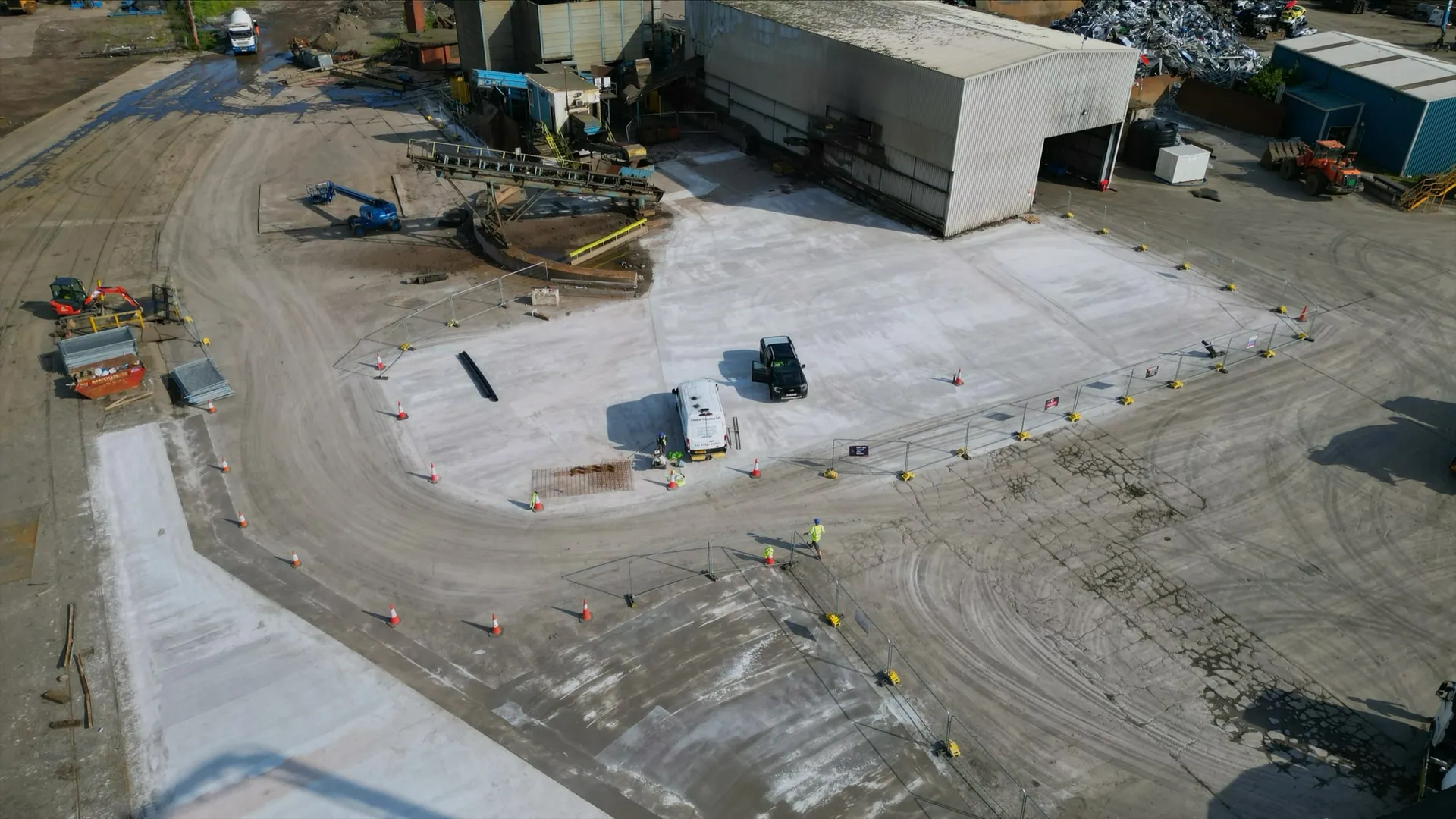
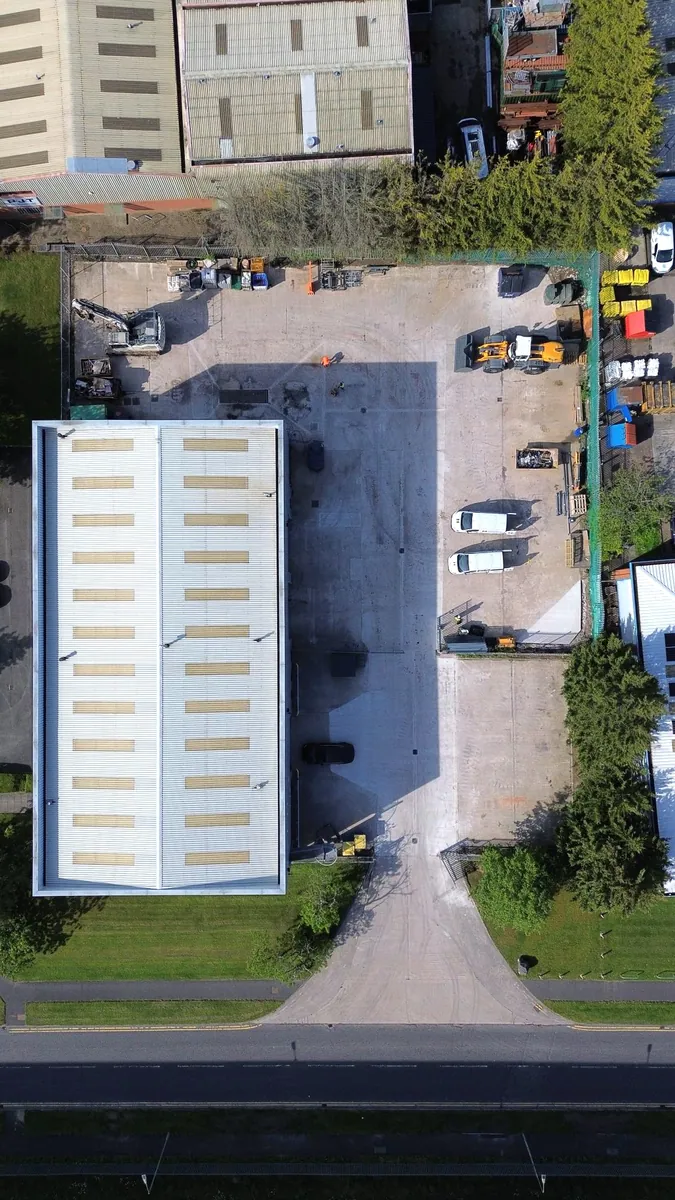
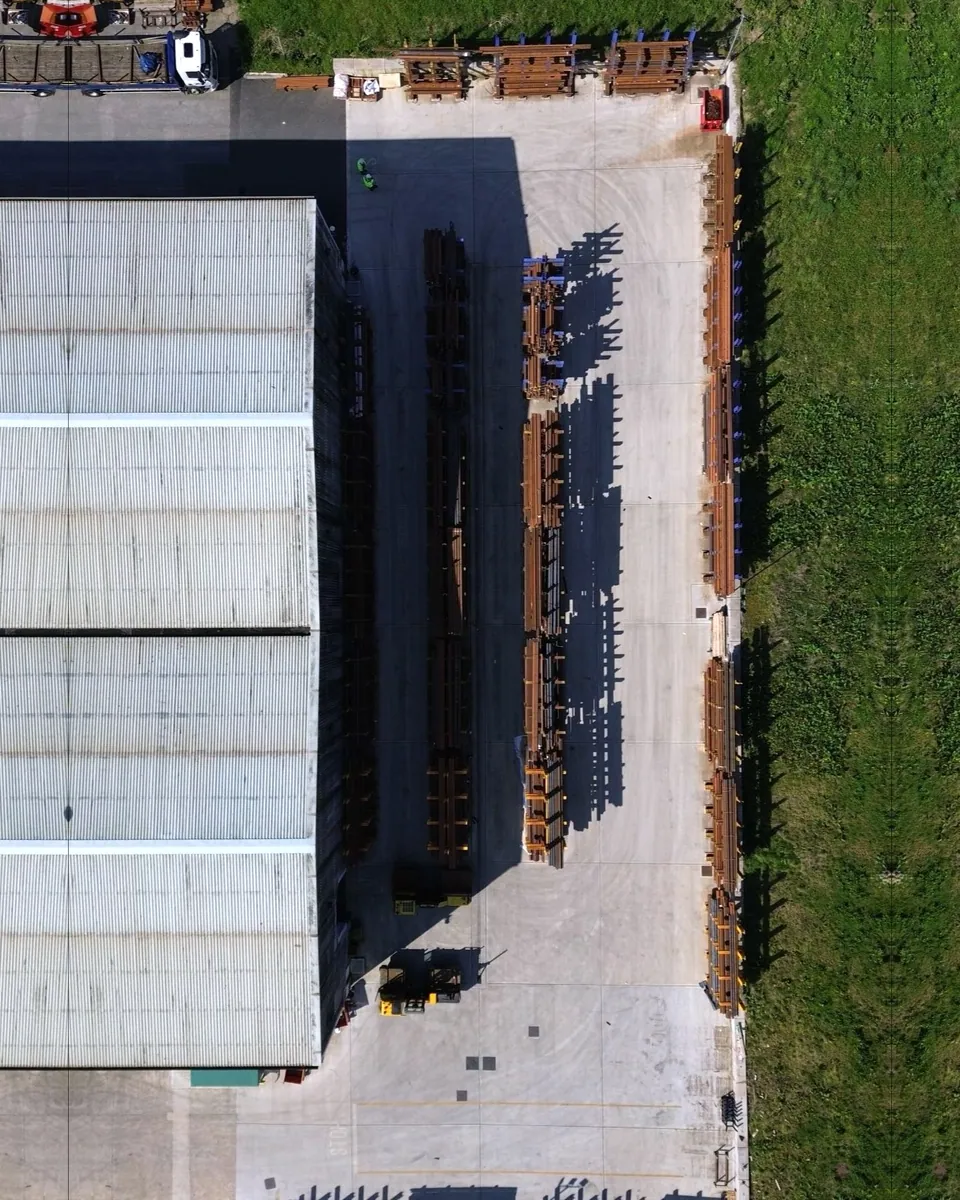
If you run a distribution, manufacturing or dockside yard in Liverpool, Knowsley or Widnes, PKB Civils is a specialist concrete yard contractor whose own crews and plant travel from Rochdale. Once the free survey is done, failed slabs come out a section at a time, so the yard keeps trading while we pour.
For site and facilities managers whose yard carries HGVs and heavy plant all day and can't simply shut. We break out failed concrete and lay new reinforced slabs with our own crews, a section at a time, and one team runs the job from the survey to the last saw cut. Our concrete yard work covers the full range.
Liverpool's heavy yards sit on the river and on the distribution land inland. The Port of Liverpool works both banks of the Mersey, with its container terminals at Seaforth close to the M62, M6 and M58, and Knowsley Council calls Knowsley Business Park one of the largest employment sites in Europe. Both mean yards that have to be repaired around the traffic. 3MG in Widnes, a 53 ha freeport site for logistics, has its own rail terminal.
Everything we can take on for you. Not sure which you need? Send your brief and we will tell you.
New hardstanding, turning areas and entrances for distribution parks around the city, built for lorries turning on the same spot all day.
Send your briefSlabs on old dock land, with the formation tested where each bay will go before the thickness is set.
Send your briefFailed bays replaced one area at a time on yards that share estate roads with their neighbours, so your vehicles and theirs keep moving.
Send your briefJoint and bay repairs on older yards near the docks, where the slab around the damage is still sound, with the cause found and dealt with first.
Send your briefLevels and falls reset on older Liverpool yards whose surface has moved since it was laid, so rain runs to the channels and off the slab.
Send your brief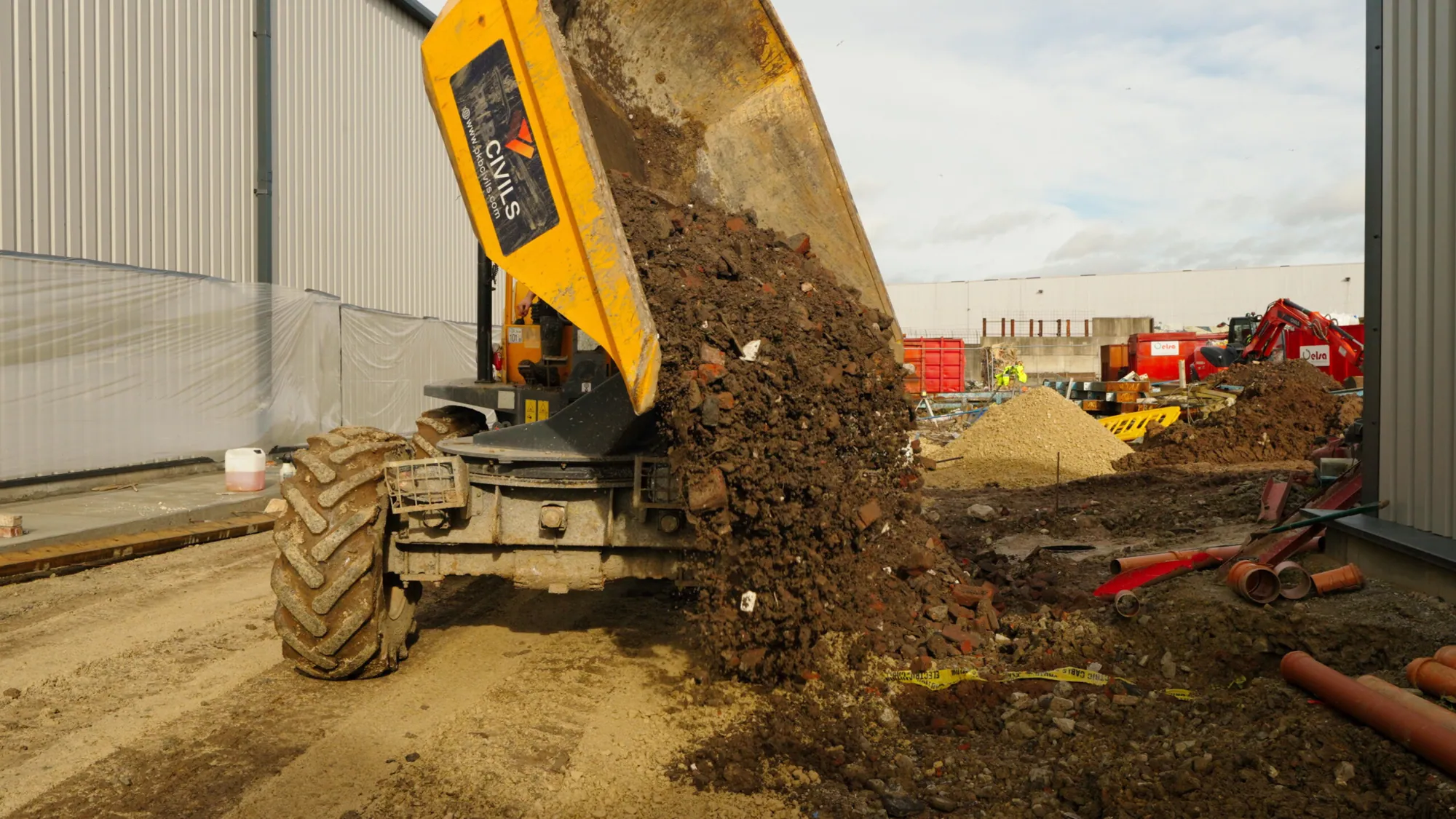
The same people survey, plan and build your job, and your site keeps running while we do it.
Send your briefBen's example is a North West logistics yard whose scaling had been put down to the concrete's age. On survey, settlement had turned the falls the wrong way and rain was collecting in a low spot after every downpour. Re-grading the surface and adding drainage fixed it without replacing the whole slab.
In Ben's words, “Poor drainage is the primary cause of premature concrete failure in industrial yards, not vehicle weight.” So before a slab is specified on a Merseyside yard, we check where the water goes. His reasoning is in how drainage destroys yard concrete.
On a distribution yard in Widnes or Speke, the slab thickness and joint layout come from the vehicles that actually use it, set out after watching how the yard runs, so turning HGVs cross joints at an angle and land where the slab is built for them.
Send us a short brief and a few photos. If it's a good fit, we'll arrange a free site survey and plan the work around how your site runs.
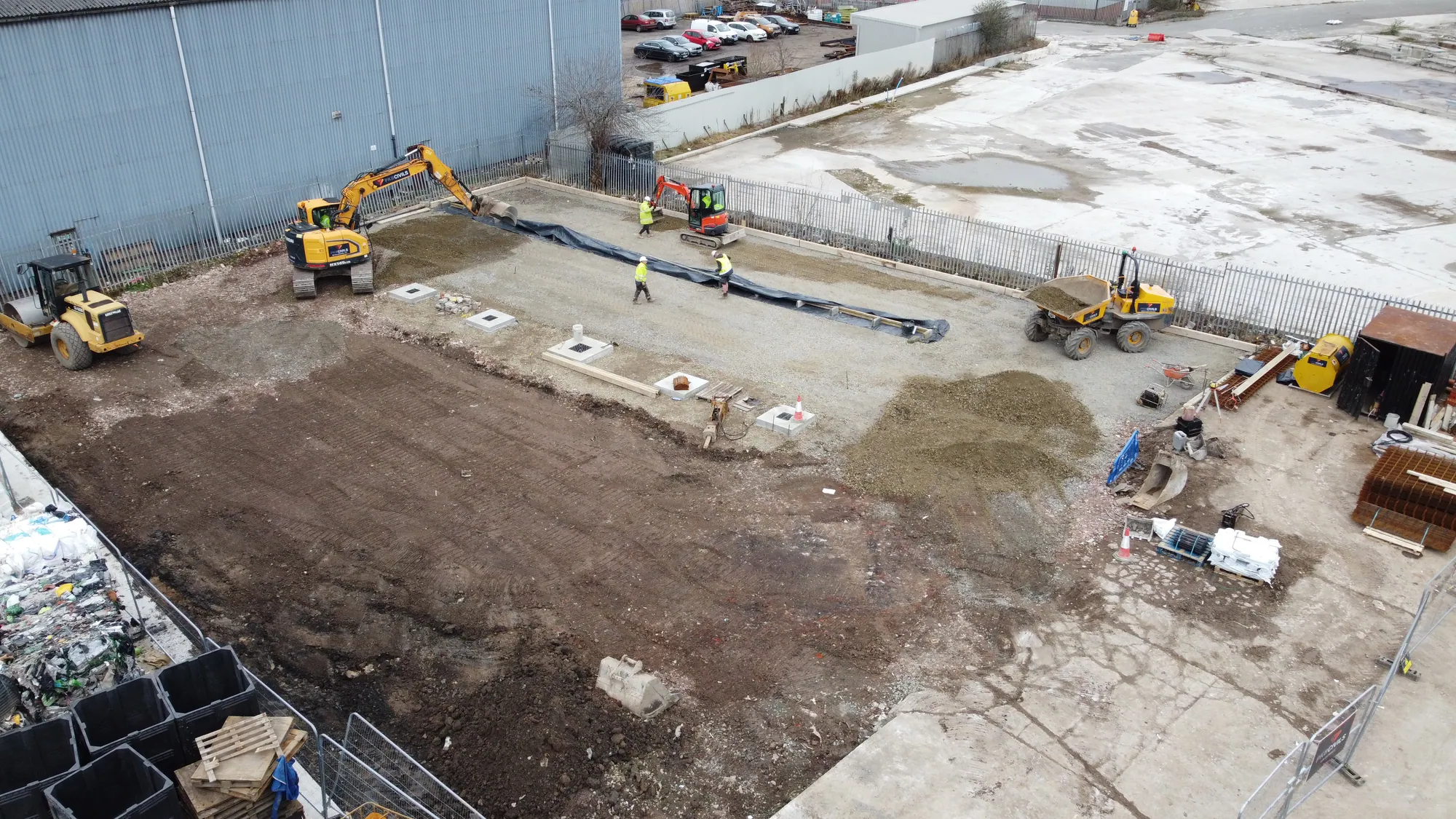
Where we look first on a distribution, manufacturing or dockside yard around Liverpool, and why.
When a site in Speke or the Eastern Corridor changes hands or takes on heavier HGVs, a yard laid for its old use starts to break up. The lasting fix is a slab sized for today's loads, with the formation tested first.
Knowsley Council counts over 800 businesses employing 18,000 people on Knowsley Business Park, so a pour there shares the roads with the whole estate. Wagons are best booked for the quieter hours, with a bay opened only when the mix can reach it.
The Seaforth terminals run straddle carriers and rail-mounted gantry cranes; where a yard takes heavy handling plant, slab and joints are set for its wheel loads.
Every patch adds a joint edge of its own, and that edge is often where the next failure starts. On an older waterfront yard repaired bay by bay for years, the patches can end up as the weakest part of the slab.
The jobs closest to Liverpool, with this kind of work first.
Feedback from the people who run these sites, shown with the job we did for them.
Everything was prepared when we arrived and the school was kept running throughout. Really pleased with how it went and look forward to working with you again
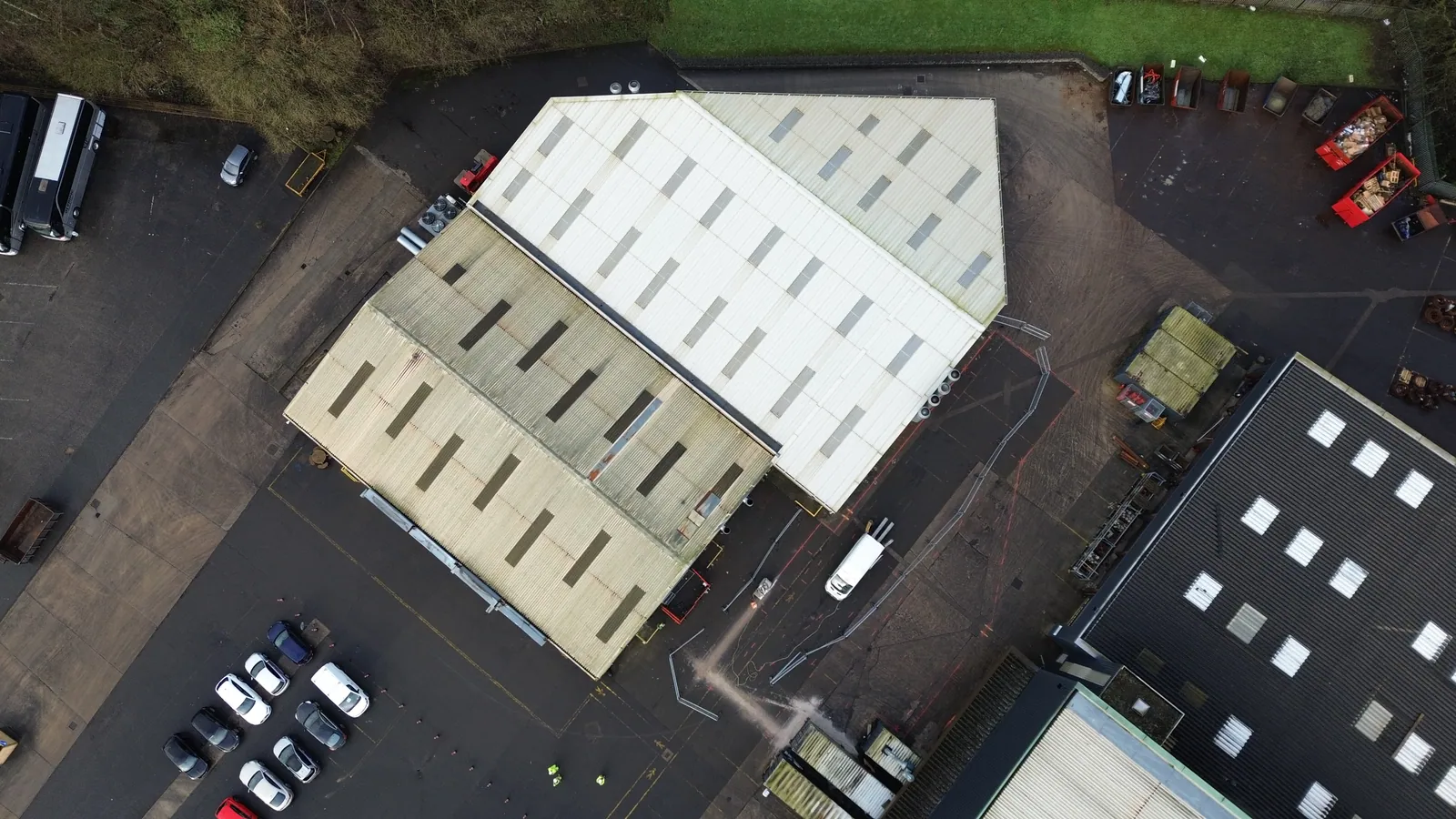
The fact you have a road sweeper coming on-site to clean up, is very much appreciated and shows attention to detail. Your team always work clean and tidy, and what really stood out is their communication and the fact nothing is too much trouble. The concrete repairs exceeded my expectations and should make the area much safer to work in.

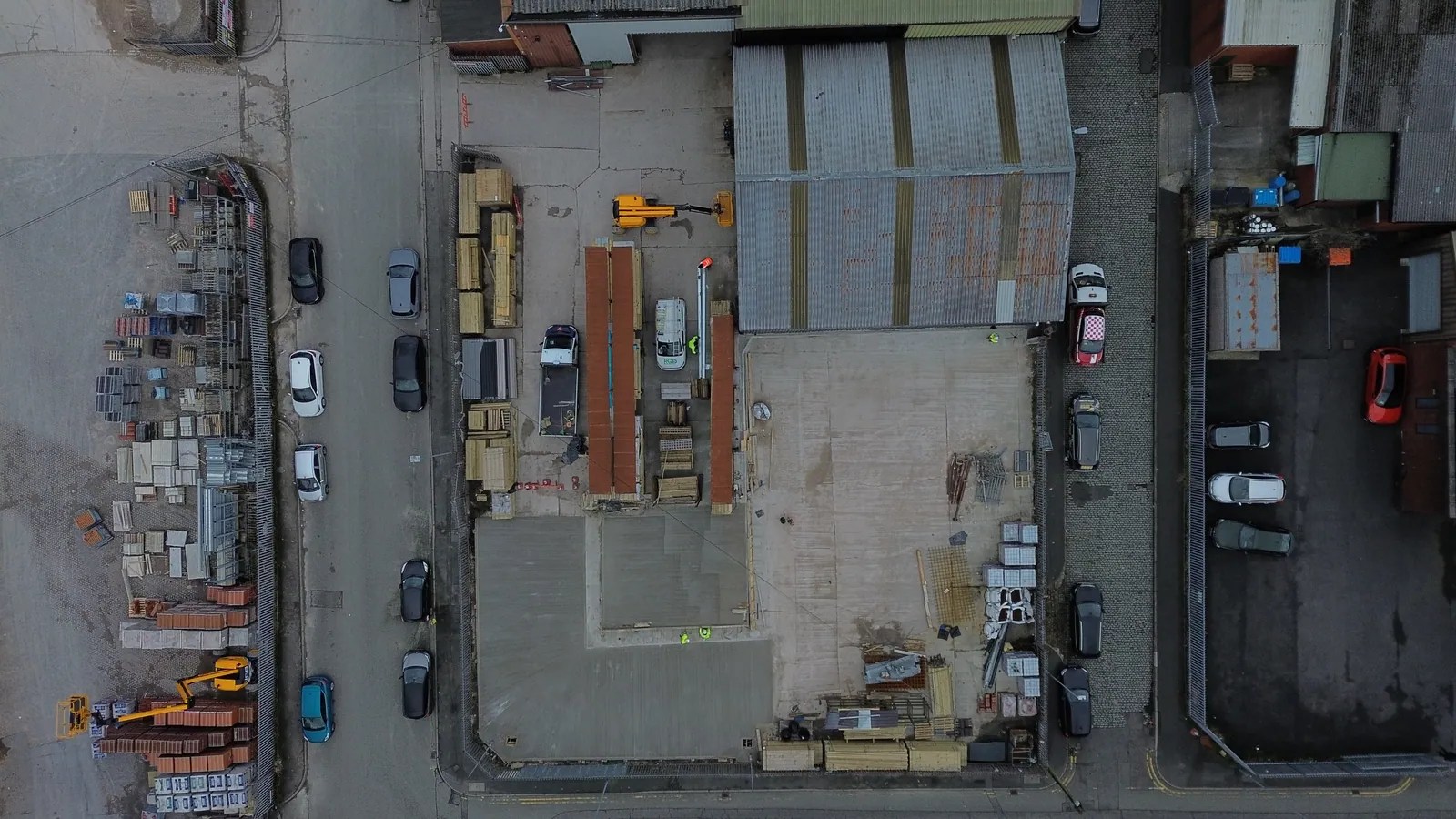
Really happy with the result. Your team were great to have on site and we were trading throughout which was important. Thank you.

Waterfront yards in Liverpool often sit on fill, which groundworks in Liverpool covers in full. For a concrete yard the practical step is testing the formation where the new bays will go, with plate bearing and CBR tests, before the slab thickness is fixed, because a reinforced slab is only as good as the sub-base and formation under it.
On older Liverpool yards the levels can have moved since the slab was laid. New bays either tie into those levels or reset them so water runs to the channels, and a level survey of the whole yard shows which before anything is broken out, so the new falls work with the old ones and the water still finds a channel.
Water from below is the other check on a Merseyside yard. If it seeps up through joints in dry weather, the cause sits under the slab, and it is dealt with before a new slab goes down, because no thickness of concrete fixes water coming up from underneath.
On a busy Merseyside estate the pour itself needs room: each one is planned around where the mixer can stand, whether a pump is needed to reach the bay, and how wagons get in without blocking a neighbour's entrance.
When a Liverpool yard's slab is sound and only the joints or a few bays are damaged, a local repair or joint filling is the better spend, and it needs no new formwork.
When water is the cause, a new slab laid to the same falls will fail the same way. On a Merseyside yard that might mean channels that have cracked or blocked, and the drainage comes first: see drainage in Liverpool.
And where a new yard sits over the deeper ground near the estuary, any piles or ground treatment are designed before the slab, and the slab is designed with them in mind.
Postcode districts in Merseyside, Cheshire and Warrington where we've delivered: CH2, CH4, CH65, L8, L20, L30, WA1, WA3, WA7, WA9, WA11.
See them on the map
Can't see your question? Call us or send your brief and we'll come back to you.
Send your briefPlan on about a week before full HGV traffic runs on standard concrete. A faster-curing mix can let light traffic back within a day or two, but heavy loading still has to wait, so the phasing on a busy Merseyside yard keeps lorries on finished bays while the new ones gain strength.
For HGVs and heavy plant we typically start at 200mm of reinforced concrete with A252 mesh, then adjust for the vehicles that use the yard and the ground under it. Around Liverpool that ground varies from site to site, so the formation is tested before the thickness is fixed.
Not yet: it is allocated land. The St Helens Local Plan allocates Parkside East, about 124.55ha gross, with at least 60ha kept for a rail freight interchange or other rail-enabled use, and its development must provide HGV access from junction 22 of the M6. A yard there will be designed from its plot's own investigation and the vehicles it takes.
Sometimes. Many repairs can go ahead in normal hours with the work area fenced off from traffic, and others are better at night or at weekends when traffic is lighter. On a yard that never shuts, we agree with your site managers which areas close, when, and how traffic gets round them before work starts, so everyone knows what is free each shift.
Both. A Merseyside job might be one damaged bay, a reinforced base for a machine or a whole new yard, and each starts with a free survey to find out why the concrete failed before anything is priced, whatever the size of the job.

Ben has over 10 years of experience in contracting management, specialising in pre-construction with some of the UK's largest contractors. Ben now leads pre-construction, project planning and client engagement.
Tell us what's happening on site. We'll review your brief and, if it's a good fit, arrange a free site survey.