What ground and site conditions should you expect in Glasgow?
Riverside plots in Glasgow can hide old dock structures. Building the bridge between Govan and Partick, which opened in 2024, meant demolishing a section of quay wall at Water Row in Govan, building a sheet piled quay wall and infilling at Pointhouse Quay, infilling the disused Govan Ferry Inlet and diverting a Scottish Water combined sewer outfall. Quay walls, filled inlets and live outfalls are what enabling works on a riverside plot have to find first.
In the east end, much of the land has had a first pass. Clyde Gateway is a partnership of Glasgow City Council, South Lanarkshire Council and Scottish Enterprise, and it estimated in 2007 that 350 hectares of its area in Bridgeton, Dalmarnock and Rutherglen was vacant, derelict, polluted or short of infrastructure. By March 2021 it had remediated 248 hectares.
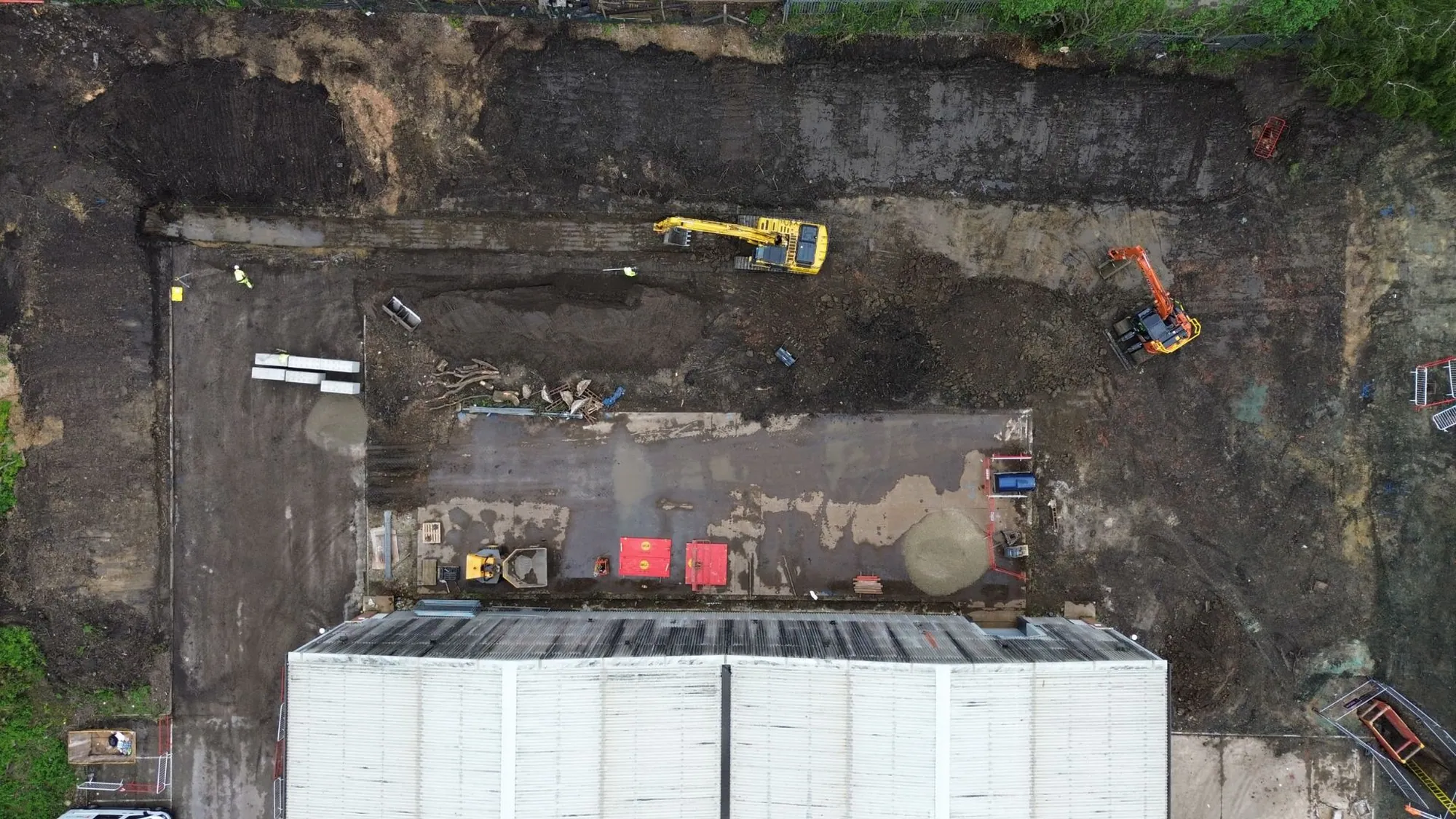
Remediated ground still needs its levels set, access built and services brought in before anything goes up on it, and that is where enabling works sits. Where a plot was remediated years ago, find out what was left in the ground and at what depth before the layout is fixed, because foundations and drainage runs have to work around it. What can be dug and reused on contaminated land is covered on earthworks in Glasgow.
When enabling works isn't the right call
If a plot still needs remediation, the remediation strategy comes first and sets the order of work, and the enabling works start once the ground is fit to work in.
If the work involves a listed structure, such as the A-listed Govan Graving Docks, heritage consents and specialist trades lead the way, and the groundwork fits around them.
And if you need the whole building put up, enabling works is only the first stage. We prepare the site and hand it to the main contractor, and build any yard, drainage or groundworks around it ourselves. If the plot is to carry solar, EV charging or battery storage, our article on readying a yard for renewables covers what the ground needs.