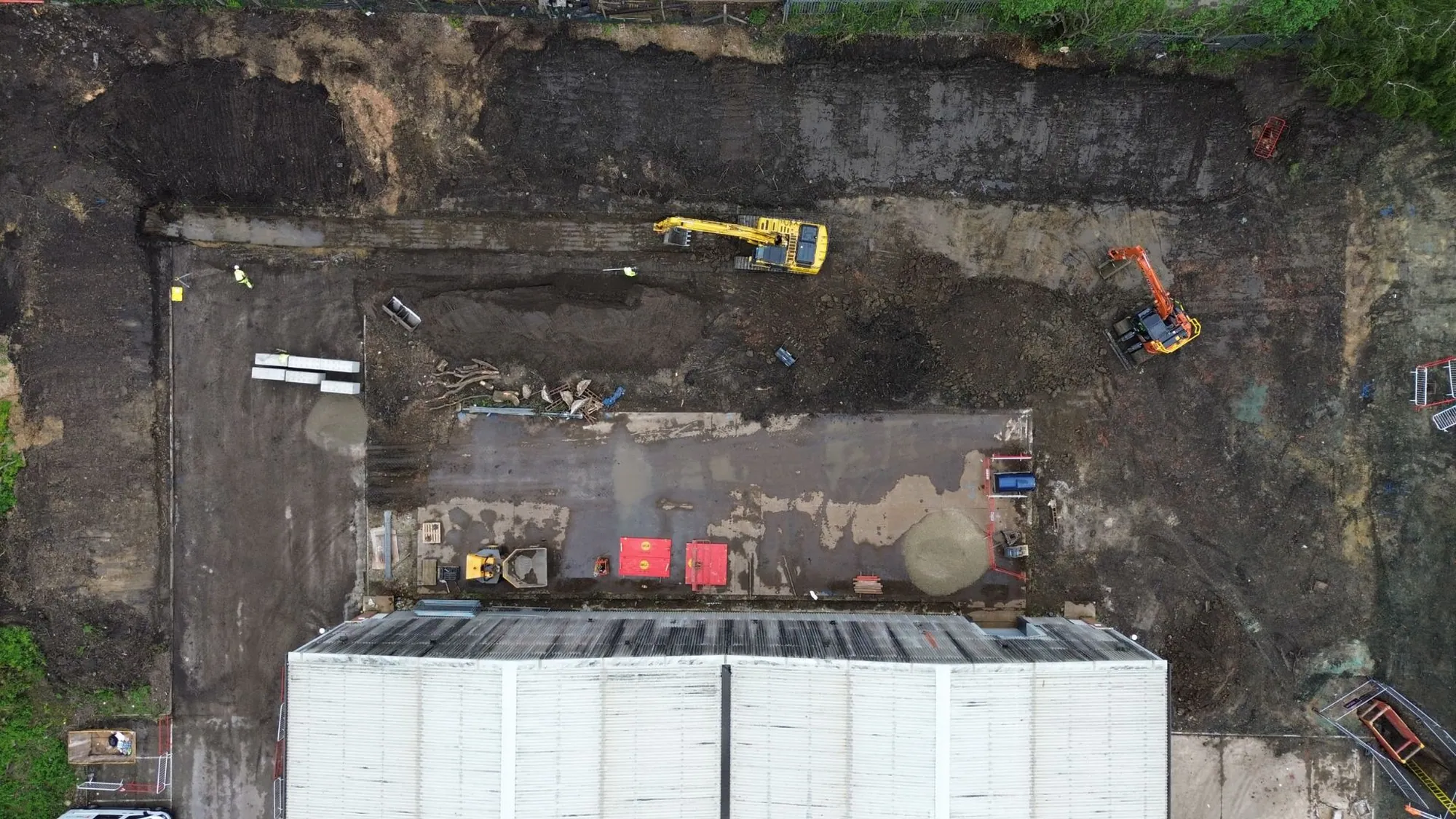
PKB Civils is a specialist groundworks contractor for yards and works across Glasgow and North Lanarkshire, building bases, trenches, retaining walls and sub-bases on the city's glacial till, soft raised marine clay and old made ground. Our crews and plant travel from Rochdale, and the work is phased so your site stays in use.
For site and facilities managers in Glasgow who need a base, a drainage trench, a retaining wall or a new sub-base built on a site that has to keep working. Our own crews do the digging and building, using our own plant, and one team carries the job from the first survey to handover. Our groundworks service page sets out everything we take on.
Ground in and around Glasgow changes over short distances: the depth to firm till varies, and near the river there may be soft clay or old fill instead. So we start from the borehole records and our own trial holes, and set levels and bases from what they show.
2,000+Projects completed across the UK
150,000m²Concrete poured across all our jobs
40yearsFamily-run in Rochdale since 1986
Groundworks in Glasgow: what we do
Everything we can take on for you. Not sure which you need? Send your brief and we will tell you.
Bases on changeable ground
Pads and plinths for plant and racking, sized from what the trial holes find, since soft clay and old fill can sit close to firmer till.
Where a new yard goes in we test the subgrade first, as we did with plate bearing and CBR tests for AVK's yard in Hyde. Ben's point is that a base carrying HGVs has to be level, even in thickness and properly jointed, and on soft Glasgow clay that starts with knowing what the formation will carry.
Planned before the crew travels
Our crews and plant come up from Rochdale, so the dig sequence, the spoil and the deliveries are worked out before they set off, and each area of your yard is handed back before the next is opened.
One crew from dig to slab
The crew that digs a Glasgow site can carry on with its drainage, retaining walls and concrete, so nobody waits for a second contractor to travel up.
Planning groundworks on a Glasgow site?
Send us a short brief and a few photos. If it's a good fit, we'll arrange a free site survey and plan the work around how your site runs.
Ground conditions recorded around Glasgow that can change a groundworks job, and the evidence for each.
Fill twelve metres deep
At one location on the Cuningar Loop, BGS models 12 m of made ground. Fill like that can change in depth and make-up across a plot, so bases are set out once the trial holes are in.
Rockhead at very different levels
Across the Clyde Gateway model area, BGS puts rockhead anywhere from tens of metres below sea level to well above it, so piles or deep bases can't assume one depth to rock.
Very soft sand by the river
The fine part of the Gourock Sand is mostly very soft to firm, BGS reports, so a trench cut into it near the river may need its sides supported from the very start.
Feedback from the people who run these sites, shown with the job we did for them.
1 / 2
“
All the feedback we've had from site has been really positive. I've also got to give credit for how you have managed some of the on-site issues that required making design changes on the fly. This showed great pragmatism. As always, it's a pleasure working with PKB on this project.
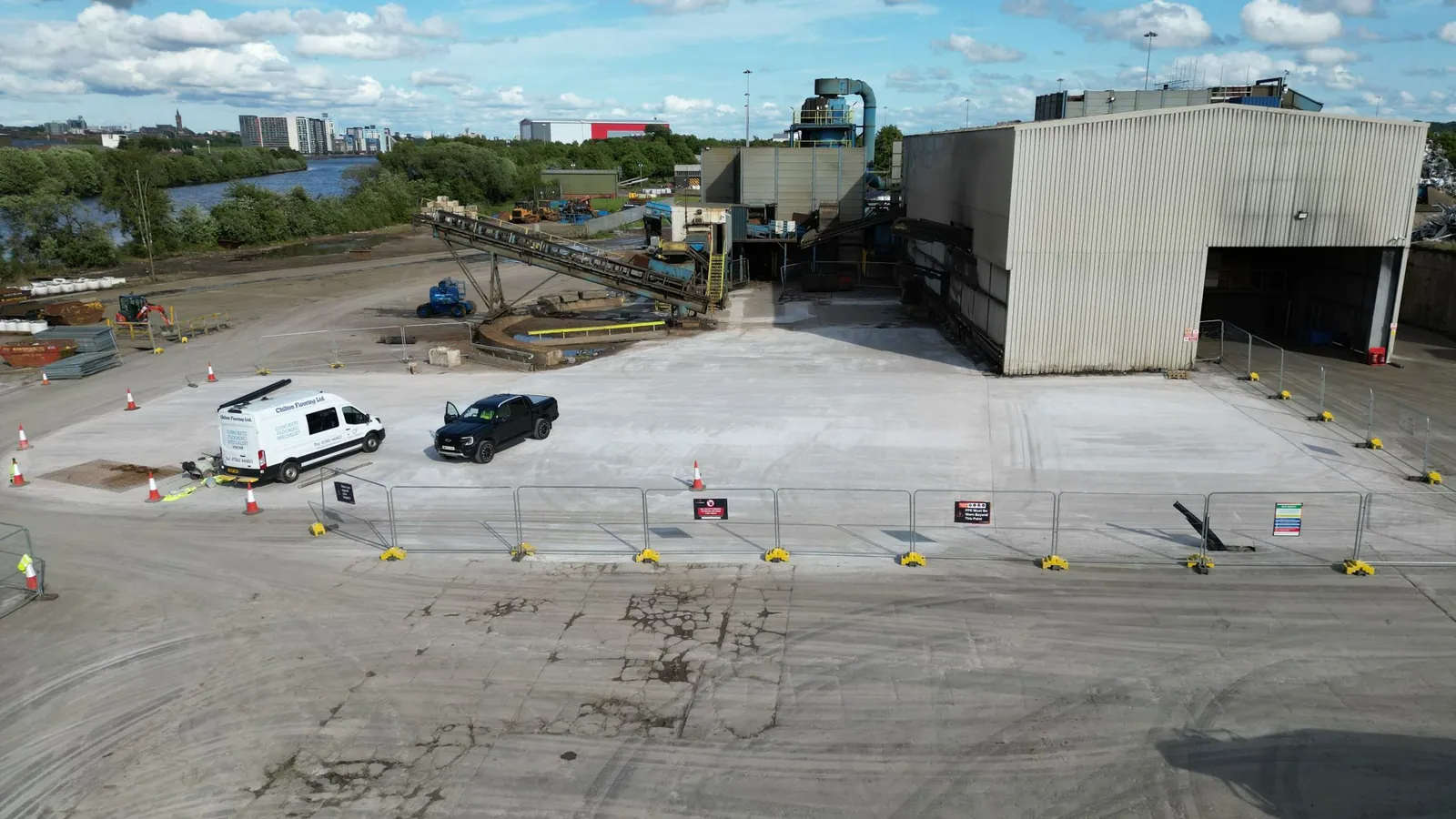
Concrete yard repairs and drainage upgradesGlasgow, Ports, 12 weeksSee the job
“
The fact you have a road sweeper coming on-site to clean up, is very much appreciated and shows attention to detail. Your team always work clean and tidy, and what really stood out is their communication and the fact nothing is too much trouble. The concrete repairs exceeded my expectations and should make the area much safer to work in.
Concrete repairsRochdale, Manufacturing, 4 to 5 weeksSee the job
What ground and site conditions should you expect in Glasgow?
Central Glasgow's hills are drumlins of Wilderness Till, which the British Geological Survey calls the most extensive unit in the Clyde area. Along the Clyde valley, buried drumlins make the thickness of the sediments above them vary considerably, so the depth to firm till under a yard can differ from one end to the other.
Near the river the ground is softer. BGS maps the Paisley Clay among central Glasgow's raised marine deposits, and its testing finds the clay mostly soft to firm, occasionally very soft: ground where a loaded pad, or the side of an open trench, has to be designed for it.
In the east end, old industry adds to it. Under the Clyde Gateway area, BGS records made ground 10 to 15 m thick in places from former industrial use, and seven coal seams worked between 1810 and 1934 lie deeper down, with the old mines expected to be flooded.
Groundwater follows the river. BGS finds that water levels in the deposits under central Glasgow respond to the Clyde's stage through the tidal reach, up to two hundred metres from the river, so a riverside trench may not hold one water level through the course of a day.
When groundworks isn't the right call
If a Glasgow yard is sinking, rebuilding the base alone may not last. Ben's experience is that sub-base can wash out from under a slab for a long time before the surface dips, so the water getting in has to be traced and stopped, often at the drains: see drainage in Glasgow and his article on water under yard concrete.
A slab that rings hollow underfoot needs looking at before any groundworks are priced. Ben treats that sound as a sign that voids have already opened beneath it, to be investigated straight away, and over made ground the investigation goes below the sub-base too.
A local track record
Postcode districts in Glasgow and Lanarkshire where we've delivered: G51, ML4.
Will groundwater near the Clyde get into an excavation?
It can, and the tide plays a part. BGS describes the superficial deposits under central Glasgow as an aquifer two to three kilometres wide and typically 10 to 30 m thick, with water levels that follow the river's stage through the tidal reach. So the ground investigation should note when water was struck, and dewatering is planned before a deep trench opens.
How soft is the Paisley Clay, and what does it mean for a new base?
Mostly soft to firm, occasionally very soft or stiff. In BGS testing, most undrained strengths fell between 5 and 80 kPa, a range BGS classes as extremely low to high strength. On a yard over it, the formation is tested before the base is designed, and soft pockets are dug out and replaced, or the base is widened to spread the load.
Why dig trial holes on a Glasgow site when borehole records exist?
Because the records are points, and Glasgow ground can change between them. The British Geological Survey notes how buried drumlins along the Clyde valley vary the thickness of the deposits over them, and made ground from old industry can change across a plot as well. Trial holes where the bases and trenches will actually go show the crew what it will meet.
Can a yard be built into one of Glasgow's drumlin slopes?
Yes, by cutting and filling to a level platform or by stepping the yard with a retaining wall. The slopes are glacial till, which the trial holes check for strength and water before the wall's foundation is designed, and the cut and the fill are balanced where the dug till is suitable, so less of it has to leave the site.
Does the Kelvin valley in north Glasgow have different ground?
Yes. Mainly north of the Clyde, the British Geological Survey records Cadder Sand and Gravel up to 60 m thick in the deep bedrock hollows of the Kelvin buried valley system, very different from the till across much of the city. Sand and gravel can carry water and run into an open trench, so excavations there are planned with support and dewatering in mind.
Ben has over 10 years of experience in contracting management, specialising in pre-construction with some of the UK's largest contractors. Ben now leads pre-construction, project planning and client engagement.
We use cookies to see how people use our site and to measure our adverts. They're on unless you choose Reject all. Privacy policy
Necessary
Needed for the site to work, such as remembering your cookie choice. They don't store anything that identifies you.
Always active
Analytics
Google Analytics and Microsoft Clarity show us how people use the site, such as which pages they visit and where they came from, so we can improve it.
Advertising
HubSpot, Google Ads and WhatConverts cookies measure how our adverts perform and connect an enquiry or phone call to the advert or page that led to it.