Really impressed with your team and how you kept the yard open, the new works look fantastic. Brilliant job.

Yard extension and retaining wallBolton, Builders merchantsSee the job

PKB Civils is a specialist commercial drainage contractor for yards and industrial sites in Glasgow and Lanarkshire, where Scottish Water and SEPA set the rules for surface water. Our own crews and plant come from Rochdale to renew channels, gullies, separators and attenuation a section at a time, with the yard kept in use.
For site and facilities managers with water lying on a working yard, a separator past its best or new hardstanding that needs somewhere to drain. We put in and repair yard drainage with our own crews, on commercial and industrial sites only, and put back any concrete we break out before we leave. Our drainage service lists what we install.
On a new or resurfaced Glasgow yard, the first question is where the surface water goes. Scottish Water will not normally accept surface water into its combined sewers, giving sustainability and protection from future sewer flooding as its reasons, and makes an exception for brownfield sites only with significant justification.
Everything we can take on for you. Not sure which you need? Send your brief and we will tell you.
Cracked channels and failed gullies replaced bay by bay, with traffic kept on the rest of the yard while each section is done.
Send your briefOil separators and silt traps for refuelling points and loading bays, which SEPA's rules treat separately from the rest of a newer yard's run-off.
Send your briefAttenuation, filter drains and other SuDS parts for a new or extended yard, so surface water is held back and cleaned before it leaves.
Send your briefDrains jetted and checked on camera before work starts and again at the end, so the cause is known before any concrete comes out.
Send your briefSilty water from the dig kept out of drains and burns, under SEPA's General Binding Rules for construction sites.
Send your brief
The same people survey, plan and build your job, and your site keeps running while we do it.
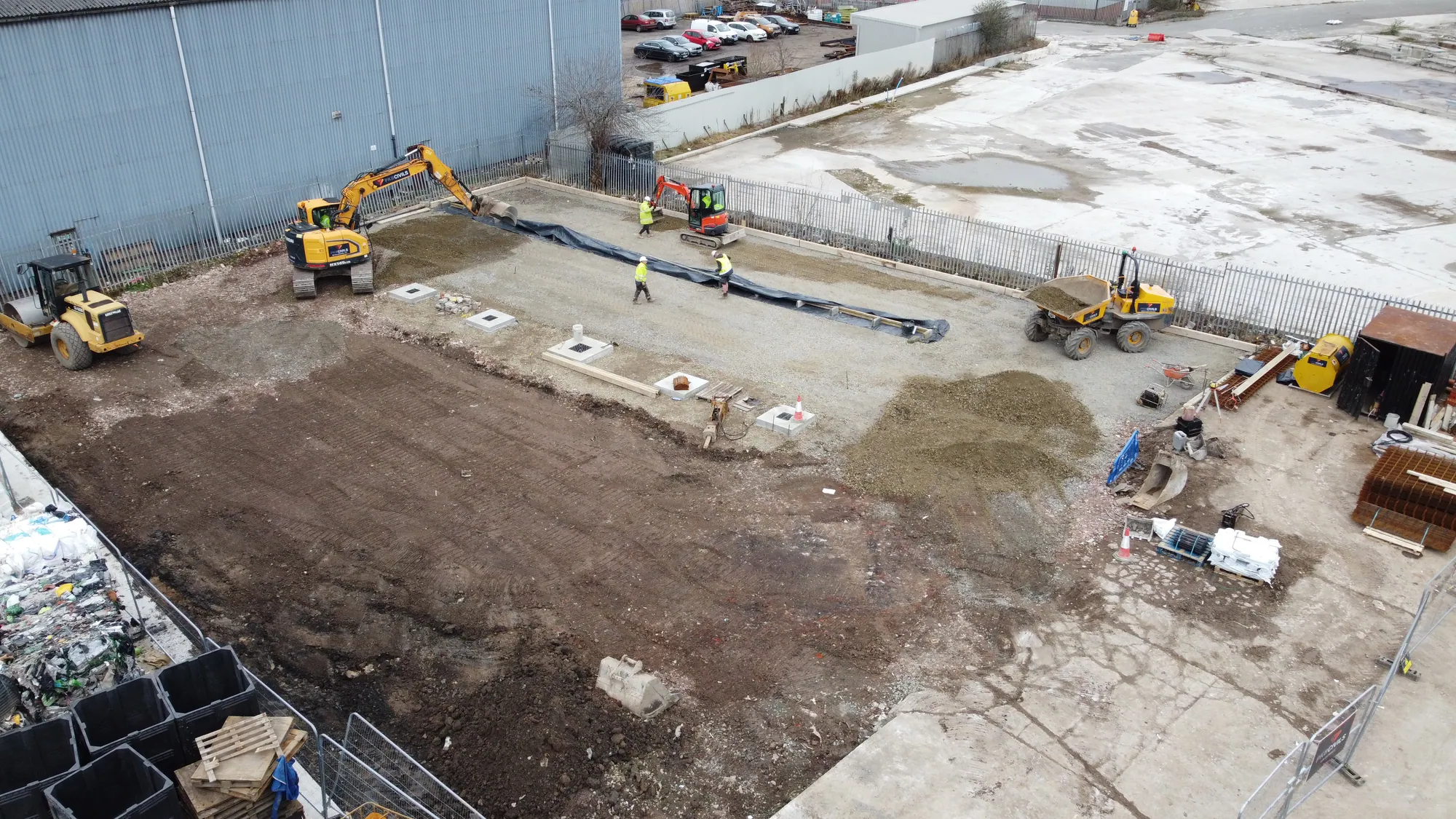
Send your briefOn a large live yard in Glasgow, the gully and channel repairs and replacements we carried out left far less standing water and fewer drainage failures.
With our crews coming from Rochdale, the drainage survey, the outfall route and the phasing are settled before they set off, so a Glasgow yard isn't left open waiting on a decision.
Ben's observation is that a yard slab is usually specified with care, and the drainage that protects it rarely is. On a Glasgow yard, where SEPA's rules and Scottish Water's policy both decide where run-off can go, we design the drainage as carefully as the concrete.
Send us a short brief and a few photos. If it's a good fit, we'll arrange a free site survey and plan the work around how your site runs.
The Scottish rules that shape a yard's drainage in Glasgow before a trench is dug, and where each one is set out.
A bigger rebuild may need a SEPA permit for its run-off. General Binding Rule 10D covers construction run-off only on a site of 4 hectares or less, with limits on site roads and on steep ground.
On an industrial estate, ask SEPA early which authorisation applies: its rule for developments built since April 2007 requires SuDS but doesn't cover run-off from industrial estates.
Keep the separator emptied. SEPA's rule for newer sites requires oil interceptors, silt traps and SuDS parts to be kept in good order and repair, and Ben's experience is that well-built drainage left unmaintained fades until it barely works, with no single moment of failure to warn anyone.
If the scheme is five or more dwellings or a new building of more than 250 sq m ground floor area, expect the council's SG8 guidance to ask for flood risk screening and a surface water drainage strategy with SuDS, with the assessments carrying compliance and independent check certificates.
The jobs closest to Glasgow, with this kind of work first.
Feedback from the people who run these sites, shown with the job we did for them.
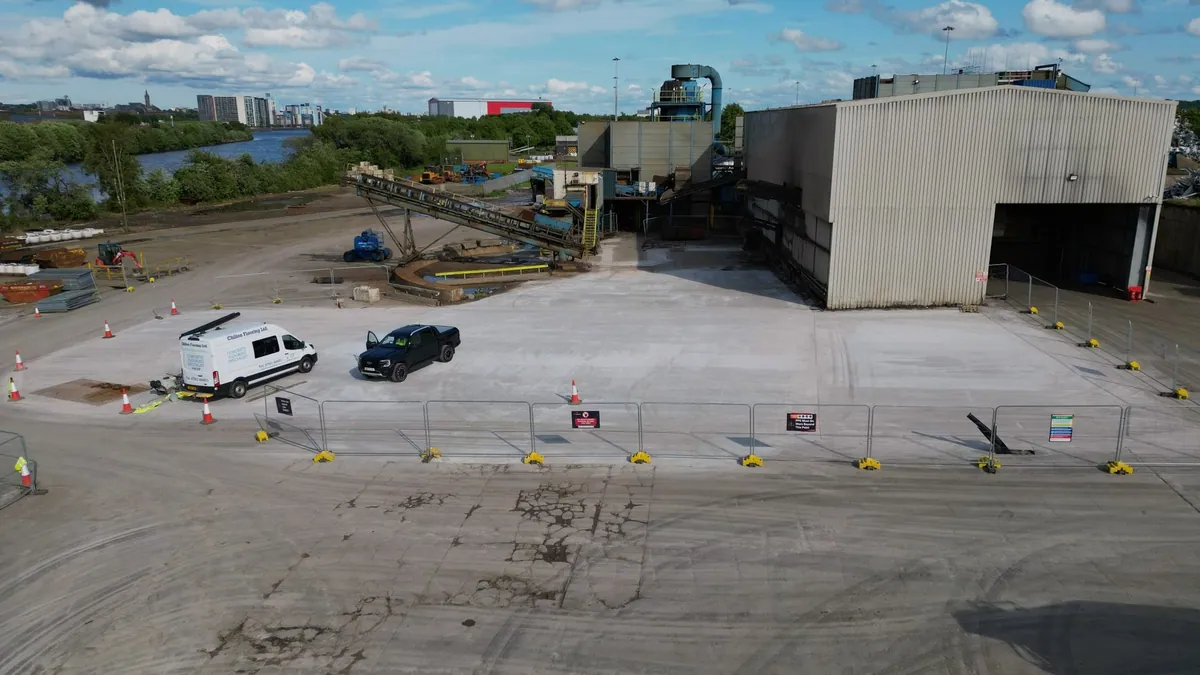
Really impressed with your team and how you kept the yard open, the new works look fantastic. Brilliant job.

The fact you have a road sweeper coming on-site to clean up, is very much appreciated and shows attention to detail. Your team always work clean and tidy, and what really stood out is their communication and the fact nothing is too much trouble. The concrete repairs exceeded my expectations and should make the area much safer to work in.

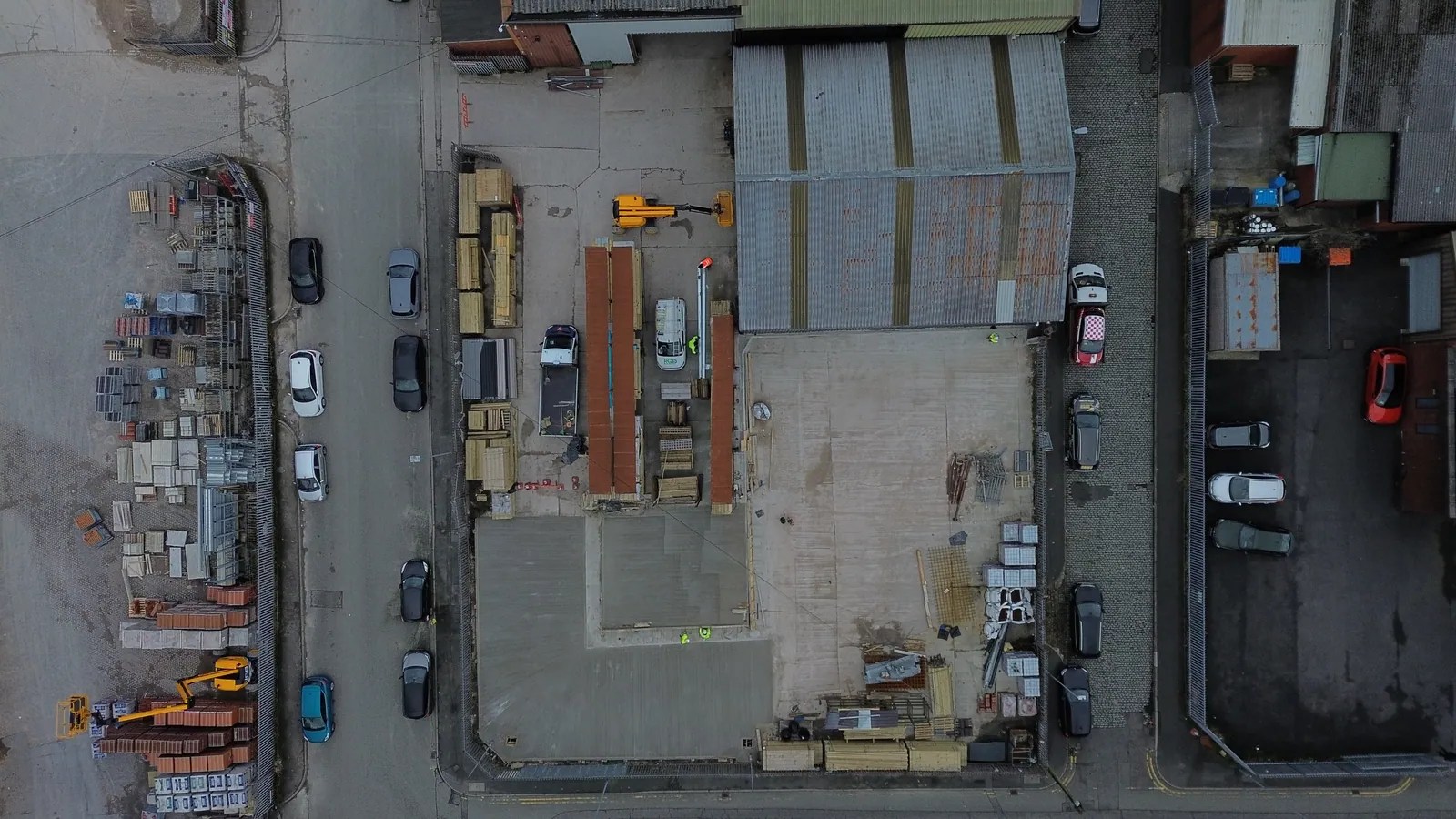
Really happy with the result. Your team were great to have on site and we were trading throughout which was important. Thank you.

In parts of Glasgow, rain is a bigger flood risk to a yard than the river. Surface water is the main source of flooding in Glasgow centre east, with about 3,600 homes and businesses at risk, and in Hillington and Cardonald, with about 2,200, according to SEPA's flood risk management plan for the Clyde and Loch Lomond, and both numbers are expected to rise by the 2080s.
Elsewhere the Clyde leads. In the West End the main source is coastal flooding from the tidal river, and at Dalmarnock it is the river itself, the plan adds, while Scottish Water is to assess sewer flood risk in the Shieldhall sewer catchment.
Allowances for a changing climate apply too. Glasgow City Council asks flood risk and drainage impact assessments to use SEPA's current climate change allowances, so channels, pipes and attenuation on a new Glasgow yard are sized with that extra rain built in. Our guide to making a yard more resilient to extreme weather covers what to check.
Below ground, the deposits near the river hold groundwater that rises and falls with the tidal Clyde, covered on groundworks in Glasgow, and a separator or chamber set in wet ground has to be anchored so it can't lift.
Not every wet yard needs new drains. Ben separates passing surface water from water that persists, and only the second points to a drainage fault. A condition survey shows which a Glasgow site has, and the first may need no more than clean channels and true falls.
If the fault is in the public sewer beyond your boundary, it's Scottish Water's to put right, and the first call is to them.
And if the yard floods from the Clyde itself, as river or tidal water, yard drains won't keep it out. Levels and flood defences are the bigger question there, and they're settled before any channel is laid.
Postcode districts in Glasgow and Lanarkshire where we've delivered: G51, ML4.
See them on the map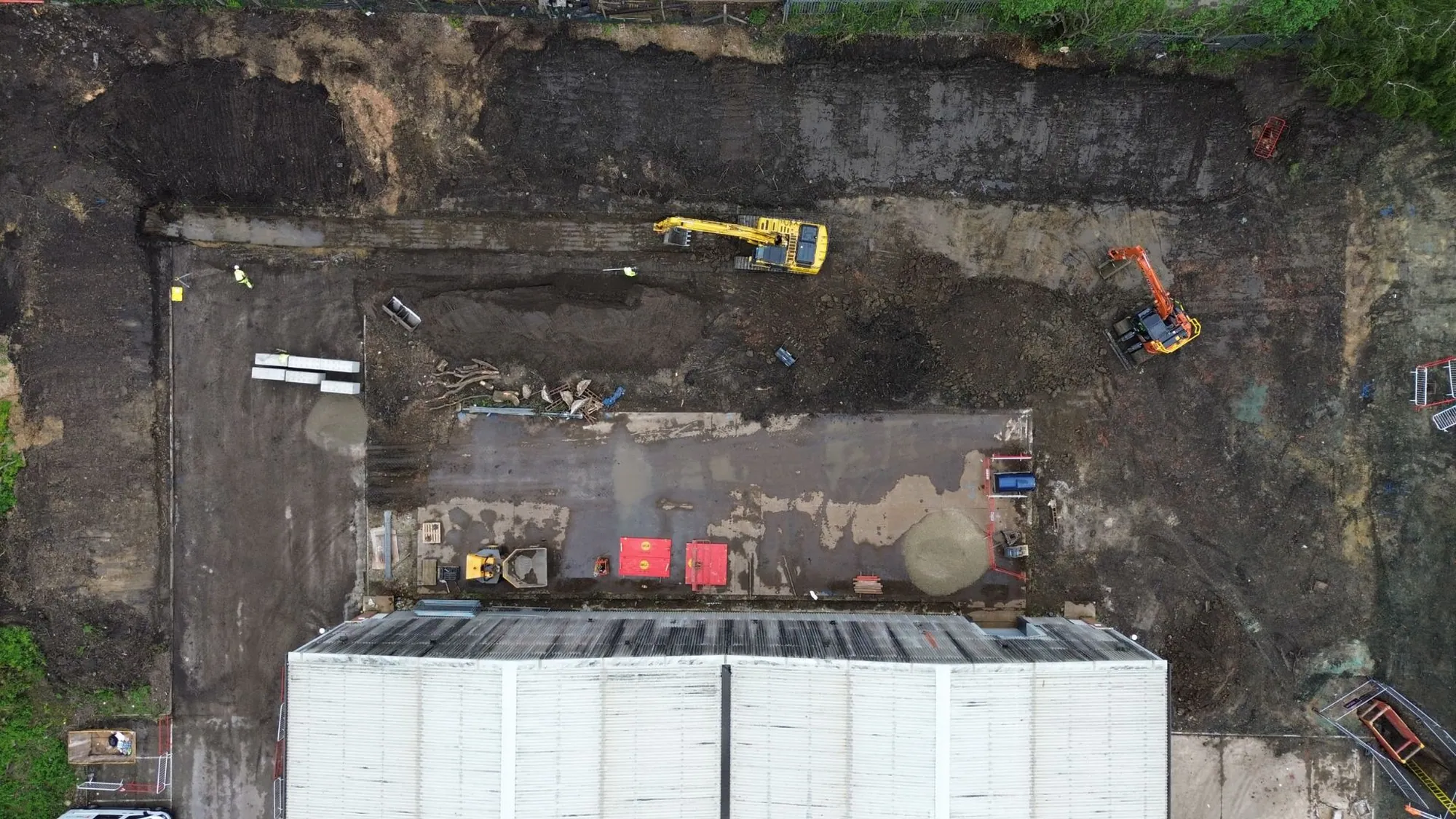
Can't see your question? Call us or send your brief and we'll come back to you.
Send your briefNot under SEPA's General Binding Rule for developments built since April 2007, industrial estates excepted. On those sites the discharge must not contain run-off from fuel delivery and refuelling areas, potentially polluting loading or unloading bays, or oil and chemical storage, handling and delivery areas; such run-off needs a different authorisation, and on an industrial estate, ask SEPA. Either way, on a busy yard the refuelling point is planned first.
As early as the design allows. Scottish Water warns that a connection may be refused if a developer waits until the connection request stage before consulting it. Its starting point is that surface water stays out of combined sewers, so the conversation is about where the yard's run-off can go instead and what attenuation it needs first.
Not on their own. The Metropolitan Glasgow Strategic Drainage Partnership, whose partners include the council, Scottish Water and SEPA, has completed schemes under the Hillington and Cardonald surface water management plan, and the council says the extra capacity releases land for homes and businesses. A yard's own channels, gullies and separators are still what move water off its surface.
Yes. In SEPA's flood risk management plan, river flooding is the main source at Dalmarnock, with about 1,000 homes and businesses at risk, rising to about 1,900 by the 2080s, and Glasgow City Council leads the local plan. On a yard there, levels, outfalls and any tanks are designed with the river in mind.
Parts of it are. SEPA's plan names Bellshill, north of the South Calder Water, as a target area where surface water is the main source of flooding, with about 460 homes and businesses at risk, rising to about 650 by the 2080s. A yard there needs drainage sized for heavy rain, with attenuation where the outfall can't take a sudden rush.

Ben has over 10 years of experience in contracting management, specialising in pre-construction with some of the UK's largest contractors. Ben now leads pre-construction, project planning and client engagement.
Tell us what's happening on site. We'll review your brief and, if it's a good fit, arrange a free site survey.